

When an electricity bill arrived at Tk3,023, a customer expected to pay exactly that amount. Instead, the bank collected Tk3,025 because it had no way to return the remaining Tk2.
This is far from an isolated incident. In another case, a customer depositing Tk10,000 into a school account outside Dhaka was charged Tk30 instead of the standard Tk23 transaction fee because the branch did not have Tk7 in change.
Such incidents have become increasingly common across Bangladesh. A shopper purchasing goods worth Tk197 often ends up paying Tk200. A pharmacy customer buying medicine worth Tk38 may receive no change for the remaining Tk2.
Individually, these losses appear insignificant, but collectively they are creating a growing and largely invisible financial burden for millions of consumers.
The root cause is a severe shortage of Tk2 and Tk5 notes and coins in circulation. As lower-denomination currency becomes increasingly difficult to find, consumers, businesses, and financial institutions are being forced to round transactions up, resulting in small but frequent losses that accumulate over time.
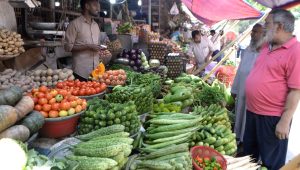
The impact is visible throughout the economy. In kitchen markets, pricing practices have changed noticeably. Items that were once sold at precise amounts such as Tk7, Tk13, or Tk18 are now commonly rounded to the nearest Tk5 or Tk10 increment. Prices increasingly settle at Tk5, Tk10, Tk15, or Tk20, reducing pricing flexibility and often pushing costs slightly higher for consumers.
Public transportation has been similarly affected. Although public transport fares are theoretically calculated according to distance travelled, the absence of small denominations makes exact payments difficult. Fares of Tk12, Tk17, Tk18, or Tk23 are rarely collected as stated. Instead, passengers frequently pay rounded amounts such as Tk15, Tk20, or Tk30.

To cope with the shortage, many retailers have adopted informal alternatives. Instead of returning change, shopkeepers often hand customers candy, chewing gum, or low-cost chocolates. While widely accepted in practice, the arrangement highlights the extent to which physical currency shortages have disrupted routine transactions.
Inside banking sector’s dilemma
A senior official at a private bank in Dhaka’s Karwan Bazar, speaking on condition of anonymity, said demand for Tk2 and Tk5 notes has risen sharply while supply has virtually dried up.
“There is a massive demand for Tk2 and Tk5 notes, but we cannot supply them,” the official told TIMES of Bangladesh. “Many traders come to us looking for loose change, but Bangladesh Bank has not printed new lower-denomination notes in years.”
According to the official, banks generally maintain around Tk10,000 worth of Tk1, Tk2, and Tk5 coins. However, a growing reluctance among customers to use coins has created a paradoxical situation. Shopkeepers often refuse coins because consumers prefer paper notes, leaving large quantities of coinage sitting idle in bank vaults. The official also noted that regulatory transaction limits restrict the amount of coins banks can distribute, making it difficult to meet demand even when vendors request large quantities of small change.
The shortage has created complications for utility bill collection as well.




“When paying an electricity bill, if there are no Tk2 or Tk5 notes available, either the bank or the consumer has to absorb the loss,” the banker explained.
Economic distortions and household strain
Shahadat Hossain Siddiqui, a professor of Economics at Dhaka University, said the cumulative impact of countless small overpayments should not be underestimated.
“Individually, these extra payments seem trivial. But collectively, they create a significant economic drain,” Siddiqui told TIMES. “By the end of the month, every member of a household is losing money to this shortage, and that is an added financial pressure.”
He added that the true scale of the problem remains difficult to measure because no reliable data exists on these countless small transactions occurring throughout the country each day. Beyond household expenses, Siddiqui argues that the shortage is distorting pricing mechanisms throughout the economy.
“Currency constraints force prices upward,” he said. “An extra one or two taka per item seems negligible, but it aggregates into massive sums across thousands of sales. This places gradual financial pressure on consumers and contributes to an artificially high cost of living.”
The underlying cause, according to economists, is simple economics. Producing and distributing low-denomination currency often costs more than the face value of the money itself, reducing the incentive to print additional notes and coins.
The digital solution and regulatory push
Experts believe the long-term solution lies in digital payments. Mobile financial services, QR-code payments, and bank cards allow transactions to be completed with exact precision, eliminating the need for physical change altogether.
“Digital systems let consumers pay exact bill amounts, decimals included,” Siddiqui said. “However, because most transactions in Bangladesh are still cash-based, the impact of this currency crisis remains disproportionately high.”
Bangladesh Bank is also pushing for a digital transition. Arif Hossain Khan, spokesperson and executive director of the central bank, said authorities are working to expand digital payment infrastructure nationwide.
“As part of this initiative, we are rolling out a unified payment system called ‘Bangla QR’ across the country from 1 July,” he said.
Khan argued that reducing dependence on cash could generate significant savings for the government.
“Transitioning to digital payments could save the national exchequer at least Tk10,000 crore annually in money-printing costs alone,” he added.
Structural barriers to digital adoption
Yet significant obstacles remain. While countries such as India have successfully integrated digital payments into everyday transactions, adoption in Bangladesh remains uneven. Small grocery stores, wet market vendors, street hawks, transport operators, and many rural businesses continue to rely heavily on cash due to limited infrastructure, inadequate internet access, lack of smartphones, and low technical literacy.
Merchants and small traders are also concerned about transaction charges and regulatory requirements. Abdur Rahim, a hosiery vendor in Mirpur 10, said he avoids accepting mobile payments despite maintaining accounts with major mobile financial service providers.
“I avoid using them because the encashment fees are too high,” he said.
Muhammad Zahidul Islam, head of media and communications at Nagad, said both structural and institutional barriers are slowing adoption. He noted that consumers and businesses remain more comfortable dealing in cash, while many small merchants are reluctant to complete the documentation required for digital onboarding, including trade licences, taxpayer identification numbers and business identification numbers.
Although he welcomed the Bangla QR initiative, Zahidul questioned whether it would deliver immediate results.
“While over 10 crore people use mobile financial services, only about four lakh establishments currently accept QR code-based payments,” he said. “This figure is remarkably low compared to the market’s true potential.”