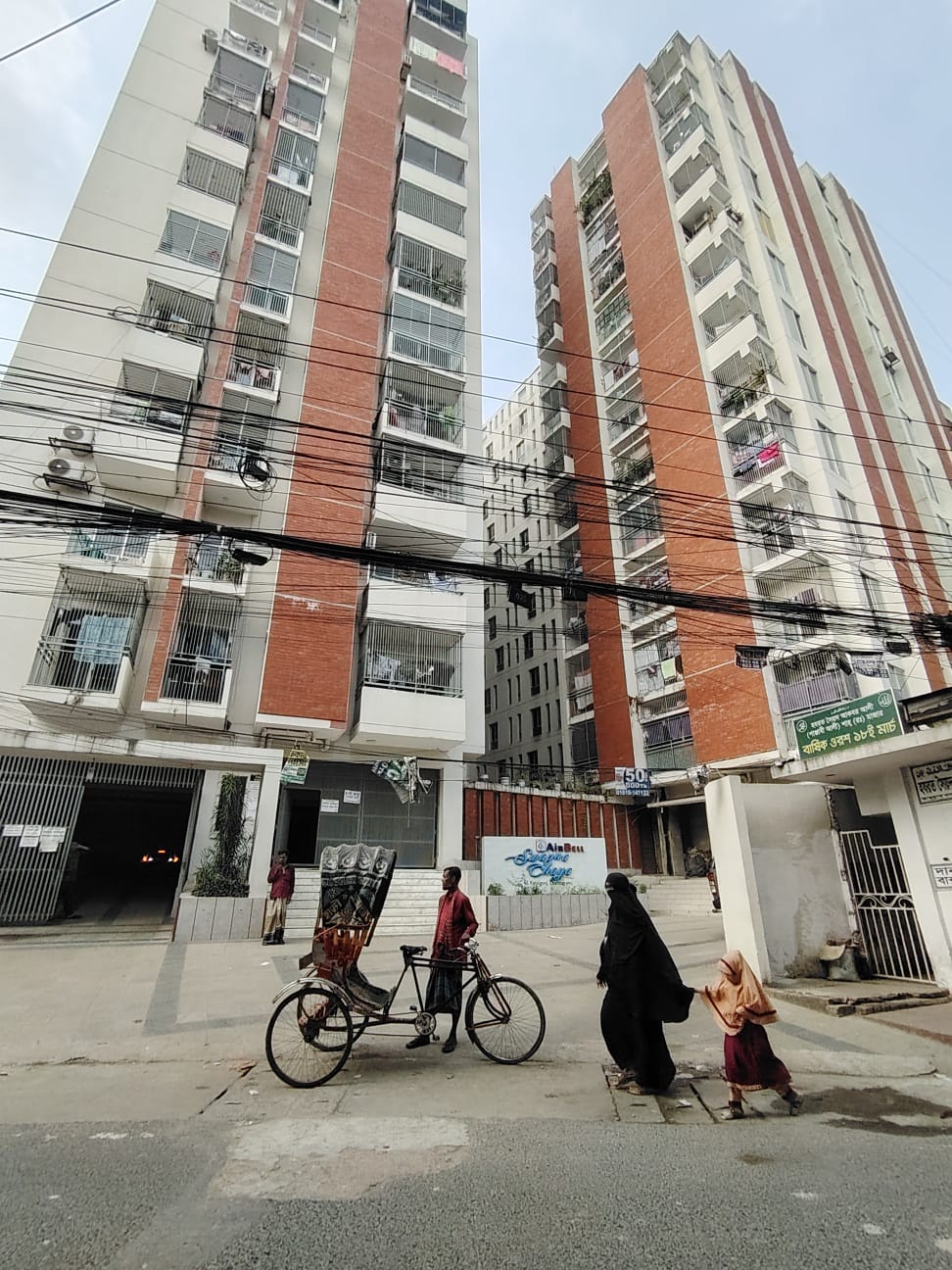
The morning in that apartment block in Katalganj, Chattogram, unfolded like any other.
Security guards opened the gate, parents escorted their children to school, and daily life moved at its usual pace. Yet beneath this normalcy lies a story of concealed ownership: eight flats worth nearly Tk110 million, registered in names that no resident recognises.
Hundreds of kilometres away, in the documentation of IFIC Bank, two names repeatedly appear: Md Sohidur Rahman and Md Zulfiqur Hider. On paper, they are high-income entrepreneurs. In reality, they are salaried employees earning just Tk 23,000 a month. Yet loans amounting to Tk 73.6 million were approved in their names.
Between these two realities lies a stark discrepancy. Official records describe property purchases, but the trail of funds tells a different story. The money ultimately diverged from its declared purpose, ending up under the control of a familiar figure: former IFIC Bank chairman Mohammad Lutfar Rahman Badal —a businessman and sports organiser widely known for his association with cricket legend Sachin Tendulkar.
The loan application was submitted on 25 August 2024 at IFIC Bank’s Karwan Bazar branch. Within just three days, on 28 August, it was approved by the bank’s chief credit officer at head office.
Each borrower received Tk 20 million under a housing scheme titled “Amar Bari”, alongside Tk 16.8 million in premium overdraft facilities—totalling Tk 73.6 million. The documentation stated that the funds would be used to purchase eight flats in Chattogram’s Airbell Swapnachhaya project, covering approximately 13,200 square feet.
However, within four days—on 1 September—the entire process of loan disbursement, pay-order issuance, return, and fund transfer occurred in a single day.
Although the pay-orders were issued in favour of Airbell Development Technologies Ltd, the developer returned them the same day, informing the bank that it had received payment “through other means”. The funds were then credited back to the borrowers’ accounts.

Transaction records show that Tk20 million from Sohidur Rahman’s account was transferred directly to Badal’s account that same day. Another Tk 16.8 million was sent to Advent Equity Management. From Zulfiqur Hider’s account, Tk 36.8 million was transferred to the same entity, which ultimately routed the entire sum into Badal’s account.
The loan approval process itself has raised serious concerns. Documents claim Sohidur Rahman earns Tk 620,000 monthly and Zulfiqur Hider Tk 590,000. However, neither audit teams nor TIMES of Bangladesh could find any evidence supporting these claims or the existence of their supposed businesses.
Both individuals listed the same Gulshan-1 address, where TIMES found only a daycare centre and no trace of the borrowers.
Further inquiries revealed that both men are employees of LR Group, owned by Badal. Vast assets were thus shown under the names of low-paid staff to secure the loans.
At the Airbell building in Chattogram, tenants were found living in all eight flats, paying monthly rents between Tk 25,000 and Tk 30,000. None recognised Sohidur or Zulfiqur. Instead, they pay rent to Md Helal Ahmed.
Helal, a former IFIC Bank branch manager now associated with LR Group, admitted to collecting rent and maintaining direct contact with Badal.



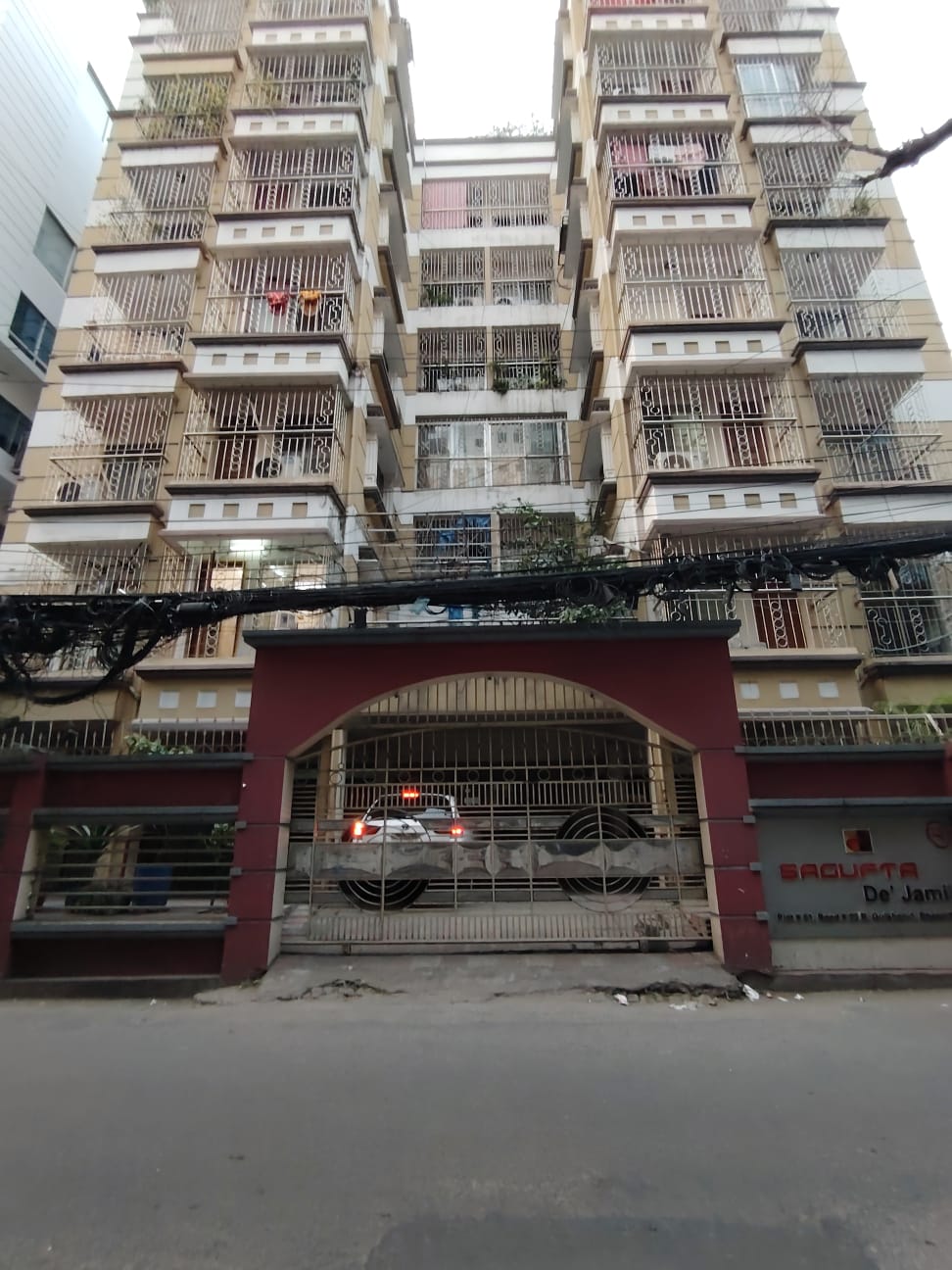
Under loan conditions, the flats were to be mortgaged to the bank within 90 days. However, while the properties were registered in the borrowers’ names, they have not been mortgaged to the bank, leaving them outside its legal control and preventing recovery through loan courts.
A senior official of Bangladesh Financial Intelligence Unit described the arrangement as “a classic routing structure”, where assets and liabilities exist only on paper while funds are controlled elsewhere.
Badal told TIMES that Sohidur Rahman had borrowed Tk 75 million from him in 2022, and the bank loans were used to repay that personal debt. He stated that IFIC Bank does not provide more than Tk 30–35 million in housing loans to a single individual, which is why loans were taken in two names.
However, a senior IFIC Bank official, speaking anonymously, contradicted this explanation, suggesting that the claim implies Badal is the actual owner of the flats.
Multiple sources indicated the assets may represent undisclosed wealth concealed through layered financial transactions.
Badal’s long-standing ties with IFIC Bank are central to understanding the context. According to banking sources, he became a director in 2006 through his association with influential BNP leader Mohammad Mosaddak Ali Falu. He later served multiple terms as chairman.
Despite changes in ownership—eventually shifting to Salman F Rahman—Badal retained influence through key board committees until his removal.
Records also show he used two luxury vehicles—Toyota Crown and Toyota Prado—without formal approval, costing the bank Tk35.5 million to purchase and an additional Tk24.6 million in maintenance by 2025.
Following his departure from the country in 2014, Bangladesh Bank removed him from the board in 2015. In 2017, Anti-Corruption Commission filed a case alleging illicit wealth of Tk1.52 billion against him and his wife.
After political changes on 5 August 2024, Badal secured permanent bail on 30 August. Just one day later, the loan funds were transferred. He returned to Bangladesh on 5 September and was acquitted from corruption charges in October 2025.
Bank officials told TIMES that a climate of fear surrounds Badal’s continued influence. “We know many things, but cannot say everything,” one official said, without disclosing name.
Bangladesh Bank sources confirmed Badal has challenged decisions blocking his return to the board and continues to exert political pressure.
Concerned officials suspect the loan funds may have been used to increase his shareholding in IFIC Bank, potentially enabling him to regain control. Current regulations require at least 2% shareholding for board membership—a threshold he is believed to have crossed.
The loans were classified as “bad and loss” by December 2025, with outstanding amounts now around Tk74 million, making recovery increasingly uncertain.
When contacted by the bank, the borrowers stated that LR Group would repay the loans.
IFIC Bank has filed cases under the Negotiable Instruments Act, though legal officials claim the borrowers later threatened bank staff.
Meanwhile, senior bank officials confirmed a recent meeting with Badal, who assured resolution—either through full repayment or rescheduling.
Despite the scale of the irregularities, no significant disciplinary action has been taken.
The approving authority, deputy managing director and chief credit officer Md Rafiqul Islam, remains in position, while the former branch manager has merely been reassigned.
Repeated attempts to obtain official responses from the bank’s management went unanswered. When TIMES reached to Managing Director Syed Mansur Mustafa on Monday and sought clarification about the dubious loans, he suggested to contact spokesperson Md Rofiqul Islam, who didn’t respond to texts or phone calls.
Investigators are also examining potential links between Badal and Airbell Development Technologies. Evidence suggests he holds approximately Tk20 million in shares in Cox Today, a five-star hotel owned by the same group—potentially strengthening the connection between the property project and the financial transactions.
In the past, investigation into similar fraudulence cases were fizzled out midway due to political pressure. This case may end up in a similar fashion, bank insiders say.