Following the successful conclusion of the Artemis II mission, which saw four astronauts navigate the far side of the Moon before returning safely to Earth, the global space community shifts its focus toward the significantly more daunting challenges of permanent lunar settlement.
While the Orion spacecraft’s performance and the stunning imagery captured during the voyage have reignited public enthusiasm for space exploration, experts warn that the transition from orbital flybys to a sustainable “Moon economy” remains fraught with technical and logistical complexities.
The triumph of Artemis II serves as a symbolic bridge between the legacy of the Apollo era and a future defined by deep-space habitation. However, analysts suggest that the current programme’s objectives are far more ambitious than those of the 1960s, reports BBC.
Whereas the Apollo missions were largely a product of Cold War competition designed to demonstrate American superiority over the Soviet Union – a goal achieved the moment Neil Armstrong stepped onto the lunar surface – the Artemis programme seeks to establish a long-term presence.
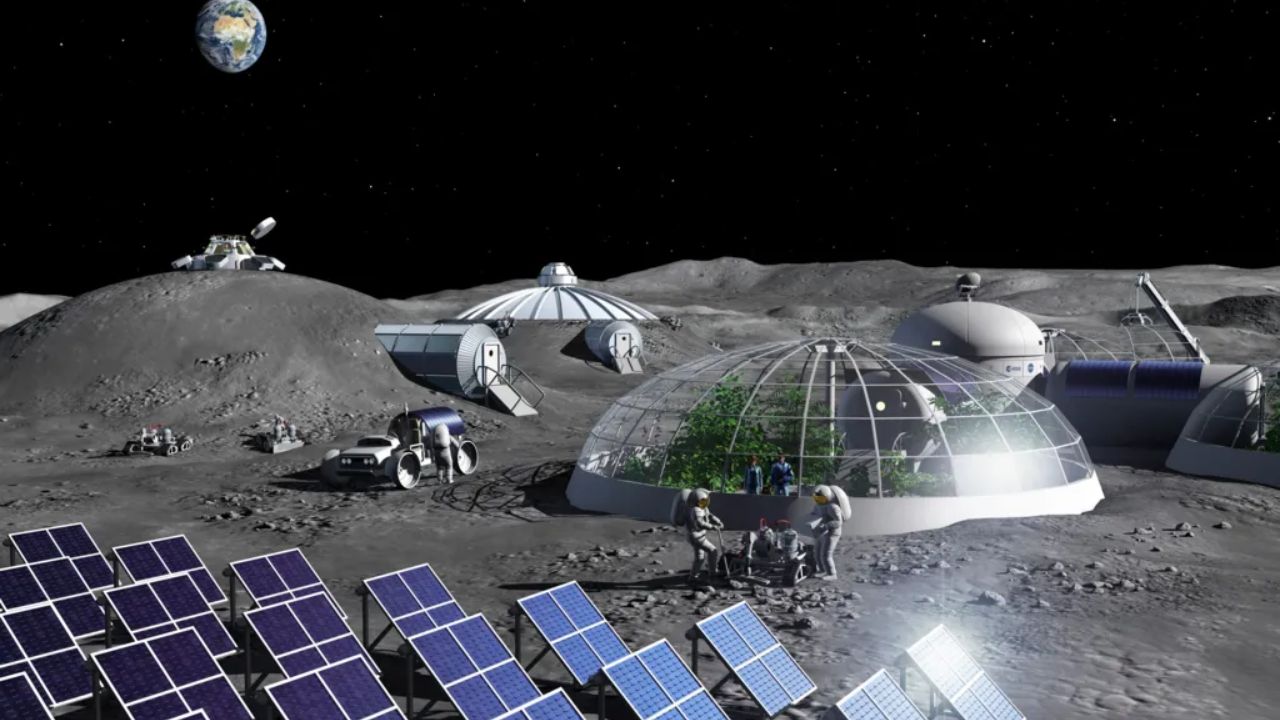
Nasa Administrator Jared Isaacman has outlined a rigorous schedule involving one crewed lunar landing annually starting in 2028. By the fifth Artemis mission, scheduled for later that same year, the agency intends to begin the assembly of a permanent Moon base.
The engineering crisis of lunar landers
Despite these lofty goals, the infrastructure required to put “boots on the ground” is currently lagging schedule. To facilitate lunar landings, Nasa has engaged two private sector giants: Elon Musk’s SpaceX and Jeff Bezos’s Blue Origin.

SpaceX is developing a 35-metre-tall lunar variant of its Starship rocket, while Blue Origin is working on its Blue Moon Mark 2 craft. However, a report from Nasa’s Office of Inspector General, released on 10 March, highlights significant setbacks.
The SpaceX lunar Starship is reportedly at least two years behind its initial delivery timeline, with further delays anticipated. Similarly, Blue Origin’s Blue Moon is trailing by at least eight months, with a 2024 design review revealing that nearly half of the identified technical issues remain unresolved over a year later.
These modern landers are vastly different from the compact Eagle module used in 1969; they are designed to transport massive amounts of infrastructure, including pressurised rovers and base components.
The sheer mass of this equipment necessitates an unprecedented amount of propellant, which cannot be launched in a single flight. Nasa’s current strategy involves a complex “propellant depot” orbiting the Earth.




This depot would require more than ten separate tanker flights over several months to be topped up. Simeon Barber, a space scientist at the Open University, noted that managing super-cold liquid oxygen and methane in a vacuum, and transferring these fuels between spacecraft, represents one of the most demanding engineering feats ever attempted.
Barber cautioned that if fuelling issues can cause delays on a launch pad – as seen during the Artemis II preparations – performing the same task in orbit will be “much more difficult”.
Geopolitical pressures and the China factor
The timeline for Artemis III, which is intended to test the docking of the Orion capsule with landers in Earth orbit, is currently set for mid-2027.
However, with SpaceX’s Starship yet to complete a successful orbital flight and Blue Origin’s New Glenn rocket having only two launches to its credit, experts like Barber describe this target as a “very steep ask”.
Political considerations are also driving the 2028 target for a crewed landing. This date aligns with President Trump’s renewed space policy, which aims to return Americans to the Moon before the conclusion of his current term.
While independent analysts doubt the realism of this deadline, the US Congress has continued to allocate billions of dollars to the programme, spurred by the rapid advancement of China’s space capabilities.
China has emerged as a formidable competitor, with a stated objective of landing astronauts on the lunar surface by 2030. Unlike the complex American plan involving orbital refuelling and depots, the Chinese approach utilizes a simpler two-rocket system with a separate crew module and lander.
Experts suggest that if the Artemis schedule continues to slip, China may well win the race to return to the Moon.
The distant horizon of the Red Planet
While the Moon serves as the immediate objective, the Artemis programme is ultimately viewed as a stepping stone to Mars. Elon Musk has suggested that human missions to the Red Planet could occur before the end of this decade, but many specialists believe the 2040s are a more realistic timeframe.
The challenges of a Martian voyage – spanning seven to nine months through intense radiation with no hope of rescue – dwarf those of lunar travel. Furthermore, landing a crewed spacecraft through Mars’s thin atmosphere and subsequently launching it back into space presents a problem of “staggering complexity”.
Nevertheless, the activity at the Kennedy Space Centre suggests a fundamental shift in how space exploration is conducted. The presence of new facilities built by SpaceX and Blue Origin alongside government infrastructure indicates a robust new partnership between the public and private sectors.
Josef Aschbacher, Director General of the European Space Agency (ESA), remains optimistic about the long-term vision, noting that the “Moon economy” will inevitably develop, even if the pace is slower than initially hoped.
The ultimate value of these missions may transcend engineering and economics. ESA astronaut Alexander Gerst, reflecting on his time aboard the International Space Station, expressed a wish that all eight billion people could see the Earth from space.
He described the planet as a “small, fragile, beautiful” world that is currently not cared for well enough. According to Aschbacher, such a shift in perspective could foster a “very different life on planet Earth.”