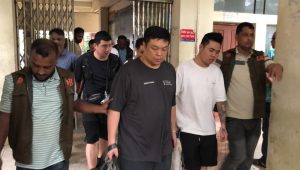
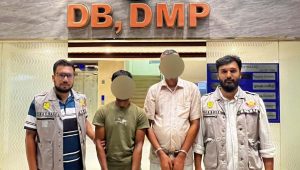
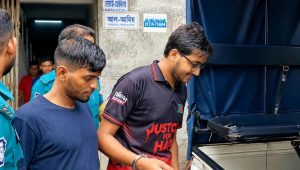
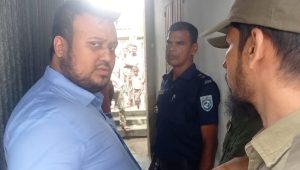
Individuals granted bail by the courts are increasingly being arrested again within seconds of walking out of prison gates, amid growing allegations of a lucrative “shown arrest” racket involving law enforcement officers and prison officials.
The practice, carried out through Production Warrants (PW) that allow authorities to show a detainee arrested in another case, has reportedly become widespread at prison gates across the country. Critics say the system is being abused to harass detainees and extract money, raising questions about the rule of law.
Reports indicate that members of police intelligence units often notify district police and prison authorities when a particular inmate is about to receive bail. Once the prisoner exits the jail gate, he may be shown arrested in another case under a PW order.
Lawyers and former officials say the practice has effectively created a parallel system where detainees must negotiate payments to avoid being re-arrested.
The alleged harassment has been reported at several prisons, including Dhaka Central Jail in Keraniganj and the three prisons in Kashimpur, Gazipur, as well as in many other prisons around the country.
Legal experts question how a person who has just been released on bail could immediately be involved in another crime warranting arrest.
Supreme Court lawyer Barrister Jyotirmoy Barua told TIMES of Bangladesh that concerns about such practices had been raised earlier.
“We feared after August 5, 2024 that many cases would be filed against unnamed accused, and that has indeed happened,” he said. “If the culture of shown arrest is not stopped, there will be serious concerns about establishing the rule of law.”
Former inspector general of police Nurul Huda also described the practice as problematic.
“After a person secures bail in one case, there is no legal obligation to arrest them in another case immediately. This has become a bad practice,” he said, suggesting that the matter should be brought before the courts so that investigations can proceed under judicial supervision.
Allegations of irregularities inside prisons
Beyond the “shown arrest” practice, allegations of irregularities inside prisons have also surfaced. Prisoners reportedly receive additional privileges by managing prison officials and guards.

These privileges allegedly include unrestricted use of mobile phones, special meals during transit to and from court, and opportunities to spend time with family members — all in exchange for money.
Prison authorities, however, deny involvement in the shown arrest process.
Inspector General of Prisons Brigadier General Syed Mohammad Motaher Hossain told TIMES that prison authorities are not responsible for shown arrests.
“This is carried out by law enforcement agencies under government decisions. The prison authority has no role in it,” he said.
Responding to allegations of illegal privileges for inmates, he added that steps are being taken to prevent prisoners from using mobile phones or receiving unlawful benefits.
He acknowledged, however, that unethical activities may occur during prisoner transport to and from courts. To address this, the prison department has written to the Ministry of Home Affairs requesting the installation of IP cameras inside prison vans.
Police response
Officials from the Dhaka Metropolitan Police (DMP) say bail numbers have risen significantly in recent months, particularly in politically linked cases.
Deputy Commissioner of the DMP’s prosecution division Mia Mohammad Ashish Bin Hasan told TIMES that more than 40 cases on average are seeing bail orders every day.




“The overall number of bail orders has increased,” he said.
He added that authorities would take action if specific complaints were received about detainees receiving unethical benefits during transit.
DMP Additional Commissioner (Crime and Operations) SN Nazrul Islam said that if a detainee has other pending cases, police inform prison authorities and show the person arrested after bail is granted.
“For that, the court issues a warrant,” he said.
Prison officials describe long-standing practice
Dhaka Central Jail Senior Jail Superintendent Faruk Ahmed said the number of inmates released on bail roughly matches the number of new detainees entering the prison.
“On average, 250 to 300 prisoners are released and a similar number of new inmates enter daily,” he said.
He acknowledged that police intelligence agencies collect bail lists from the court prosecution branch and notify prison authorities if they plan to show someone arrested in another case.
Describing it as a practice that has existed for around 20 years, he said he had heard allegations of financial dealings but was not aware of any prison staff being involved.
He also noted that Kashimpur prisons see more such incidents due to the higher number of inmates.
Senior Jail Superintendent of Kashimpur Central Jail-2, Al Mamun, said lists for shown arrests are sent to prisons by the prosecution division and Special Branch.
After that, detainees are detained again at the jail gate through PW orders, he said.
According to him, around 100 inmates receive bail each week. Overcrowding in prisons in Dhaka, Gazipur and Narsingdi often leads to inmates being transferred to Kashimpur.
He added that Kashimpur previously housed around 6,500 inmates but currently holds about 4,500.
‘Clearance trap’ allegations
Another controversial aspect is what detainees describe as a “clearance trap.”
Once a bail order is issued, the release documents reach the prison, after which officials reportedly begin “verification” and “police clearance” procedures before allowing the inmate to leave.
According to allegations, negotiations begin during this stage involving prison officials and members of police units such as the District Special Branch (DSB) and City Special Branch (CTSB).
If payments are made, detainees can reportedly secure release within two hours. If not, they may face a PW order and a fresh shown arrest.
Political figures — particularly leaders of Awami League, former MPs and wealthy detainees — are reportedly asked to pay between Tk50,000 and several lakh taka to avoid re-arrest at prison gates.
Similar allegations have surfaced in prisons including Dhaka, Kashimpur and Chattogram.
Government warnings against harassment
Senior government officials have previously warned against harassment of innocent individuals in politically motivated cases.
Former home adviser Jahangir Alam Chowdhury of the has said many innocent people were implicated in cases related to the July movement.
Former inspector general of police Bahaarul Alam also said strict action would be taken against complainants who filed false cases following the July–August uprising.
Despite such warnings, several detainees released on bail have complained of harassment and financial demands during the clearance process.
Individuals released from Dhaka Central Jail in Keraniganj told TIMES that the practice has become common for detainees arrested in cases linked to the July–August 2024 incidents.
Without negotiating payments, securing release from prison has become a matter of luck, they said.
Police stations such as Uttara, Jatrabari, Rampura, Savar and Ashulia reportedly filed many of the cases linked to those incidents. Even individuals who are not politically affiliated say they have been arrested in those cases due to personal disputes.
Directive sparks controversy
The issue has drawn further attention after a directive from a senior police official.
On February 24, Rajshahi Range Deputy Inspector General Mohammad Shahjahan reportedly instructed police superintendents in eight districts to show influential leaders and activists of now-banned Awami League and its affiliated organisations arrested in other cases to prevent their release on bail.
The instruction sparked widespread criticism, with observers saying such directives risk encouraging the continued use of shown arrest practices by local police stations.
Rights advocates warn that unless the practice is curtailed, it could deepen concerns about misuse of legal procedures and weaken public confidence in the justice system.