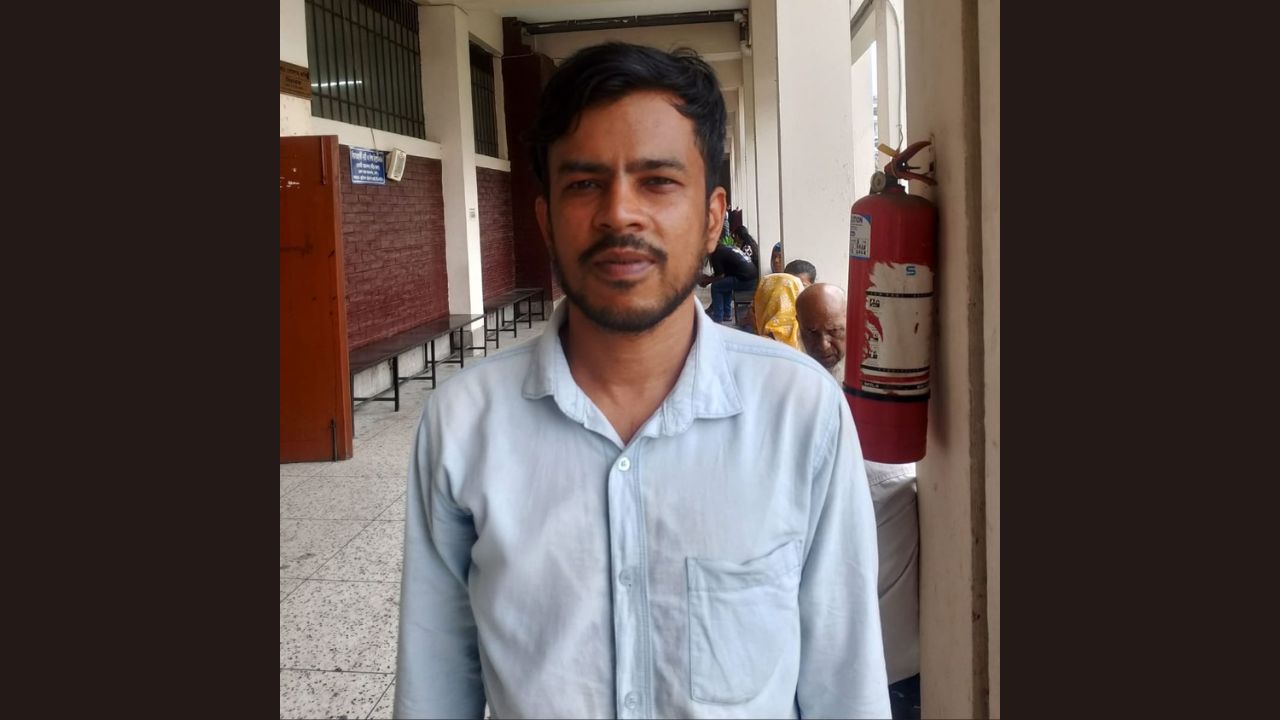

In 2010, Nurul Amin – known locally as Danny Babu – was accused of rape and murder in a case filed at Kadamtali police station in Dhaka. Prosecutors described him as the main suspect. At the time of the alleged crime, he was 13.
Yet he was treated as an adult.
For more than a decade, he remained behind bars.
It was only years into his imprisonment that a new defence lawyer challenged the official record of his age, asking the court to recognise that he had been a child at the time of the incident. The court ordered fresh scrutiny of the documents, along with radiological tests to determine his age.
The results were stark. Medical assessment concluded that he had been 13 years and eight months old when the crime took place.
By then, however, Nurul Amin had already spent 13 years in custody, from 2010 to 2023.
After the court formally declared him a minor at the time of the offence, he was released on bail. His case is now being heard in a juvenile court — more than a decade after his arrest.
Legal experts say prosecuting and imprisoning him as an adult, despite his age, conflicts with child protection laws and amounts to a miscarriage of justice.
Child rights and human rights activists described the case as an example of negligence and judicial weakness.

They said compensation should be considered, though no financial redress could fully undo the harm caused. Such incidents, they added, raise serious questions about the integrity of the justice system.
Case details
Court documents show that on 7 May 2010, a housewife named Yasmin was raped and killed in the capital. Her daughter was also murdered the same day. A case was filed on 8 May at Kadamtali police station.
The investigation was initially led by Sub-Inspectors Golam Mostafa and Shah Alam of Kadamtali police station. Investigators from the Detective Branch later took over the inquiry.
In the chargesheet, Nurul Amin was named as the primary accused, with Al Amin listed as the second and Miraj Molla as the third. All three were later sent to prison by court order.
On 2 April 2019, defence lawyer Mizanur Rahman Mizan filed a petition claiming that Nurul Amin was a minor at the time of the alleged offence and sought to transfer the case to a juvenile court.



Following a court order, a radiological test was conducted. A report issued on 13 November 2022 stated that he was 25 years old at the time of examination. Based on that assessment, his age at the time of the killings was calculated to be 13 years and eight months — legally a child.
On 1 August 2023, Dhaka’s Women and Children Repression Prevention Tribunal-3 formally declared him a minor at the time of the incident. He was granted bail in September 2023, and proceedings against him are now continuing separately under the Children Act.
Court sources said that after he was recognised as a child, his trial began afresh under juvenile law. A hearing for witness testimony was scheduled for 29 January this year, but no prosecution witnesses appeared. The court has now set a new date in May.
Meanwhile, the other two defendants were sentenced to death by the trial court. Both have appealed to the High Court.
Why Nurul was recorded as an adult
According to case documents, the investigation went through several stages at the time.
Shah Alam, Sub-Inspector at Kadamtali police station who later handled the case, said an earlier investigating officer had relied on a birth certificate that indicated Nurul was an adult.
“The previous officer mentioned in the report that, according to the birth certificate, he was of age,” he said. “But when I reviewed the case, I found that he was in fact a minor.”
He added that school certificates and other documents were not initially submitted to the court by Nurul Amin’s first lawyer. It was his subsequent lawyer, Mizanur Rahman Mizan, who later filed an application raising the issue of age. In response, several review committees were formed and, following a radiological test, he was officially recognised as a child at the time of the offence.
Sazzad Hossain Sabuj, Public Prosecutor of the Women and Children Repression Prevention Tribunal-3, said he had taken up the role recently and that the events predated his tenure.
“It is the responsibility of the defence to establish whether the accused is innocent or a minor. That is not the duty of the prosecution,” he said, adding that the case was nevertheless “regrettable” and that both the crime and its aftermath were tragic.
Defence lawyer Mizanur Rahman Mizan said, “He served 13 years before being recognised as a minor. The trial is now proceeding under juvenile law.”
Now on bail after being formally declared a minor at the time of the offence, Nurul Amin told TIMES that he maintains his innocence.
“I did not commit any wrongdoing. Thirteen years in prison was extremely hard,” he said. “I was the youngest in my cell.”
He said he had scored 3.25 in his Secondary School Certificate examinations and had hoped to continue his studies.
“After coming out of prison, I felt that if I could study again, I could rebuild my life,” he said. “If I get the opportunity to enrol in the Open University while working, I want to study. I do not know how possible that is, but I want to continue my education.”
In conflict with the law
Bangladesh’s Children Act 2013 defines anyone under the age of 18 as a child. Section 33 states that a child cannot be sentenced to imprisonment, although they may, if necessary, be sent to a juvenile development centre.
The law also says that if a child accused of serious crimes — such as murder or rape — turns 18 while the case is still ongoing, or while in custody, the authorities must transfer them to a central or district prison with the approval of the juvenile court.
In Nurul Amin’s case, however, none of these provisions were applied at the time, according to legal and human rights advocates, who say the process appears to have been inconsistent with the Children Act.
Afzal Khan, Programme Manager at Educo Bangladesh, told TIMES that the length of time taken to determine and prove his age reflected “a form of negligence and judicial weakness”.
“It is inconsistent with the law,” he said.
Human rights lawyer Salma Ali said that while lawyers may make mistakes or overlook information, it was the court’s responsibility to examine the matter carefully.
“This case should be resolved swiftly,” she said.
Farhana Sultana, Project Manager at Action for Social Development, an organisation working on child rights, said such incidents fundamentally contradict the Children Act and raise broader concerns about the justice system.