The new government should review foreign agreements signed under the previous interim administration to ensure they reflect its own policy priorities, a macroeconomist and public policy analyst has said.
Speaking at a media briefing in Dhaka on Thursday, he called for a reassessment of all “known and unknown” agreements with foreign entities, particularly as the government weighs whether to defer Bangladesh’s graduation from Least Developed Country (LDC) status.
Bhattacharya, a distinguished fellow at the Centre for Policy Dialogue (CPD) and convener of Citizen’s Platform for SDGs, said outstanding liabilities and external commitments must be examined carefully to understand their fiscal and policy consequences.
The review, he added, should not be confined to agreements involving the United States or port facilities.
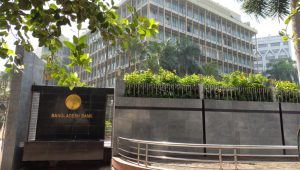
The event, titled “Macroeconomic Benchmark for the New Government”, was organised by the Citizen’s Platform for SDGs at the BRAC Centre Inn in the capital.

Debapriya proposed forming a dedicated transition team to evaluate the commitments, liabilities and policy implications inherited from the outgoing administration.
The team could prepare ministry-wise briefing documents and conduct a thorough assessment of past decisions, including procurement contracts and external agreements.



Criticising the interim administration, he said it failed to articulate a coherent economic reform strategy, leaving key policy directions unresolved at the time of transition.
At the briefing, Citizen’s Platform for SDGs presented a paper identifying three principal economic challenges facing the administration: fragile macroeconomic stability, subdued private investment and employment, and narrowing fiscal space.
Delivering the keynote address, CPD Research Director Towfiqul Islam Khan said inflation continued to weigh on the economy despite easing global price pressures.
Bangladesh’s 12-month average inflation stood at 8.77 per cent in January, well above the central bank’s 7 per cent target.
By comparison, global inflation fell by 4.6 per cent in the 2024–25 financial year and declined by a further 7.3 per cent during the July to January period of 2025–26. While food inflation has eased, non-food inflation remains elevated.
Coupled with modest wage growth, this has eroded real incomes and deepened pressure on low- and fixed-income households, he said.
He said a letter has already been sent to the UN headquarters in New York seeking deferment of the LDC graduation timeline.
On the fiscal front, Towfiqul Islam Khan said domestic revenue mobilisation is no longer sufficient to meet recurring expenditures.
Borrowing to service existing debt has intensified, while weak revenue collection and rising non-Annual Development Programme (ADP) spending have narrowed policy space. ADP implementation in FY25 and FY26 has dropped to historic lows.
To address these challenges, the platform recommended imposing a strict expenditure ceiling for the remainder of the current fiscal year and formulating a comprehensive economic stabilisation plan.