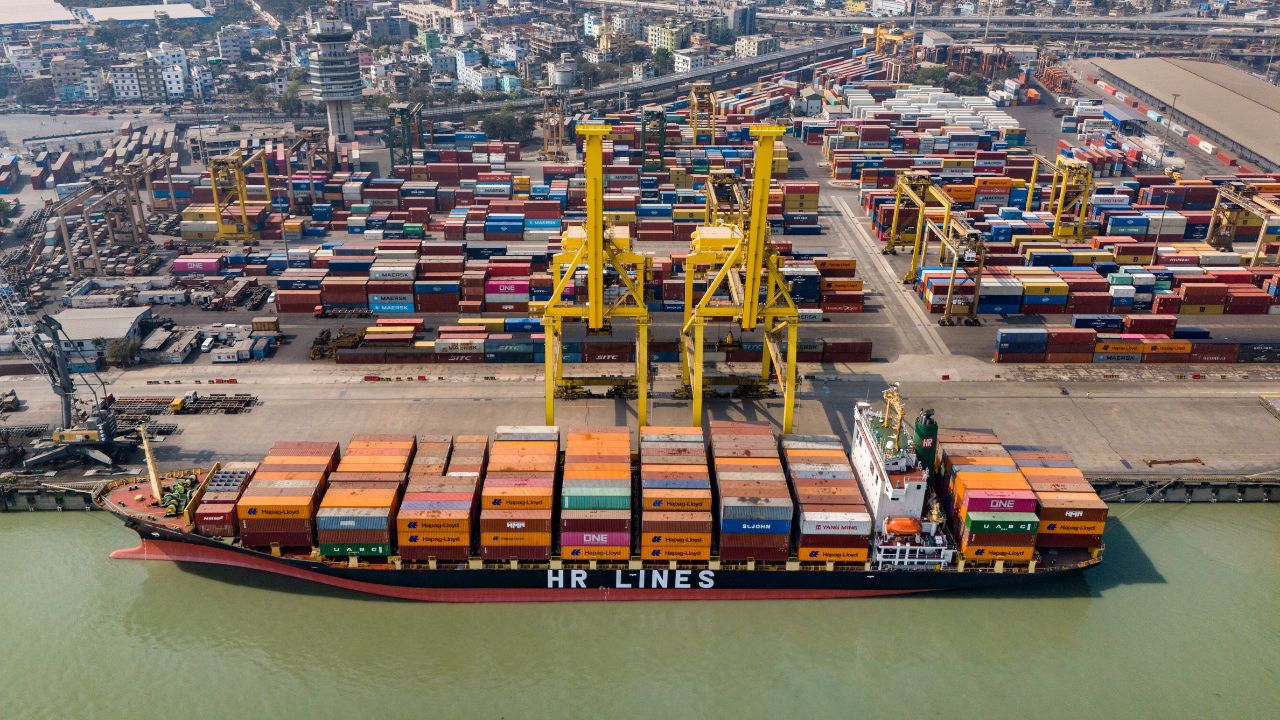
A vessel booked to carry 750 export containers is at risk of departing without its cargo as an ongoing workers’ strike is heavily disrupting operations at Chattogram port.
The MSC Polo 2, which arrived at the country’s premier seaport on 31 January, was scheduled to set sail for Singapore on the morning of 2 February, said port officials.
But as the strike is hampering loading operations, the containers were unable to reach jetties at the General Cargo Berth (GCB) in time, they added.
Port sources also informed that the vessel will likely leave without the cargo on 3 February unless loading operations are completed within the remaining time.
At least four other vessels docked at the GCB, New Mooring Container Terminal (NCT), and Chattogram Container Terminal (CCT) also missed their scheduled departure, with most consignments comprising garment exports.
Against this backdrop, exporters have warned that shipments routed through transshipment hubs to Europe and North America may miss their planned transfer onto mother vessels.
As such, the buyers may cancel their orders, seek penalties or discounts for the delay.
The situation is showing no signs of letting up soon though as the Chattogram Port Protection Council announced a fresh 24-hour strike on 3 February.

Mohammad Rafique Chowdhury, vice-president of the Bangladesh Garments Manufacturers and Exporters Association, said the garments industry is under severe strain.
“So, if shipments are missed, it could cause order cancellations, discount seeking, and other complications,” he told TIMES of Bangladesh
“We are deeply worried. If the situation is not resolved quickly, the export sector will face further disaster,” added Chowdhury, who is also managing director of Chowdhury Fashion Wear Ltd.
Fazle Ekram Chowdhury, President of the Berth Operators Association, questioned why operations at the GCB should be affected by a programme centring the NCT issue.
“Containers are not reaching on time due to the programme, which is having a direct adverse impact. If the goods do not arrive, ships will have no choice but to sail without them,” he said.
The ongoing strike has sharply reduced the container movement between the port and 21 inland container depots (ICDs) in Chattogram.
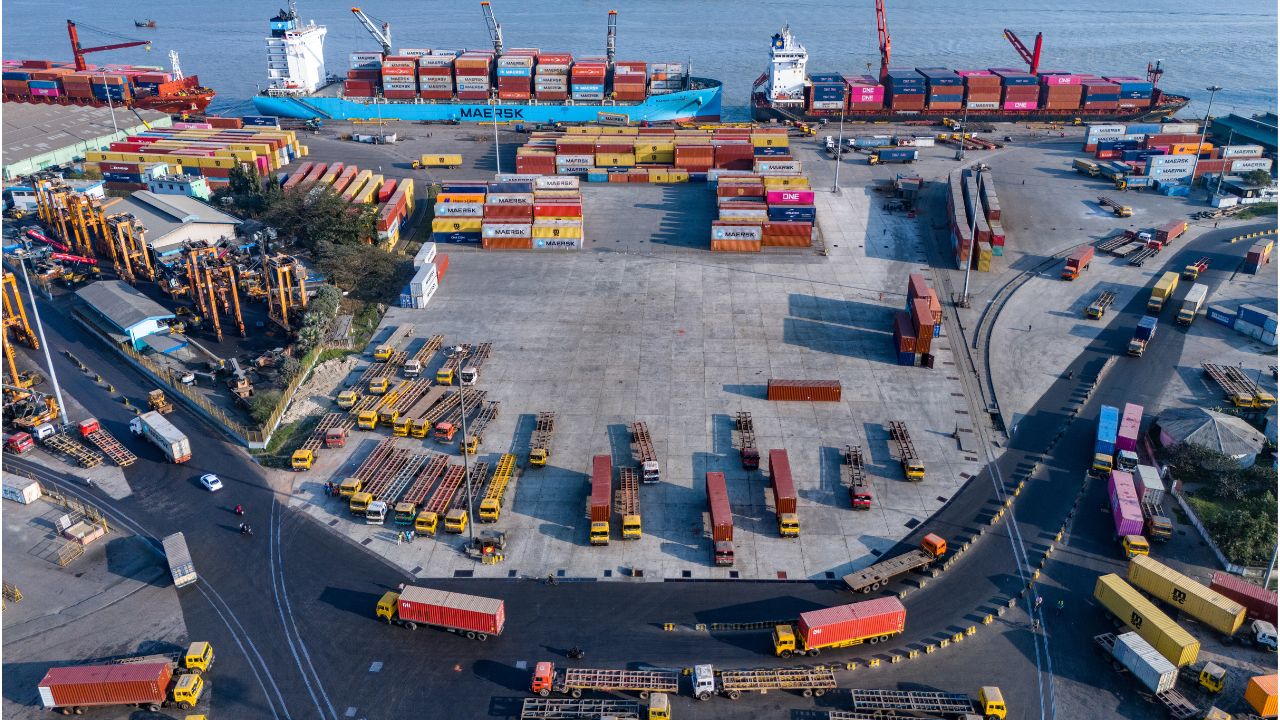



Normally, up to 2,500 twenty-foot equivalent units (TEUs) of export containers are delivered from the ICDs to the port each day, while around 8,000 TEUs are stored inside the port.
Container movement has fallen significantly amid the disruption, with 2,941 TEUs delivered on 31 January while 1,610 TEUs reached the port on 1 February and 1,472 TEUs on 2 February.
Ruhul Amin Sikder, secretary general of the Depot Owners’ Association, said the impact is visible.
“Export-import container handling has fallen by more than half due to the strike. If this continues, goods may become stuck at depots as well as the port yard,” he added.
The current slowdown has also affected deliveries of imported goods.
Typically, between 3,500 TEUs and 4,000 TEUs of imported cargo are delivered daily but recent figures show a steep decline.
About 4,099 TEUs were delivered before the strike on 30 January while the volume fell to 3,102 TEUs on 31 January before declining to 1,750 TEUs on 1 February and 1,684 TEUs on 2 February.
Reduced deliveries subsequently led to container accumulation at the port. In a single day, 4,434 TEUs were added to the yard, with the total at 37,307 TEUs on 2 February.
With a storage capacity of 59,000 TEUs, this indicates that 36.76 per cent of the yard space is still vacant. However, officials say the rapid buildup could lead to a serious congestion in no time.
Amid the unrest, some 15 officials were transferred from Chattogram port to the Mongla and Payra ports on 2 February.
Earlier, several officials were transferred to the Pangaon Inland Container Terminal (ICT) and Kamalapur ICD.
However, port sources say some of the transferred officials continue to participate in the strike without joining their new postings.
Md Humayun Kabir, coordinator of the Chattogram Port Protection Council, alleged that the relevant authorities are resorting to punitive measures rather than approaching a dialogue.
“We demand the removal of Chairman SM Moniruzzaman, Director (administration) Omar Faruk, and Chief Personnel Officer Nasir Uddin,” he said.
“And if our transferred colleagues are not reinstated, then the programme will only intensify,” added Kabir, who works as an audit assistant at the port.
Attempts to contact Omar Faruk, director (administration) of the Chattogram Port Authority (CPA), for a comment were unsuccessful by the time this report was filed.
On condition of anonymity, a senior CPA official said formalities for the agreement to lease NCT operations to DP World, a global port operator based in Dubai, are almost complete.
“Round-the-clock meetings are taking place at the PPP Authority in Dhaka. Negotiations are at a final stage. An agreement may be reached within a day or two,” the source said.
Shipping Adviser Brigadier General (retd) Dr M Sakhawat Hossain told journalists on 2 February the government would not take decisions that go against national interests.
“Those involved in the current situation are being investigated,” he said.
“Operations are being disrupted, which is undesirable. The ministry supports whatever is beneficial for the port and country,” he added.