





Alexei Maximovich Peshkov, popularly known as Maxim Gorky (1868-1936), was the Russian and Soviet writer and proponent of socialism who was nominated five times for the Nobel Prize in Literature. He spent much of his childhood in kinship care. He was only seven when he first went to live with his working-class grandparents in Nizhny Novgorod after his father died. His grandfather was a violent man and used to abuse his wife and son. As a child, Alexi was once beaten unconscious by his grandfather when he tried to protect his beloved grandmother from her husband’s wrath. His grandmother always loved him, who became the sole source of kindness in his childhood, treating him well and telling him endless folk stories.
In his book “My Childhood,” he wrote, “Her words were like music and like flowers. They bloom in my memory like everlasting blossoms. I remember her smile as a dilation of her large eyes and a cheerful flash of her white teeth that gave her face an inexpressible charm. ….”

Gorky expressed in his book that a child’s early years should be filled with wonder, discovery, and the gradual unfolding of one’s imagination, rather than fear, pressure, and judgment. Childhood should be a sanctuary for freely growing curiosity, a space for the trials and errors of the learning process, and a place for meeting the world with innocence rather than anxiety.

This, however, is not the case in Bangladesh, where many three to four-year-olds are already taking examinations, having not yet mastered the delicate art of play. The neglect of the gentler aspects of education endangers the essence of childhood.
Recently, I was deeply disturbed to learn about the stress and trauma a four-year-old child is already experiencing when I spoke to my niece about her daughter. I envisioned light-hearted anecdotes of playful learning, joyful picture books, and the small pleasures of early childhood education. I was astonished to learn that the child, with child-bright eyes and an excited voice, had recently completed an exam. To my growing horror, she further explained that children were dismissed from the school for failing their exam. It is hard to believe the amount of pressure that is predicated on a child barely out of toddlerhood.
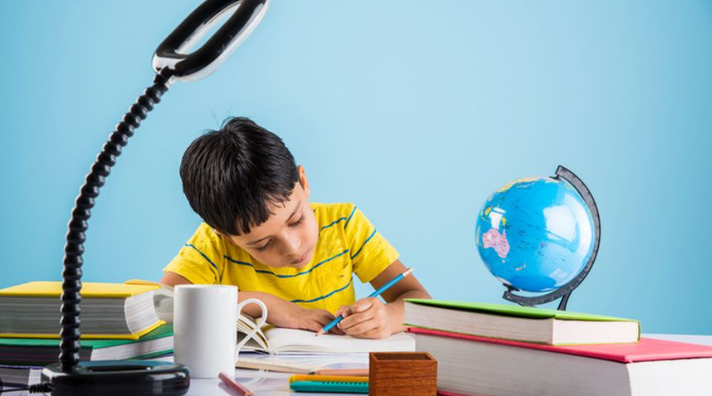
This is the time when children are learning to hold a pencil and articulate their feelings, not the time for a written exam focused on recall. What assumptions can be made regarding our educational principles? What implications can be made concerning the impressionable young mind? This situation is far from unique. Many private English medium and missionary educational institutions in Bangladesh have implemented a strict, examination-oriented educational system as early as the play and nursery stages. They are often self-described as elite providers and charge exorbitant amounts. However, the processes utilised on the youngest learners tend to disregard educational and psychological principles, neuroscience, and the effective approaches to early education. Instead of fostering a child’s innate sense of wonder, schools are introducing evaluations, rankings, and competitions to children who are still struggling with the basics of shoelace tying.
The situation in developed nation is different where they see most effective pedagogy for young children is play, facilitating exploration, discussion, and movement. During the age of three to four, the brain is in a phase of rapid development, and the most effective stimulation for this is through active engagement, as opposed to passive learning. An active learning approach is particularly important as the consequences of stress and pressure at this age tend to greatly affect a child’s learning throughout their life as a result of increased anxiety and a reduction in self-esteem. There are no formal examinations to children under the age of six as this is viewed detrimental at this age. In several European countries such as Finland, Sweden, Denmark, Germany, and the Netherlands, the legal and educational framework for early years education is anchored on the premise of play-based learning. No children at playgroup age are formally tested. Most standardised tests are also not done before the age of seven and when they are, they are of low-stakes nature.
Finland is regarded as one of the best in the world when it comes to education, which is why they do not do exams, do not rank, and do not give much homework in the early years. Teachers observe German kindergartens just to watch how children problem-solve, work creatively, and join in social and playful activities. In Sweden and Norway, they do social activities, music together, and do firsthand activities, while also spending much of the day outside. The first level of schooling in the UK, “Reception,” which is even before the Nordic countries start schooling, is based on the Early Years Foundation Stage.
Early childhood education in Bangladesh contrasts with global systems of education. The common perception among parents that examination-centric teaching methods correlate with higher educational quality, to the detriment of their children’s emotional and cognitive development, is unfortunate. Schools providing inadequate educational opportunity, support and psychological care in their institutions, in return for substantial fees, create a shocking paradox. Early year education system in Bangladesh is in urgent need of a change in thinking if the country hopes to foster thoughtful, creative, and resilient generations. The imposition of formal examinations prior to the age of six ought to be prohibited.
The assessments should be replaced with evaluative measures that shift the focus towards play. Teachers equipped with relevant expertise should be employed in early childhood settings. There is a need for all institutions to be held accountable for practices that inflict harm upon young children. Parents require support in understanding that early childhood education should focus on the emotional security, curiosity, and enduring love of learning, rather than competition. When a young child is faced with failure, the imposition of discipline becomes emotional control.
Europe provides evidence on how children can develop into capable, confident, and well-functioning adults without the need for examinations early on in their schooling careers. The same can be said for Bangladesh. When young children are forced to sit for examinations where they are judged, compared, and possibly threatened with removal, the scenario ceases to become education. If all across Europe proves play-based education to be the best means of producing emotionally and academically robust adults, then there is no justification for Bangladesh not to be in the same position.
To foster creativity and stimulate innovative thinking in the children, the current education system must begin to prioritise education reforms for the better. Bangladesh should aim to embrace European-style play-based models, carefully integrating these to the local cultural context, so as to create a well-balanced system that appreciates childhood as a one-of-a-kind, irreplaceable phase of life. Now question is: Will we continue putting a stress burden on our youngest children, or give them the childhood they so rightly deserve?
The writer is an educator, author, and researcher


