
According to the Centre for Policy Dialogue (CPD), the most difficult challenges for the next government will be reviving investment and generating employment.
The private research organisation also said that the new administration must prioritise controlling inflation and overcoming the current investment slowdown.
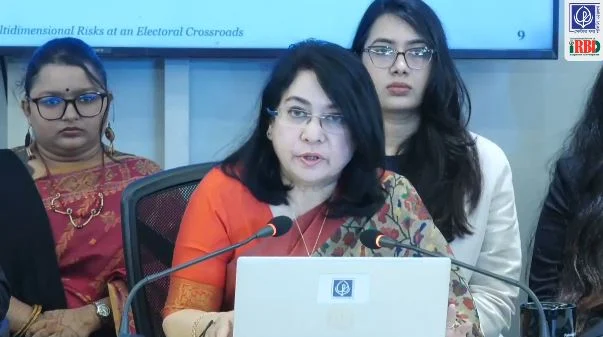
The observations were shared at a programme titled “Bangladesh Economy 2025–26: Multidimensional Risks at the Electoral Crossroads,” held on Saturday at CPD’s office in Dhanmondi.
CPD Executive Director Fahmida Khatun presented the keynote paper, while CPD Distinguished Fellow Mustafizur Rahman and Research Fellow Khondaker Golam Moazzem were also present.
Fahmida Khatun said the country is currently facing a severely weakened investment climate due to high interest rates, political uncertainty and a lack of confidence, discouraging domestic and foreign investors, leading to shrinking employment opportunities and growing economic unease.

She warned that failure to revive investment would deepen inequality and social instability. Job opportunities, particularly for young people, have become increasingly limited, putting excessive pressure on government employment amid quota-related complications and persistently high inflation. Together, these factors have created intense economic stress for many households.
Highlighting future prospects, Fahmida said Bangladesh’s greatest strength lies in its young population, with an average age of just 26 to 27 years.
If properly harnessed, the skills and innovative capacity of the youth could help restore economic momentum, she said, adding that young people are best positioned to adapt to the rapid technological changes shaping the modern economy.




Presenting key macroeconomic indicators, she further said that the implementation rate of the Annual Development Programme (ADP) has fallen to its lowest level in a decade, adding that private investment has dropped to a historic low, while foreign direct investment has also declined sharply. Although food inflation has eased somewhat, non-food inflation remains at a distressing level, she said.
On the banking sector, the CPD executive director said reform initiatives undertaken by the interim government must continue under the elected government.
She stressed the need for tough decisions, including mergers or closures of weak banks, to restore depositor confidence, backed by clear political commitment and policy direction.
On revenue mobilisation, she called for exploring new avenues to boost tax collection, encouraging taxpayers, withdrawing unnecessary tax exemptions, preventing illicit financial flows, and strengthening oversight of project spending.
She also urged restraint in bank borrowing to manage fiscal pressures.
Addressing inflation, Fahmida said it has now become a structural problem and cannot be controlled solely by raising interest rates.
Reforms in the food supply system, curbing hoarding, investing in transport and storage infrastructure and making timely import decisions based on reliable data are essential, she said, emphasising that food security should be treated as a matter of national security.
Fahmida also stressed that sustainable growth is impossible without comprehensive banking sector reforms, including reducing political influence, enforcing the Bank Resolution Act, ensuring the independence of the central bank, and properly implementing the Bank Companies Act.
On the electoral process, Fahmida said CPD expects a transparent, neutral and participatory election.
She underscored the importance of preventing the misuse of money and ensuring a violence-free environment so that voters can exercise their rights freely.
Prof Mustafizur Rahman warned that the rising burden of domestic and foreign debt has made interest payments one of the largest components of the national budget, increasing the risk of Bangladesh falling into the middle-income trap.