Iran is currently grappling with one of its most significant waves of protests in years. What began as demonstrations over economic hardship has quickly spiraled into a nationwide uprising, reflecting broader political discontent.
The unrest, now in its second week, has led to at least 45 deaths, including eight children, and over 2,200 arrests, with the Iranian government ramping up repression in response. These protests are notable for their scale, intensity, and the diverse range of grievances expressed by the Iranian population.
As the country faces its worst internal crisis in years, the question remains: where will Iran go from here?
At the core of the unrest lies Iran’s weakened economy. Years of international sanctions, particularly related to its nuclear programme, have exacerbated the country’s financial troubles.

The rial has collapsed to approximately 1.4 million to the US dollar, triggering a surge in inflation that has made everyday goods unaffordable for many Iranians.
Basic necessities such as food, medicine, and fuel are increasingly out of reach for large segments of the population, particularly the urban poor.
The situation has been worsened by the economic aftermath of a 12-day war in June with Israel and the United States, during which US forces struck Iranian nuclear facilities, further isolating the country.
Iran’s economy has also suffered from chronic mismanagement, corruption, and a lack of substantial reforms. While the government has introduced some measures, like a small monthly subsidy for food staples, analysts argue that such temporary solutions are unlikely to quell the widespread anger. These economic factors have provided the perfect backdrop for the current protests.

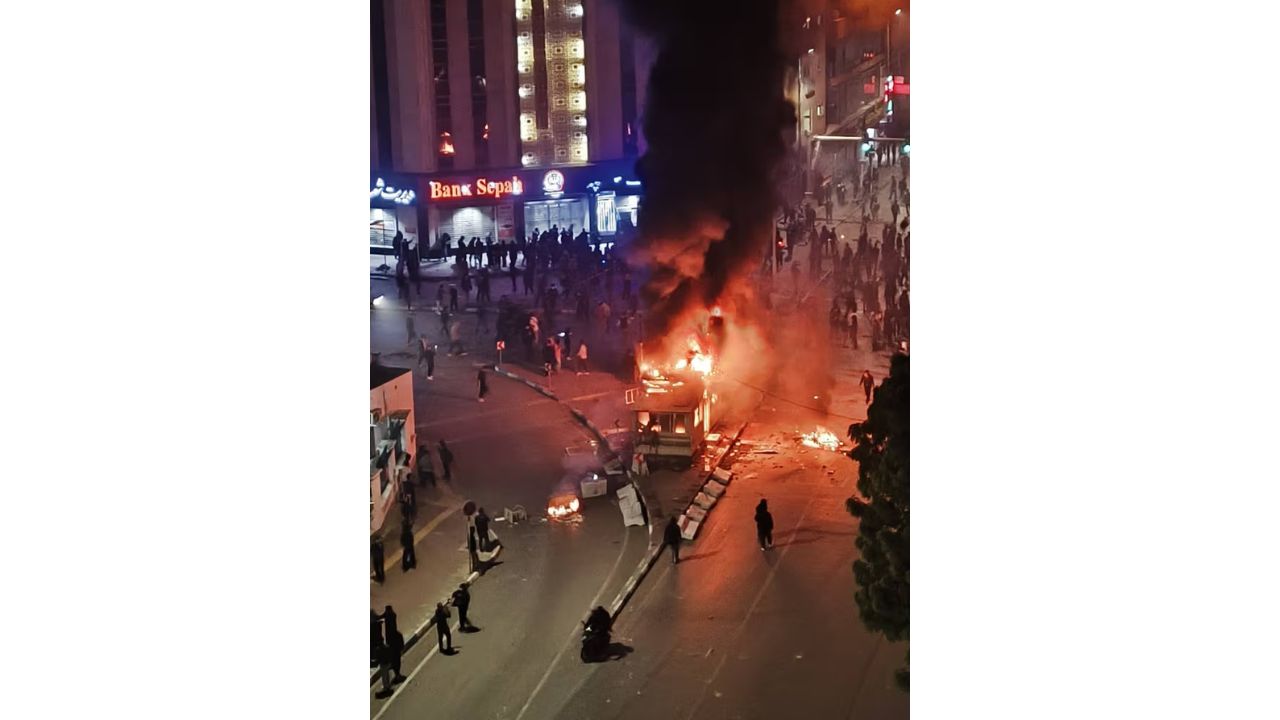
The protest from economic grievances to political dissent
The unrest started in Tehran’s Grand Bazaar, where shopkeepers protested the rapid depreciation of the rial, a key factor driving inflation.
What began as an economic protest quickly morphed into broader political discontent. The demonstrations spread from Tehran to provincial cities, including university campuses, and even rural areas.
The protests have shifted from calls for economic relief to demands for systemic change, with many Iranians now calling for the overthrow of the Islamic Republic and an end to decades of authoritarian rule.
The political nature of the protests has been compounded by the frustration over lack of political freedoms, human rights abuses, and corruption within the ruling elite.

Analysts argue that the protests reflect a deep-seated malaise within Iranian society, with citizens from all walks of life—rural and urban, wealthy and poor—expressing their dissatisfaction with the status quo.
The protests are also fueled by the government’s failure to address these grievances. In previous waves of unrest, the government resorted to repression and limited concessions. However, this has not led to lasting solutions or a change in the underlying causes of discontent.

As a result, protests have grown in scale and intensity, with many Iranians demanding fundamental changes to the political system.
The government’s response
In response to the growing protests, the Iranian government has resorted to traditional methods of suppression, including violence, arrests, and censorship.
On January 9, the government cut internet and phone access across the country, effectively shutting down communication channels. This strategy has been used before by the government to prevent the spread of protests and make it harder for activists to organize.
It is a familiar tactic to suppress dissent, and has proven effective in the short term.
The Iranian government has also stepped up its security presence across the country, deploying riot police and security forces to break up protests.

In some instances, these forces have used live ammunition, resulting in fatalities and injuries. According to Human Rights Activists News Agency (HRANA), at least 45 people have been killed, and hundreds more have been detained. Among the dead, eight were children, a fact that has only intensified the outrage among protesters and human rights organizations.
The Iranian authorities have framed the protests as part of a foreign-backed conspiracy, accusing both Israel and the US of using “hybrid methods” to destabilize the country.
This narrative has been amplified by senior government figures, including Supreme Leader Ayatollah Ali Khamenei, who has ordered security forces to put “rioters in their place.” This inflammatory language signals a hardline approach, potentially leading to greater repression in the days to come.
The international dimension
The situation in Iran has also been impacted by international dynamics, particularly the actions of the United States. President Donald Trump’s “maximum pressure” campaign, which includes severe economic sanctions aimed at crippling Iran’s economy, has played a significant role in exacerbating the economic crisis.
With foreign investments drying up and banks facing liquidity problems, the country has been forced to rely heavily on trade with China. This has left Iran economically isolated, further intensifying the impact of the protests.
The Trump administration’s rhetoric has also added a volatile international dimension to the unrest. Trump has issued harsh warnings against Iran, stating that the US would come to the aid of protesters if they were met with violence. Although the US has not intervened directly, its policies of sanctions, coupled with Trump’s threatening remarks, have created an atmosphere of uncertainty.
For many Iranians, the prospect of foreign intervention, whether economic or military, is a source of both hope and fear.
Some analysts, like Alex Vatanka from the Middle East Institute, argue that sanctions, combined with mismanagement by Iran’s theocratic regime, have led to a “perfect storm” of economic collapse. The regime’s focus on ideological goals and foreign policy priorities, such as its nuclear ambitions and support for proxy groups in the Middle East, has come at the expense of domestic economic development.
What lies ahead for Iran
The future of Iran is uncertain. The question arises what lies ahead for Iran? While the government has managed to suppress uprisings in the past, these protests are different. The economic collapse, compounded by political repression, has reached a tipping point.
The government’s tactics of limited economic relief and repression have failed to address the deeper structural issues in Iranian society.
The current protests could either lead to greater repression and eventual stability, or they could spark a more sustained, widespread movement for change.
Given the deep-seated anger across various segments of society, it is unclear whether the government will be able to fully quell the unrest without making significant reforms.
The role of the United States will be crucial in shaping the outcome. Washington’s “maximum pressure” campaign has already strained Iran’s economy, and any further sanctions or threats of military action could escalate the situation.
Conversely, the Iranian government’s ability to manage the unrest through force and limited concessions will also play a critical role in determining the country’s future trajectory.
Ultimately, the ongoing protests in Iran are a manifestation of deep economic and political dissatisfaction. While the government has resorted to traditional methods of repression, it is facing a crisis that cannot be easily quelled by force alone.
The scale and intensity of the protests indicate that the country is at a critical juncture. How Iran’s leadership responds—whether through greater repression or meaningful reform—will determine its future direction. The coming months will be a defining period for Iran, with the potential for significant political and economic changes.