The 21 private inland container depots (ICDs) in Chattogram are increasingly struggling to cope with the rising volume of import-export cargo, according to industry people.
The ICDs, set up over 352 acres collectively, are burdened by insufficient capacity along with outdated equipment and operational systems.
For years, apparel exporters, freight forwarders, carrying and forwarding (C&F) agents, and other stakeholders have been voicing concerns over the deteriorating performance of private depots.
Their frustration has grown sharper as exports continue to rise while ICD capacity and modernisation lag far behind.
Major stakeholders say the situation becomes chaotic during peak seasons, particularly around the two Eid festivals, leading to severe delays and escalating export costs.
Under current arrangements, 100 percent of export cargoes are stuffed, sealed, and sent to the port from inland depots. Additionally, 66 categories of imported goods are delivered via these off-docks, which also provide storage for thousands of empty containers.
Rafiq Chowdhury, vice-president of the Bangladesh Garment Manufacturers and Exporters Association, notes that very little has changed in the way ICDs operate.
“Container stuffing is still done manually, using old methods that consume unnecessary time,” he said. “Outdated machines and manual management mean the depots simply cannot handle today’s import-export pressure.”
To meet current demands, he estimates that ICDs must increase their equipment capacity by at least 40 percent, and that requires new investments.
Garment manufacturers say ICD capacity shortages become particularly severe during the two Eid seasons each year. Normally, cargo unloaded from covered vans take eight to twelve hours to process.
But during Eid, when export cargo flows rise fourfold, the unloading time increases dramatically as each covered van must often wait five to ten days.
As a result, rental costs double, exporters said.
According to Chowdhury Zafar Ahmed, secretary general of the Bangladesh Covered Van-Truck-Prime Mover Goods Transport Owners Association, there are around 10,000 covered vans operating in Chattogram.


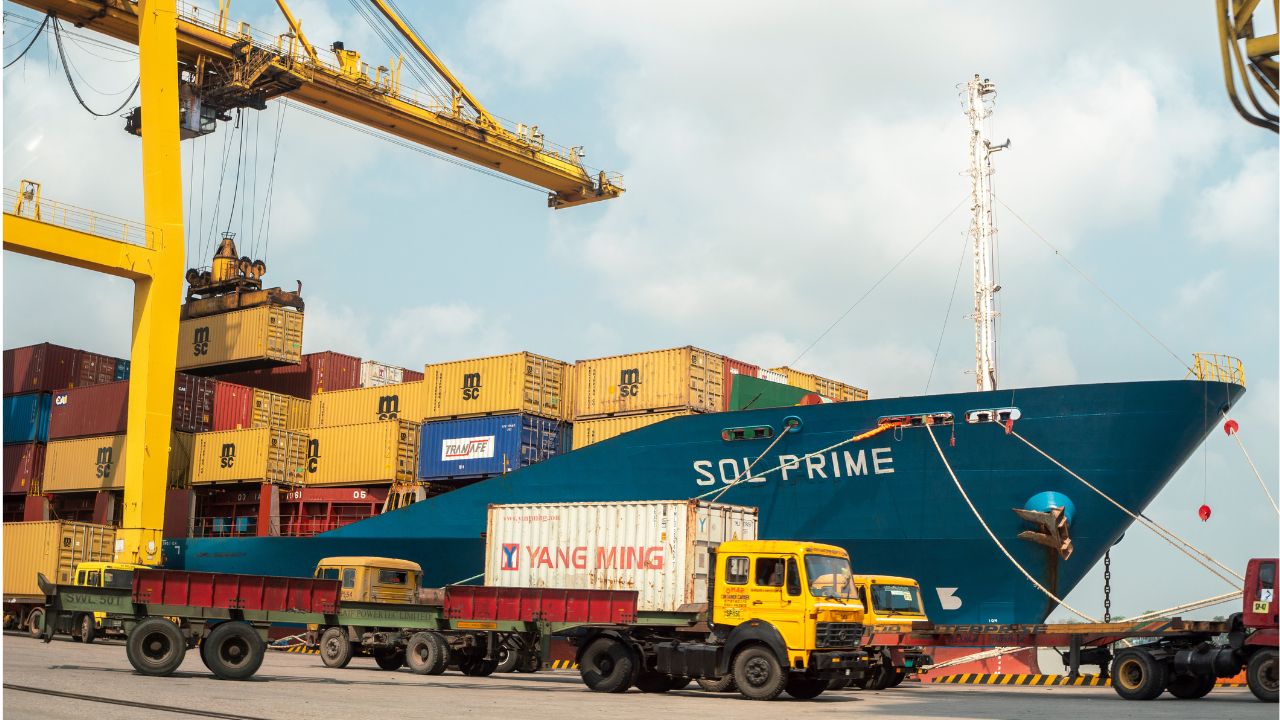

When the pressure increases, more than 5,000 vans may be stuck at depots waiting to unload, he said.
Data of the Bangladesh Inland Container Depot Association (BICDA) shows that the 21 ICDs have a collective annual storage capacity of 1.06 lakh TEUs (twenty-foot equivalent units).
However, they handle about 7.5 lakh TEUs of export cargo, 3 lakh TEUs of import cargo, and 1.2 lakh TEUs of empty containers each year.
As such, they have a total annual throughput of 22.5 lakh TEUs with an overall workforce of 30,000 people.
Still, stakeholders argue that the depots’ operational efficiency has not improved in line with growing demand.
C&F agents have repeatedly expressed dissatisfaction to both the Chattogram Port Authority (CPA) and National Board of Revenue (NBR) in this regard.
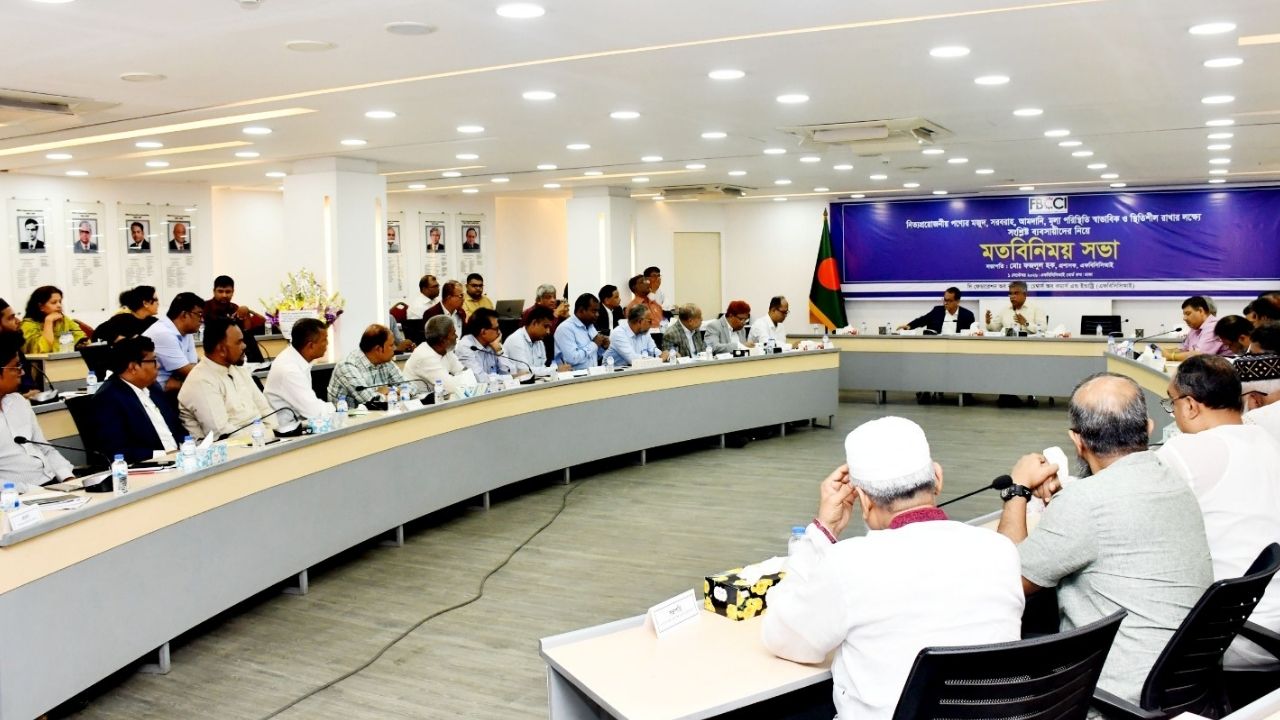
In a recent meeting at the Chattogram Custom House, NBR Chairman Md Abdur Rahman Khan echoed these concerns.
Similarly, SM Saiful Alam, president of the C&F Agents Association, said there is a clear capacity problem.
“ICDs seek approval to handle more imported goods, but the reality is they can’t manage the load. So, importers lose valuable time,” he added.
Although ICDs are privately owned, their operations are controlled by the CPA and customs, adding another layer of complexity to the problem.
CPA Chairman Rear Admiral SM Moniruzzaman said in a recent interview with TIMES that ICD capacity must be significantly expanded to match port growth.
“The off-dock capacity needs to be doubled,” he said. “Our goal is to deliver 100 percent of the import cargo from off-docks.”
Currently, only 65 types of import goods are allowed to be delivered through ICDs, representing less than 30 percent of total import volumes.
To ease the situation, the CPA is considering establishing a new off-dock facility if required, while also urging the NBR to approve private sector proposals for additional ICDs.
A revision of the existing off-dock policy is also under consideration.
Addressing complaints regarding Eid-time congestion, depot owners said the problem stems from exporters sending goods days ahead of vessel schedules due to long Eid holidays.
Ruhul Amin Sikder, president of BICDA, told TIMES that they can provide up to 95 percent of the required services with existing equipment.
“To handle additional pressure, we need around 30 percent more capacity. But claims that our capacity is inadequate are exaggerated,” he said.
Sikder added that ICD charges remain low compared to services provided, and that although the rates were raised, implementation has been delayed due to external pressures.
Besides, three new depots are expected to start operations within the next year, adding a total of 15,000 TEUs of capacity.