


Retailers, wholesalers and representatives of major essential-goods importers said prices have little scope to rise if supplies remain normal, but warned that a prolonged energy crisis, supply-chain bottlenecks and excessive profiteering by intermediaries could undermine market stability.
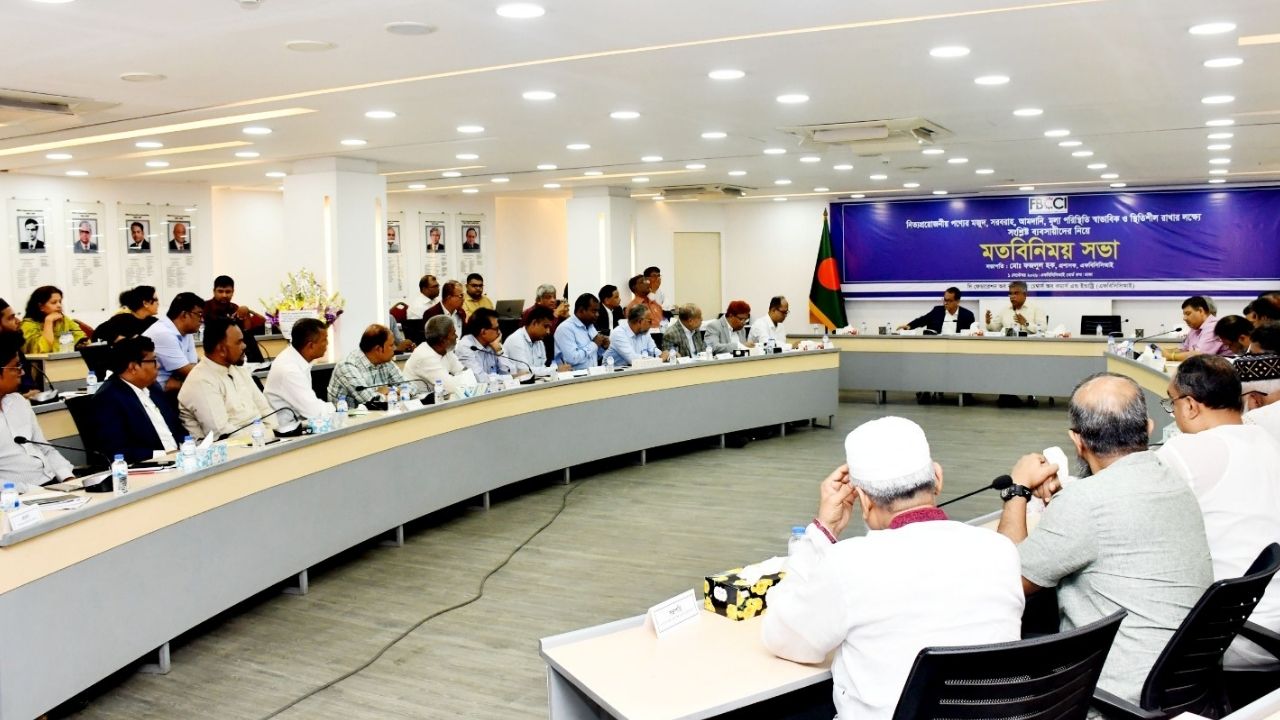
At a consultation on essential commodities in Dhaka on Tuesday, the Federation of Bangladesh Chambers of Commerce and Industry (FBCCI) called for urgent action to restore energy supplies, ease import constraints and curb unnecessary intermediaries.
FBCCI administrator Md Fazlul Hoque also urged businesses not to use the recently approved government pay scale to justify higher prices.
“Prices are already high. If businesses increase prices by taking advantage of the approved government pay hikes, the pressure on ordinary consumers will increase further,” he said.
Businesses said gas and electricity shortages were disrupting production, while complications involving letters of credit (LCs) were constraining imports.

Golam Mawla, general secretary of the Moulvibazar Traders Association, said regular imports and mill production were critical to market stability. He warned that fewer major consumer-goods producers now account for a large share of supply, increasing the risk of wider disruption if any of them face production problems.
Sugar prices were a particular concern after retail prices rose about Tk10 per kilogram.


Mohammad Shafiullah of the New Market Banolata Kitchen Market Traders Association said wholesalers were paying about Tk5,550 for a 50kg sack, making retail sales below Tk115 per kg difficult after costs.
Md Abul Hashem, president of the Bangladesh Sugar Traders Association, attributed the increase to supply shortages caused by production disruptions at some mills.
Taslim Shahriar, senior deputy general manager of Meghna Group of Industries, said gas and power shortages had affected production while global raw-sugar prices had risen, although mill-level prices had not increased significantly.
Traders also called for a more efficient distribution chain. Md Zakir Hossain of the Bangladesh Supermarket Owners Association said removing unnecessary intermediaries could help contain prices, while Saifur Rahman Sujon of the Karwan Bazar Raw Materials Wholesale Market Traders Association urged stronger monitoring of roadside vendors and unregistered businesses.
Md Abul Kalam Azad, organising secretary of the Consumers Association of Bangladesh (CAB), called for closer government-business coordination to maintain stable supplies.
The Trading Corporation of Bangladesh (TCB) said it was selling subsidised essential goods to nearly one crore families through family cards, while the Department of Food continued subsidised rice distribution for low-income households.
Businesses urged TCB to expand direct imports and diversify sourcing instead of relying mainly on domestic suppliers.
FBCCI said it would submit the recommendations to policymakers and urged businesses to ensure the new pay scale does not become a pretext for unjustified price increases.