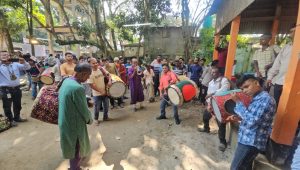
A unique river-based lifestyle fair was held on the banks of the Kholpetua River in Shyamnagar, Satkhira.
The exhibition of snails and shells became the highlight of the fair, attracting the attention of visitors.
The display of traditional fishing tools, such as nets, baskets, buckets, earthen pots, and shells, highlighted various aspects of river-dependent livelihoods.
The fair, held on Thursday in Kamalkati village of the Padmapukur Union, showcased the integration of coastal culture, livelihoods, and nature.

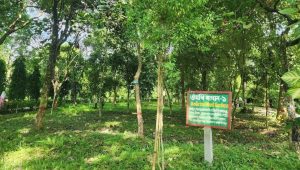
Among the exhibits were salt-tolerant plants found along the banks of the Kholpetua and Kapotaksha Rivers, including bainan, crabs, gewa, garan, khalisa, golpata, and rice plants.
The fair was organised by the Bangladesh Resource Centre for Indigenous Knowledge (BARCIC), Green Coalition, Kamalkati Ekta Youth Association, Kadbel Women’s Development Organisation, and local communities.
As visitors entered the fair, they were greeted by symbolic vessels filled with soil, sand, mud, and saltwater from the Kholpetua and Kapotaksha rivers.


According to local elders, the river’s soil is not only crucial for agriculture but also plays an important role in building homes, repairing embankments, and preserving coastal culture.
Veteran fishermen pointed out that while fish populations have decreased due to the loss of navigability and increased salinity, the river remains their primary source of livelihood.
Mohammad Ashraf Hossain, President of Padmapukur Union Green Coalition and former Union Parishad member, presided over the fair’s opening ceremony.
Other attendees included Ramkrishna Jowardar, Regional Coordinator of BARIC, Sukri Rani, Reserved Female Member of Padmapukur Union Parishad, Bikash Kumar Mondal, Member of Green Coalition, and Mofijur Rahman, Programme Officer at BARIC.
Gaurang Mondal, a volunteer from Kamalkati Ekta Youth Association, told TIMES, “The trees on the river islands are not just part of nature; they protect the coastline from storms and floods. River pollution, navigability issues, and climate change are putting the coast in danger. Protecting the river means protecting our lives.”
Ananya Mondal, a 10th-grade student from Nawabeki Safirunnesa Secondary Girls’ School, shared her excitement about seeing the riverbank, plants, and fishing tools.
“I really liked seeing the riverbank, plants, and fishing equipment. It’s a hands-on opportunity to learn beyond textbooks. I will now participate in social initiatives to protect the river,” she said.
Local villagers expressed that the Kamalkati village event was more than just an exhibition; it was a living classroom, reflecting the real-life picture of the coast.
The fair served as a living example of how the river sustains human life and how people depend on the river for their livelihoods.