


Referendum is now at the centre of discussion in the country around reform initiatives. This process of directly asking the public for their opinion on important decisions of the state is basically a referendum. Ordinary citizens express through votes whether they accept or reject a proposal. That is, the people make the decision instead of the parliament or the government.
Many countries have a history of organising referendums. Though few countries have achieved real success, Switzerland, Norway, France, and the United Kingdom the people’s verdict has truly changed the future of the state.
Since independence, a total of three referendums have been held in Bangladesh during different political periods. The first referendum in the country was held on May 30, 1977, to verify the legitimacy of the rule of the late President Ziaur Rahman. Through the vote, the people of the country expressed whether they had confidence in the president and his policies and programs. The second referendum was held on March 21, 1985 to verify the legitimacy of the policies and programmes of the then President and Chief Martial Law Administrator Hussain Muhammad Ershad. Third referendum, after the fall of Ershad’s autocratic government on December 6, 1990 in the face of mass protests, was held and a bill was passed in parliament on August 6, 1991 to establish a parliamentary system with a prime minister head of government after 16 years of presidential rule. To give it a Constitutional framework, the provision for referendum was added to the Constitution of Bangladesh through the 12th Amendment. It was later repealed in the 15th Amendment in 2011.
In 2024, after the Awami League government fell due to a student-public uprising, an interim government took charge. When they took the initiative to reform, the issue of a referendum came to the fore. In a meeting of political parties with the National Consensus Commission, a proposal was raised to hold a referendum to ensure the legitimacy of constitutional reforms based on the July Charter. In July this year, the High Court, in a ruling, reinstated the provision for referendums in Article 142 of the 12th Amendment to the Constitution.

The draft of the July National Charter (Constitutional Reform) Implementation Order, 2025 states that a referendum will be held on the constitutional reforms included in the July National Charter. In order to exercise the sovereign power of the people, this order and the part of the July National Charter included in its schedule related to constitutional reforms will be presented in a referendum. Appropriate laws will be formulated for the Election Commission to take necessary measures to hold a referendum.
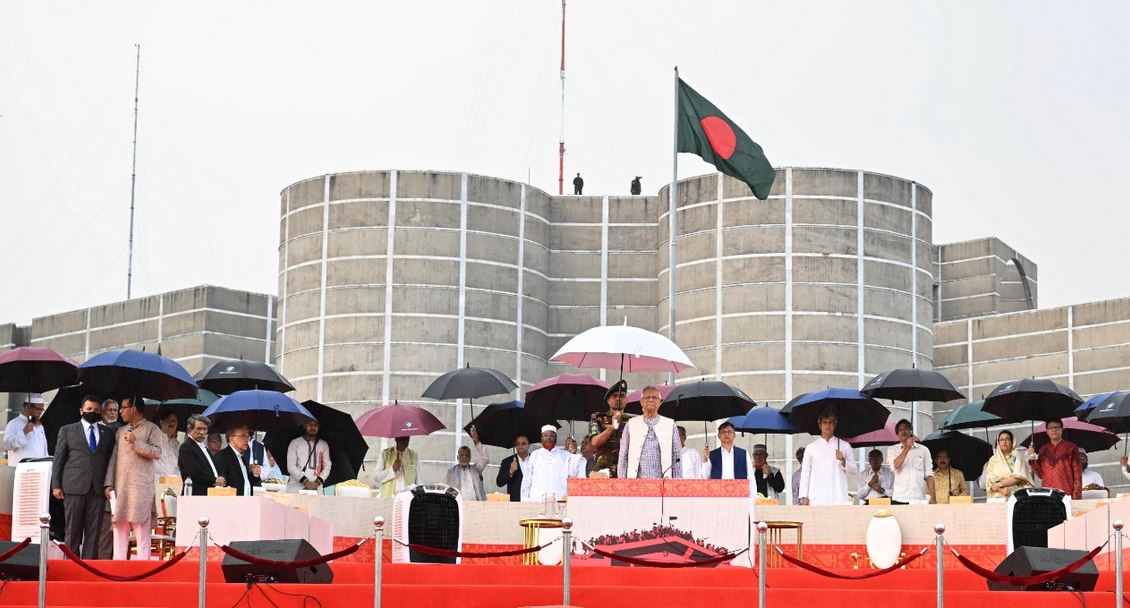
In a recent address to the nation, the issue of the referendum became clearer as the Chief Advisor said that the national parliamentary elections and the referendum will be held on the same day. On the day of the referendum, the people will express their opinion by voting ‘yes’ or ‘no’ on just one question on these four issues:


- a) During the election period, the caretaker government, the Election Commission and other constitutional institutions will be formed in light of the process outlined in the July Charter.
- b) The next parliament will be bicameral. An upper house with 100 members will be formed in proportion to the votes received by the parties in the national parliament elections, and the approval of a majority of the members of the upper house will be required to amend the constitution.
- c) The winning parties in the next election will be obliged to implement the 30 proposals on various issues agreed upon by the political parties in the July National Charter, including increasing the representation of women in parliament, electing the deputy speaker and the chairperson of the parliamentary committee from the opposition party, limiting the term of the Prime Minister, increasing the powers of the President, expanding fundamental rights, independence of the judiciary and local government.
- d) Other reforms mentioned in the July Charter will be implemented as promised by the political parties.
Recently the government published the gazette of the “July National Charter (Constitutional Reform) Implementation Order, 2025”. The Order mandates the government for a referendum on the provisions of the July National Charter relating to reforms of the Constitution.
We understand that the constitution must be amended to implement the July Chartered proposals –the issue which is oblivion to the mass people. In Bangladesh, majority people do not know what a referendum is. Those who understand the referendum, are not aware of many of the proposals mentioned in the July Charter. When the discussion on referendum is gaining its peak, any campaign for making awareness about the July National Charter and its proposals has yet started.
After the announcement of the election schedule, the nation will be thriving with the election campaigns, and nobody will pay heed to the referendum issues. So, the situation is, how voters exercise their preferences during the vote. Will it not be a true reflection of the people’s will?
The positive or negative verdict will be sought from voters on a vague concept they have till now. Some have criticised the single query (to be voted yes or no) contains four distinct segments whereas all four segments have their distinct implications. People may endorse one and reject others. How come they approve of all when they have disagreement with one or more of the four proposals?
We believe neither many people have gone through the July charter nor are they expected to do so in the remaining time before polls. In a country where voters vote for candidates on the basis of party symbols or in rare cases banking on popularity and personal charisma, is not it too much to expect informed verdict from voters on the referendum issue?
If the people fail to appreciate the subject of a referendum because of the government’s inability to present it in simple and clear terms, it is not the people’s fault, but of those who are in charge.
The writer is a journalist and columnist