
The government on Thursday approved the draft Anti-Corruption Commission (ACC) Ordinance (Amendment) 2025, introducing a requirement for the anti-graft body to publicly disclose its activities every six months.
The proposed law will also require ACC officials to submit their asset statements, though the method of implementation will be detailed later.
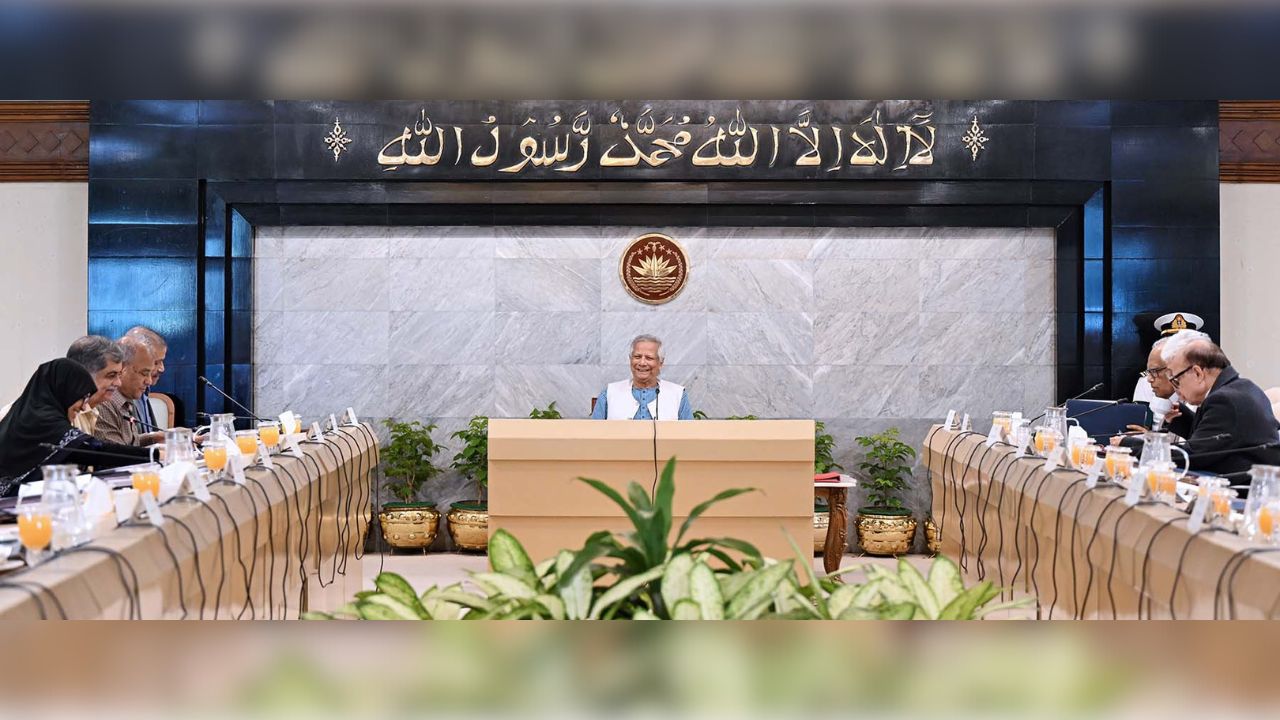
The approval came at the weekly meeting of the council of advisers at the Chief Adviser’s Office, chaired by Chief Adviser Muhammad Yunus.
In addition to the ACC amendment, the council cleared three other draft ordinances: the National Human Rights Commission Ordinance 2025, the Rajdhani Unnayan Kartripakkha (Rajuk) Ordinance 2025, and the Prevention and Suppression of Human Trafficking and Smuggling of Migrants Ordinance 2025.

Briefing reporters at the Foreign Service Academy, Press Secretary Shafiqul Alam said the new ACC law aims to strengthen the commission’s accountability and transparency. “The law requires the ACC to make its activity reports public online every six months,” he said. ACC officials will also be required to submit their asset statements, he added.
The ordinance proposes expanding the commission to five members—replacing the current structure of one chairman and two commissioners. At least one commissioner must be an information technology expert, given the rising use of technology in corruption, and at least one must be a woman. Alam noted that the draft was prepared based on the ACC Reform Commission’s recommendations.
National Human Rights Commission Ordinance
This ordinance designates the NHRC as Bangladesh’s National Preventive Mechanism (NPM), in line with international obligations to prevent torture.




The commission will now have the authority to investigate human rights violations committed by law enforcement agencies as well as abuses carried out under state sponsorship or with state support.
Rajuk ordinance
It introduces new regulatory measures for construction, protection of water bodies, prevention of illegal landfilling, safeguarding natural water flow, and restrictions on altering the classification of parks, playgrounds and water bodies.
Penalties will apply for construction that violates approved building designs, and Rajuk will be empowered to remove “deviation-prone or dangerous structures.”
The ordinance also prohibits the Rajuk chairman, board members and employees from holding any interest in contracts related to Rajuk operations.
Human Trafficking and Migrant Smuggling Ordinance
This introduces tougher mechanisms to combat trafficking, protect victims and enforce accountability.
Under the ordinance, individuals suspected of involvement in trafficking may—upon a court order—face freezing of bank accounts, seizure of assets, and restrictions on foreign travel during investigations. The law incorporates specific provisions addressing organ trafficking.
Alam noted that human trafficking remains a serious challenge in Bangladesh, particularly affecting women and children. He highlighted recent cases in northern districts such as Joypurhat and Bogura, where individuals were trafficked for organ removal. “The new law addresses this specifically,” he said.
With traffickers increasingly using online platforms for recruitment and fraudulent advertisements, the ordinance also targets digital pathways of trafficking.