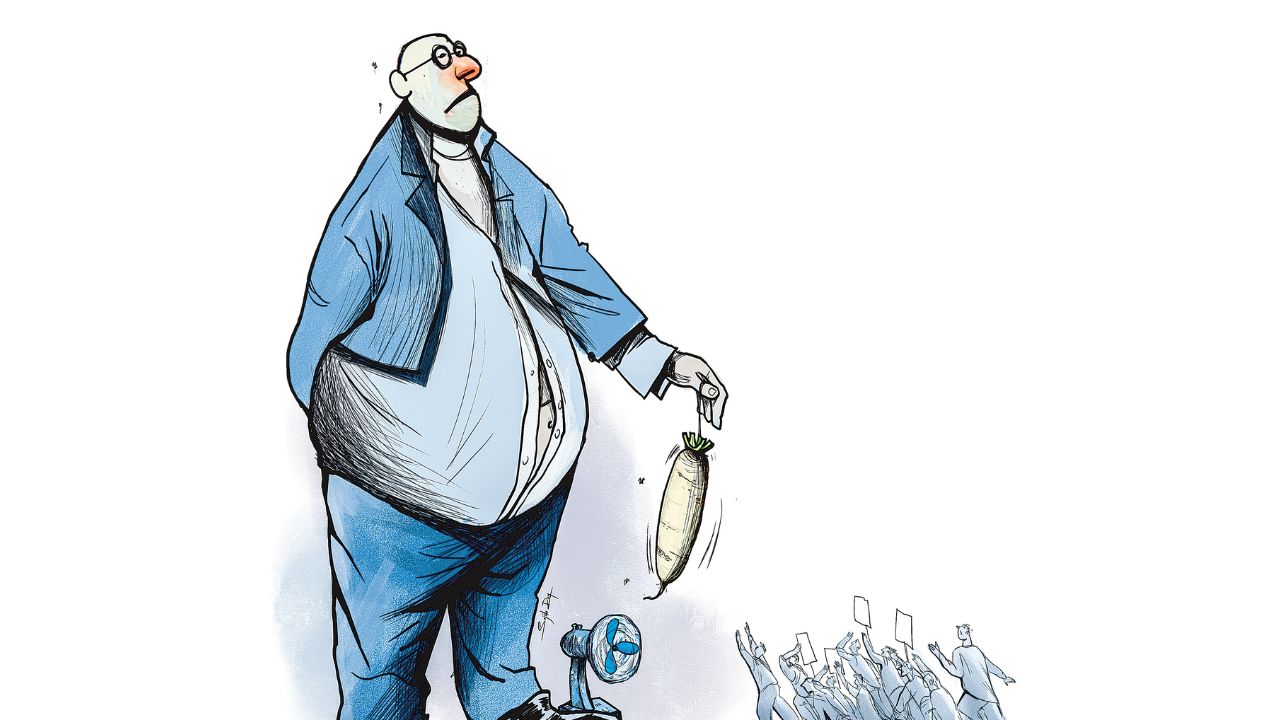
Around 80 per cent of the income tax returns filed so far came in the non-taxable category, casting doubt on whether the “ambitious” revenue target for fiscal year 2025-26 can be attained, according to tax officials.
Besides, their concerns have been intensified by the fact that 12 per cent of the taxpayers paid only the minimum tax.
Data of the National Board of Revenue (NBR) shows that about 19.61 lakh of the 1.24 crore registered taxpayers submitted returns as of 27 November.
NBR officials said a major reason for the surge in non-taxable returns is that a significant number of taxpayers, particularly salaried individuals, have their taxes deducted at source by employers.
Similarly, the taxes on savings certificates are deducted by banks, resulting in an increased number of non-taxable returns, they added.
However, some blamed the slowdown of economic activities in Bangladesh and absence of primary scrutiny of income tax files for the spike in untaxable returns.
They said widespread factory closures and investment stagnation in recent months have damped the country’s economic momentum and led to a sharp rise in unemployment.
Also, prolonged inflationary pressures have further squeezed household expenditures as the peoples’ income has not increased at the same pace.
So, this financial burden spilled into revenue collection, they added.
The revised direct tax target for the current fiscal year is Tk2.04 lakh crore, but officials managed to collect just Tk43,000 by 26 November.
A senior tax official, on condition of anonymity, told TIMES that the government initially set a collection target of Tk1.84 lakh crore.
“But the new target is a big burden for us amid the slow economic activities.”


As per current guidelines, if an individual’s total payable tax is less than Tk 3,000, they must pay a minimum tax based on their location. For example, the minimum Tk 3,000 tax will be paid by those living outside the city corporations.
Meanwhile, those within the Dhaka city corporation will have to pay a minimum tax of Tk5,000 while the charge is Tk4,000 for those in the Chattogram city corporation.
Data of the Bangladesh Garments Manufacturers and Exporters Association shows that 353 factories across the country were shut down in the past 14 months, leaving 119,842 workers unemployed.
Furthermore, many mid-level officials and managers of these units, who previously earned taxable incomes, are now jobless.
Rabiul Hasan, an official of a garments factory in Savar shuttered this year, informed that he has been unemployed for nearly eight months now.
So, with no taxable income for most of the year, he filed a zero-tax return, despite having paid more than the minimum tax in previous years.
Other sectors are suffering the same, with many individuals now falling outside the taxable bracket.
Dr Mustafizur Rahman, a distinguished fellow of the Centre for Policy Dialogue, believes the unusually high proportion of zero-tax returns this year warrants further scrutiny.
“Mandatory e-filing is a positive step, and more people are submitting returns,” he said.
“But such a large volume of zero-tax filings needs verification. Many may genuinely have low income, but the data may not be accurate for everyone,” Rahman added.
He also said the figures significantly differ from the Household Income and Expenditure Survey, and that cross-checking taxpayers’ financial transactions could help verify their true income status.
But with the deadline for filing returns set at December 31, the NBR expects filings will increase as the date draws near.
Motasim Billah Faruqui, NBR member (tax policy), said return submissions typically peak in the days before the deadline.
“Many new taxpayers have registered this year, and they can file under the self-declaration system until June 30. Overall, we expect return filing to exceed last year’s total.”
Asked about the unusually high number of untaxable returns, Faruqui said many people filed zero-tax returns without understanding the requirements.
“But anyone providing false information will face legal action,” he added.
However, Faruqui also said that those who filed zero-tax returns by mistake may still submit