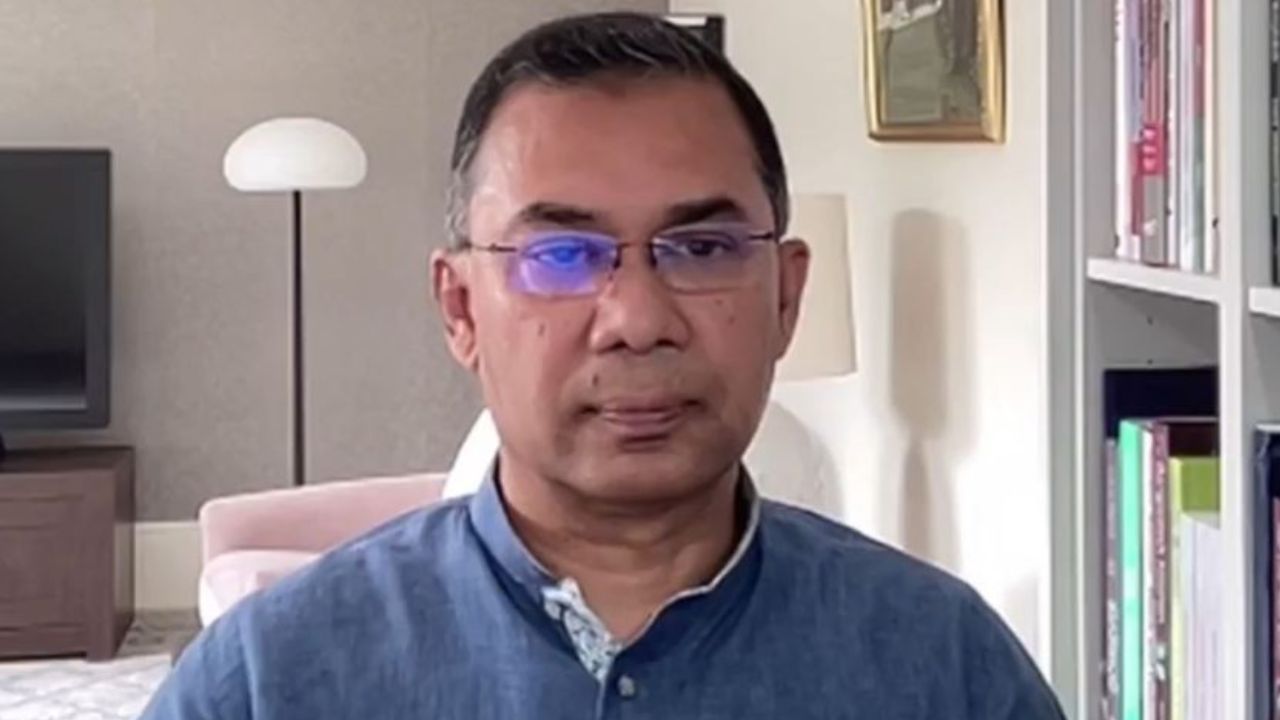



BNP’s acting chairman Tarique Rahman has said that the interim or unelected government has no jurisdiction to make decisions regarding Chattogram Port or Bangladesh’s graduation from Least Developed Country (LDC) status.
He said such decisions should be taken by a government that is accountable to the people.
According to him, long-term decisions on the port do not fall under the routine responsibilities of an interim administration. He described them as strategic matters involving national assets and said an unelected government with no democratic mandate is making choices that will bind future generations.
The interim government has signed an agreement with a foreign company for operating a terminal at Chattogram Port. It has also taken the decision for Bangladesh to graduate from LDC status in 2026. Amid discussions and criticisms, Tarique Rahman expressed his reaction in a Facebook post on Monday.

In the post, he described the story of a garment factory owner in Gazipur. He wrote that the owner had built the business over more than a decade, employing several hundred workers. The factory ran on modest profits. The government silently withdrew the tariff benefits that helped keep product prices competitive.
As a result, the owner began losing purchase orders at the new product prices. This put pressure on him to keep the factory running, pay workers’ wages and maintain his family’s livelihood.
In a second story, he highlighted the experience of a family in Narayanganj with a university student. The student’s father worked in a factory. To support the family, he had to work overtime.




But when export pressure from the factory began to decline, his overtime hours disappeared. Eventually, layoffs began, and the student’s father was also laid off.
Tarique Rahman wrote that such stories never make headlines. These are silent crises inside ordinary households. The people who are facing such conditions—whether the garment factory owner or the student’s family—did not vote for the decisions that caused their hardship. They were never even asked.
He further wrote that BNP has long said that the discussion surrounding Bangladesh’s graduation from the LDC list is important, but the matter itself is even more significant. He said that accelerating the graduation timeline instead of taking additional time through alternative options is entirely a political decision.
Yet such a decision is being taken by an interim government with no electoral mandate, while it is making long-term commitments that will affect the country’s economy for decades.
Tarique Rahman added that calling delays in LDC graduation impossible or considering requests to extend the timeline as insulting reflects Bangladesh’s weakness in negotiation capacity.
He cited the examples of Angola and Samoa, whose requests led the United Nations to extend their timelines. He said UN rules also allow for such provisions. He believes the interim government should act responsibly by seeking additional time to secure the country’s future.
He wrote that government documents show that businesses in the country are already dealing with pressure in the banking sector, instability in the foreign exchange market, increased credit risks and a slowdown in exports.
Even so, Bangladesh has earned the eligibility to move forward. But he said that being “eligible” for graduation and being “prepared” are not the same thing.