Bangladesh has marked a major public-health milestone by reaching more than 97 percent coverage in the nationwide Typhoid Conjugate Vaccine (TCV) Campaign 2025, protecting over 42.5 million children. UNICEF described the achievement as a “national breakthrough” and praised the Government for its commitment to child health.
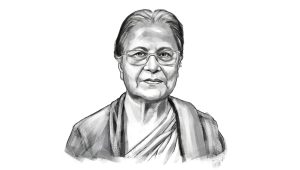
Rana Flowers, UNICEF Representative in Bangladesh, said the country now stands “among the global leaders”, becoming the eighth nation in the world to launch such a large-scale TCV campaign.
She said the result reflects the Government’s determination to shield children from “preventable illness, death, and the crushing financial strain” that families face when a child becomes critically ill.
Bangladesh’s latest Multiple Indicator Cluster Survey (MICS), conducted by the Bangladesh Bureau of Statistics with UNICEF support, paints a stark picture. Only 39.3 percent of people have access to safely managed drinking water.

47.2 percent of all water sources contain E. coli bacteria. Inside homes, contamination rises sharply, with 84.9 percent of household water samples testing positive.
“These numbers show that typhoid is a daily threat for millions,” Flowers said. “For many children, even a glass of water carries danger.”
She added that until safe water becomes a reality for every family, the TCV campaign offers one of the strongest layers of protection.



Flowers thanked parents for bringing their children to vaccination sites in huge numbers. She also credited the Ministry of Health and the countrywide EPI network for delivering the campaign efficiently.
UNICEF supported the Government by supplying 50.4 million TCV doses, strengthening cold-chain systems with new cold rooms, introducing digital tools such as the VaxEPI platform, and training frontline health workers for the massive rollout.
Communication campaigns reached more than 120 million people, partly through collaboration with the Islamic Foundation and extensive messaging across TV, radio and social media. These efforts helped counter rumours and built public trust.
Flowers highlighted the campaign’s reach across Bangladesh’s most challenging landscapes. Health workers reached children living in marshlands, coastal belts, remote hill districts, tea estates, nomadic groups, under-resourced families, children with disabilities and students in Qawmi madrasas. Children in sex-worker communities also received protection.
In the Rohingya camps, more than 424,000 children received the vaccine, which UNICEF said underscores Bangladesh’s commitment to every child living within its borders.
Flowers expressed gratitude to Gavi, the Vaccine Alliance, for financing the one-time catch-up campaign. She also thanked the World Health Organisation and other partners for their sustained involvement.
She praised the media as well, saying responsible reporting helped families receive accurate, evidence-based information at a time when misinformation can spread quickly online.
“Vaccinating our children is one of the strongest promises we can make,” Flowers said. “With this campaign, Bangladesh has taken a powerful step towards a typhoid-free future.”