






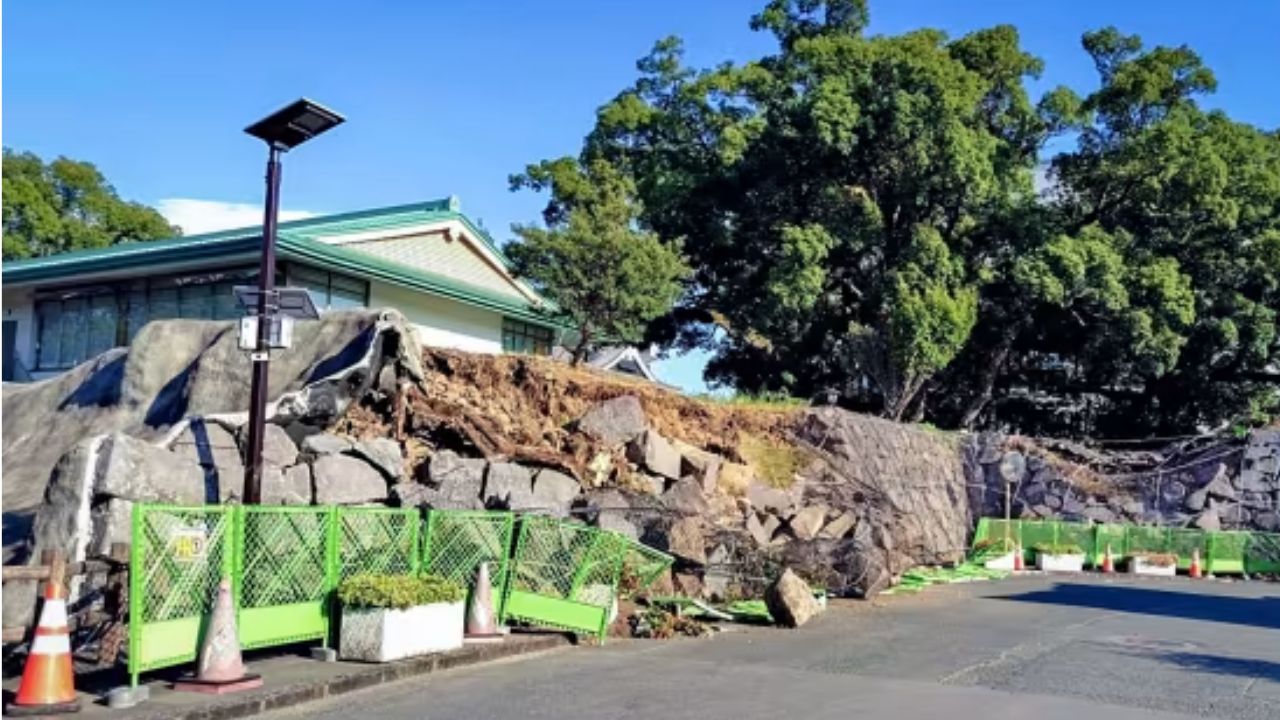
A magnitude 7.1 earthquake struck Japan’s southern Kumamoto prefecture on Tuesday afternoon, injuring more than 50 people, cutting power to thousands of homes, rupturing roads and triggering a blast at a shopping mall where police say several people are presumed dead and others remain trapped, as authorities warned of a risk of strong aftershocks, according to Al Jazeera.
One hospital told public broadcaster NHK that more than 50 people had been injured following the quake, with several more hurt when the tremors derailed a high-speed train.

A tsunami warning was initially issued but later lifted, while Japan’s Nuclear Regulation Authority said no abnormalities had been detected at three nearby nuclear power plants.

Prime Minister Sanae Takaichi said: “We have already been informed that people have been injured. Power outages and fires have occurred in some areas, and there has also been damage to roads and bridges and the collapse of buildings.” She added: “I ask everyone to take action to protect themselves, including evacuating to a safe location.”
Around 300,000 people have been told to head to evacuation centres, Japan’s disaster management agency said, while Takaichi announced that 3,600 soldiers would be deployed to assist with recovery efforts as aftershocks continued to shake the region.
Shinkansen bullet trains and local services in Kyushu were suspended for safety checks, and the runway at Aso Kumamoto Airport was closed, with an airport website notice stating there was “no prospect of resuming operations.”
The most serious incident appeared to be an explosion at an Aeon Mall in Kumamoto. Kazuya Tsurunaga told broadcaster TBS he heard the blast while clearing up dishes broken by the earthquake inside a pub roughly 300 metres from the mall, describing a huge impact and a large cloud of smoke that billowed towards his location as the wind blew in that direction, leaving the area coated as though in volcanic ash.
An Aeon spokesperson said customers and staff were evacuated immediately after the initial quake, and that the cause of the subsequent explosion remained unclear.
Japan is among the most earthquake-prone nations in the world, experiencing a tremor at least every five minutes, and sits along the Pacific “Ring of Fire,” accounting for roughly 20% of the world’s earthquakes of magnitude 6 or above.
In a post on X, Takaichi urged residents of the affected areas to remain alert to the possibility of a further earthquake of similar magnitude, adding that the government was working to assess the scale of the damage as swiftly as possible.
The Japan Times reported that strong shaking was felt in cities across Kumamoto as well as the neighbouring prefectures of Nagasaki, Kagoshima, Fukuoka, Saga and Miyazaki. The quake’s epicentre was located in the city of Uki, just south of Kumamoto city, at a depth of 10km.
Companies including Sony and TSMC, the world’s largest contract chipmaker, operate plants in the affected region, though there was no immediate confirmation of infrastructure damage.
Sony and Fujifilm both evacuated staff from their local plants, the Nikkei newspaper reported. Kyushu Electric Power, the region’s main energy supplier, said around 40,000 homes had lost electricity as a result of the quake, while railway operator JR Kyushu confirmed it had suspended services, including its high-speed bullet trains.
Two major earthquakes struck Kumamoto a decade ago, killing 275 people and injuring 2,739, according to official figures. An official at Kumamoto Castle’s office said parts of the fortress’s stone walls, already undergoing repair, had also collapsed as a result of Tuesday’s earthquake.


