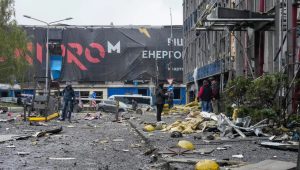
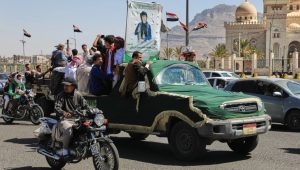
At least four police personnel were killed and 20 others injured in violent clashes in Pakistan-administered Azad Jammu and Kashmir (AJK) after unrest erupted between security forces and supporters of the newly-proscribed Joint Awami Action Committee (JAAC) in Rawalakot on Sunday.
Officials said the violence also left two protesters dead, while dozens were injured. Local fears suggest the toll may rise further as mobile data services remain suspended, restricting communication in the region, reports The Dawn.
A statement issued late Sunday by AJK police chief Liaqat Ali Malik’s office said demonstrators attacked Combined Military Hospital (CMH) Rawalakot, where four police personnel were killed. It said they were hit by firearms and shotguns, describing the incident as “outright terrorism” and vowing strict action to protect public order.
The unrest stemmed from tensions following the death of a trader, who was allegedly shot during a confrontation with law enforcement on Friday night. His burial was first scheduled for Saturday but was later postponed after his body was taken to CMH Rawalakot for post-mortem examination. The funeral was again deferred to Sunday.

The body was kept in the hospital mortuary, but no post-mortem was conducted. A large sit-in continued outside the hospital, where protesters demanded action over the incident.
Witnesses said police arrived to disperse the crowd, triggering clashes with protesters. Riot police used tear gas and baton charges. Protesters responded by throwing stones, though no injuries were reported in that exchange.
The family of the deceased trader said they would not bury him until the notification banning JAAC was withdrawn. A family member was quoted as saying they would not proceed while the group remained labelled a terrorist organisation.


A senior administration official, speaking anonymously to Dawn, said the sit-in had severely disrupted patients and their families. He said authorities repeatedly urged protesters to disperse peacefully, but the appeal was ignored. The area remained under protest until the filing of the report.
Meanwhile, the AJK Supreme Court, in an advisory opinion on a presidential reference, said constitutional amendments could not be treated as concessions to be forced from the government.
The reference concerned JAAC’s demand to abolish 12 refugee seats in the AJK Legislative Assembly ahead of the July 27 elections. These seats are reserved for refugees from Indian-occupied Jammu and Kashmir who settled in Pakistan after 1947. JAAC alleges the seats influence government formation in Muzaffarabad.
The presidential reference sought clarification on the constitutional status of the seats, legislative powers, rights of assembly and association, and the state’s duty to protect the electoral process.
In its opinion dated June 6, AJK Supreme Court Chief Justice Raja Saeed Akram Khan said the constitution of AJK was the “supreme law” of the state and belonged to the people of AJK and Kashmir as a whole.
He said constitutional amendments were a solemn legal process, not a concession to be taken under pressure. Any change must follow due procedure through elected representatives and consensus-building, the court said.
The advisory opinion came a day after the AJK government proscribed JAAC ahead of a planned protest on June 9. The group has been demanding abolition of refugee seats, along with economic reforms including lower energy prices and free healthcare.
Parliamentary Affairs Minister Tariq Fazal Chaudhry said most of the demands had already been met. He said claims of inaction were “false propaganda” and added that 35 of 38 demands had been addressed.