





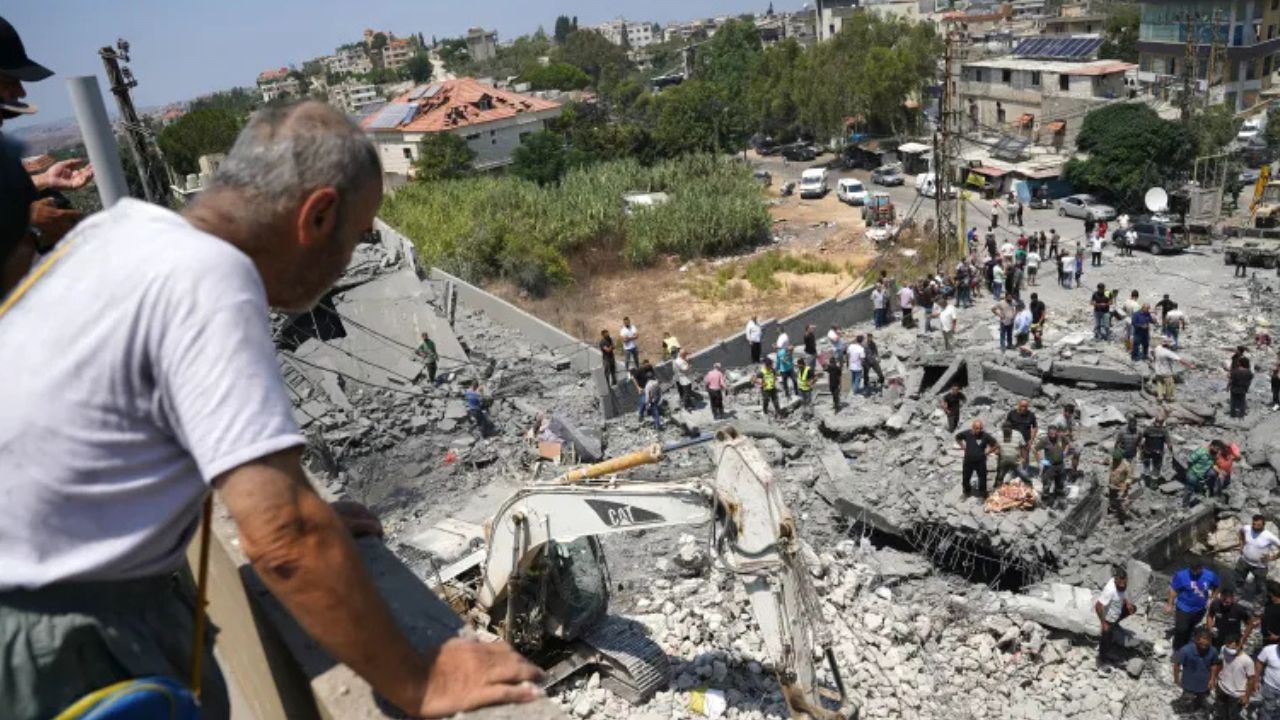
Israeli airstrikes in southern Lebanon killed at least 11 people, escalating tensions across the Middle East.
Meanwhile, Iran claimed Saturday that three of its pilots missing since March are being held in Qatar, a charge Doha denied.
Iran’s Missing Persons Committee of the Armed Forces General Staff said Qatar’s military captured the three pilots after their jets were downed. Tehran had previously said it had no information about the pilots’ fate.
Iran also alleged that Qatar had prevented the pilots from meeting or communicating with their families and Iranian officials. It appealed to the president of the International Committee of the Red Cross for assistance.
Qatar denied the allegation. Foreign Ministry spokesperson Majed Al Ansari said the pilots’ aircraft had been shot down and that Qatari search teams had recovered the remains of one of them. He said Iran had been invited in April to inspect the search efforts but did not respond.
Iran said a fourth pilot was killed during a mission targeting a military base in Qatar, according to Iranian state media.
Meanwhile, an oil tanker operated by Abu Dhabi’s state-owned oil and gas company ADNOC was attacked while passing through the Strait of Hormuz, the UAE’s state-run WAM news agency reported.
No one was injured in Friday evening’s incident, which the UAE described as the third attack on an ADNOC-operated vessel in the strategic waterway within a week.
The United Arab Emirates called on Iran to halt what it described as unprovoked attacks.
The United Kingdom Maritime Trade Operations centre separately reported that a bulk carrier was hit in its hull by an unidentified projectile on Friday. It was not immediately clear whether it was the same vessel.
The Strait of Hormuz, through which about one-fifth of the world’s traded oil and natural gas passed before the latest conflict, has remained a major flashpoint since the war began with US and Israeli strikes on Iran on 28 February.
Meanwhile, Israeli airstrikes in southern Lebanon killed at least 11 people on Saturday, among the deadliest attacks since a fragile truce between Israel and Iran-backed Hezbollah took effect on 20 June.
Lebanon’s Health Ministry and state news agency said an Israeli strike on a house near Ansar killed seven people, including three children, and wounded two others. Another strike in Deir al-Zahrani killed four people and injured 17.
The Israeli military said it killed a Hezbollah battalion commander and several other militants at a command centre in southern Lebanon, saying the strike was carried out in response to Hezbollah activity against Israeli troops.
Israeli Prime Minister Benjamin Netanyahu’s office said three Israeli soldiers were seriously wounded and blamed an explosive drone.
The Israeli military said the commander’s family was present at the site but was not the intended target, while Israeli authorities accused him of using family members as human shields.
The strikes came amid a framework agreement between Lebanon and Israel aimed at paving the way for an Israeli withdrawal from southern Lebanon in return for Hezbollah’s disarmament. Hezbollah has rejected direct negotiations and was not part of the agreement.
In Yemen, Iran-backed Houthi rebels attacked the government-controlled Red Sea port of Mokha, killing at least three people, including two marines, Yemeni authorities said.
Port director Abdul-Malik al-Sharabi said Friday evening’s attack also forced the suspension of port operations.
Yemeni military spokesperson Col. Majed al-Nazili said the Houthis fired six ballistic missiles at the port.
The attack was the latest escalation by the Houthis against government-held areas and neighbouring Saudi Arabia, raising concerns that the conflict could push Yemen back into a wider civil war.
Analysts say the escalation is part of Iran’s broader effort to increase pressure on the United States and its regional allies.


