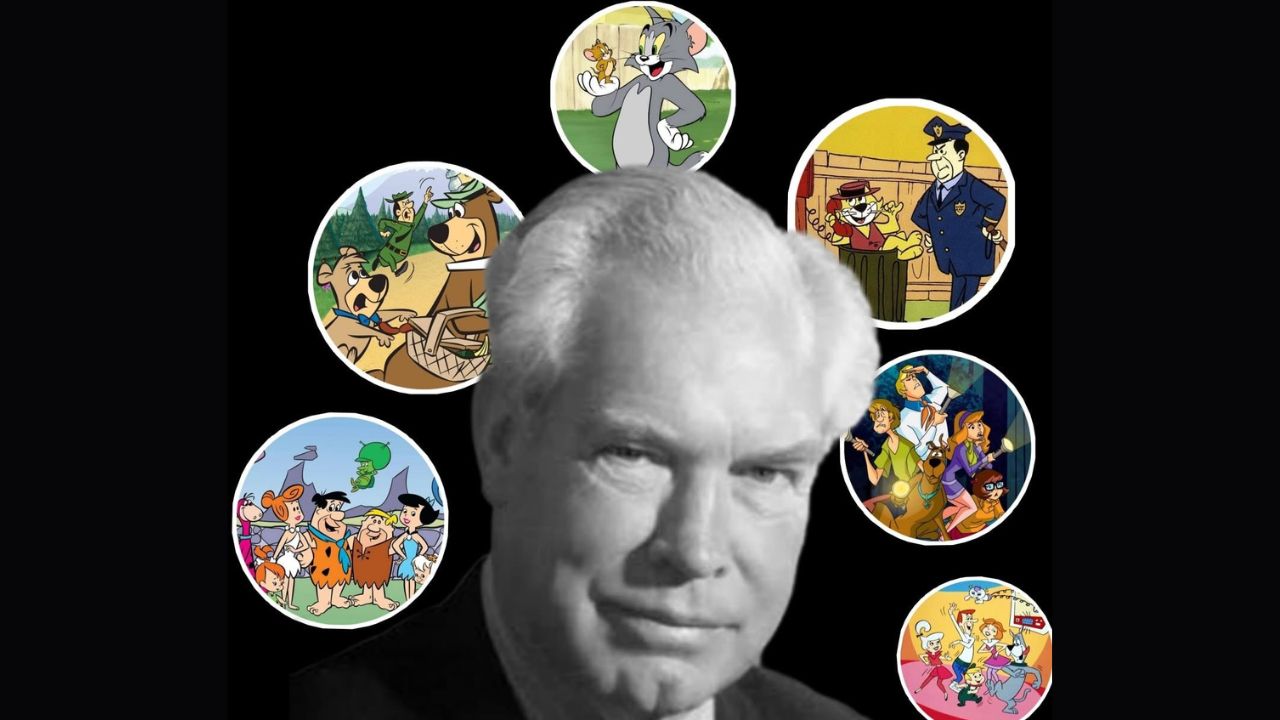



For many children, a television set was a magical window into another world. After school hours, during lazy afternoons or early weekend mornings, families gathered around their screens to watch a clever mouse outsmart a frustrated cat, a group of young detectives chase mysteries, or a prehistoric family turn everyday life into an adventure.
For generations growing up before the digital era, and even for children of the 1990s and 2000s, these moments carried a special kind of happiness. There were no streaming platforms, no endless online libraries — just the excitement of waiting for a favourite cartoon to appear on television.
Behind many of those unforgettable childhood memories was William Hanna, the legendary animator whose imagination turned simple drawings into characters loved across the world.
Born on 14 July, Hanna is remembered on his 116th birth anniversary as not only the co-creator of Tom and Jerry, but also as one of the greatest pioneers who transformed animation into a global cultural force.
Some artists create characters. A rare few create entire worlds that continue to live long after their creators are gone. Hanna belonged to that extraordinary group.

His journey began in 1930 when he joined the Harman and Ising studio. While working on projects including Captain and the Kids, he developed the skills that would later shape the future of animation.
The defining chapter of his career arrived in 1937 when he joined Metro-Goldwyn-Mayer (MGM) and met animator Joseph Barbera. Their partnership became one of the most influential creative collaborations in animation history.
Together, Hanna and Barbera introduced the world to Tom and Jerry — the never-ending chase between a mischievous mouse and a determined cat. The series became a worldwide phenomenon, winning seven Academy Awards. The duo also received two additional Oscar nominations and later earned eight Emmy Awards throughout their careers.




When theatrical cartoons began losing ground to television, Hanna and Barbera adapted with remarkable vision. In 1957, they founded Hanna-Barbera, a studio that would become one of the most successful television animation companies of its era.
The studio went on to create a golden collection of animated classics, including The Flintstones, The Huckleberry Hound Show, The Jetsons, Scooby-Doo, The Smurfs and Yogi Bear.
These characters became companions for millions of children around the world. They crossed borders, languages and cultures, proving that laughter and imagination needed no translation.
At the height of its popularity during the 1960s, Hanna-Barbera programmes attracted more than 300 million viewers worldwide. Their cartoons reached audiences in more than 28 languages, making them a part of childhoods across continents.
The studio’s success also became a major business achievement. In 1967, Hanna-Barbera was sold to Taft Broadcasting for $12 million, though Hanna and Barbera continued to lead the company until 1991.
Following later acquisitions by Turner Broadcasting System and Time Warner, the two animation legends remained connected with the studio as advisers, helping guide the future of the worlds they had created.
Even decades later, William Hanna’s creations have never truly disappeared. Tom and Jerry’s playful battles, Scooby-Doo’s mystery-solving adventures and The Flintstones’ prehistoric family life continue to entertain new audiences through television reruns, streaming platforms, films, books, merchandise and popular culture.
That is the true magic of Hanna’s work. His characters were never just drawings on a screen. They were childhood friends who shared laughter, excitement and unforgettable moments with millions of viewers.
More than three decades after his passing, William Hanna’s legacy continues to grow as new generations discover the worlds he helped create.
On his 116th birth anniversary, he is remembered not simply as an animator, but as the man who gave the world a shared childhood — one filled with laughter, imagination and memories that never grow old.