International Women’s Day is being observed this year with the theme “Today’s action, tomorrow’s justice, let the rights of women and girls be protected.” Around the world, the campaign is spreading the message “Give to Gain.”
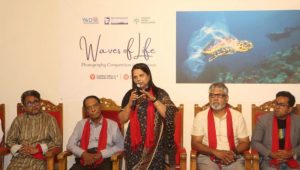
The day is being marked in the country with rallies, discussions, and award ceremonies, celebrating women’s achievements while highlighting the ongoing struggle for equality and justice.
From factory floors to streets
The story of International Women’s Day begins far from the present-day celebrations – on the factory floors of New York in 1857. Female garment workers protested against harsh working conditions, wage discrimination, and endless working hours. Though suppressed by authorities, their courage planted the seeds of early labour activism.
More than fifty years later, 15,000 garment workers marched through Manhattan’s Lower East Side, demanding fair pay and safer workplaces. The following year, the Socialist Party of America organised the first National Women’s Day on 28 February.

Around the same time, German socialist leader Clara Zetkin helped bring the movement to the international stage, organising the first global women’s conference in New York.
A global call for equality
In 1910, the second international women’s conference in Copenhagen, Denmark, gave the movement a global platform. Zetkin proposed an annual International Women’s Day, a motion supported by 100 delegates from 17 countries. Their mission was clear: equal rights for women – the right to work, to vote, and to participate in public life.



The first official International Women’s Day was observed on 19 March 1911, marking the 40th anniversary of the Paris Commune. Over a million people rallied across Austria, Denmark, Germany, and Switzerland. By 1914, 8 March became the internationally recognised date, a tradition that continues today.
Protest, revolution, and recognition
The fight for rights was not limited to marches and conferences. In 1917, female textile workers in Petrograd staged a protest demanding “Bread and Peace.” The demonstration became a spark for the Russian Revolution, contributing to the abdication of Czar Nicholas II. Soviet leader Vladimir Lenin later declared 8 March a national holiday in honour of their courage.
It wasn’t until 1975 that the United Nations formally recognised International Women’s Day, making it a global observance in 1977. In Bangladesh, however, the tradition predates independence in 1971, reflecting a long-standing recognition of women’s contribution to society.
Honouring women across the country
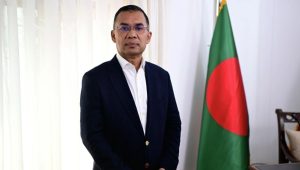
This year, the 112th anniversary of the observance sees Bangladesh President Mohammed Shahabuddin and Prime Minister Tarique Rahman issuing greetings to women around the world.
Former prime minister Khaleda Zia will receive the “Indomitable Woman in Democracy” award. The Ministry of Women and Children Affairs will present the “Odommo Nari” (Indomitable Women) awards to recognise exceptional contributions by women.
The Jatiya Press Club will host a discussion and candle-lighting ceremony at 11am, with State Minister of Foreign Ministry Shama Obaed as the chief guest.