Udichi Bangladesh’s cultural community gathered in the capital on Saturday morning as Bangladesh Udichi Shilpigoshthi organised a protest march and rally, condemning the recent arson attack on its central office and warning of an increasingly hostile environment for artists and performers.
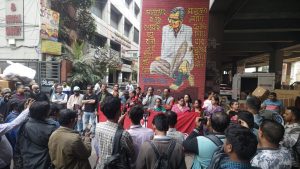
The protest march began around 11:00 am at the Paltan intersection and moved towards Satyen Sen Chattar, outside Udichi’s headquarters opposite the National Press Club. The march drew artists, musicians, theatre workers, journalists and supporters, many of whom described the attack as a blow not only to Udichi but to the country’s wider cultural life.
Participants carried placards and chanted slogans invoking the spirit of the Liberation War and Bangladesh’s long tradition of cultural resistance. The chants framed the destruction of Udichi’s office as part of a broader attempt to silence progressive voices in music, theatre and the arts.

Addressing the gathering, Udichi General Secretary Amit Ranjan Dey said the arson had destroyed an irreplaceable body of cultural history. According to the organisation, 55 years of archives were lost, including songs, scripts, photographs and documents chronicling decades of artistic activism. Dey described the loss as a cultural tragedy that went far beyond physical damage.




He also drew parallels between the attack on Udichi and earlier assaults on media houses and cultural institutions, arguing that these incidents reflected a pattern of intimidation against spaces that promote free expression. Dey alleged that threats against Udichi had been made openly before the attack, but that no preventive action had been taken. At the time of the rally, he said, no arrests had been reported.
Speakers at the event stressed that Udichi’s history has repeatedly made it a target. Founded in 1968 by Satyen Sen and Ranesh Dash Gupta, the organisation has long used music, theatre and performance to challenge communalism, authoritarianism and social injustice. That legacy, they noted, has previously exposed Udichi to violence, including deadly bomb attacks in Jashore in 1999 and Netrokona in 2005.
Beyond condemning the arson, the rally voiced concern over what participants described as a shrinking civic and cultural space, citing recent attacks and harassment faced by journalists and cultural figures. Udichi leaders warned that continued inaction could further embolden those seeking to intimidate artists and dismantle progressive platforms.
The organisation called for the swift identification, arrest and prosecution of those responsible, while also questioning whether the state is doing enough to protect cultural institutions. The programme concluded with a pledge from Udichi members to continue their protests until accountability is ensured.
“This is not just about one organisation,” Dey told the crowd. “It is about whether culture, memory and artistic freedom can survive without fear.”