






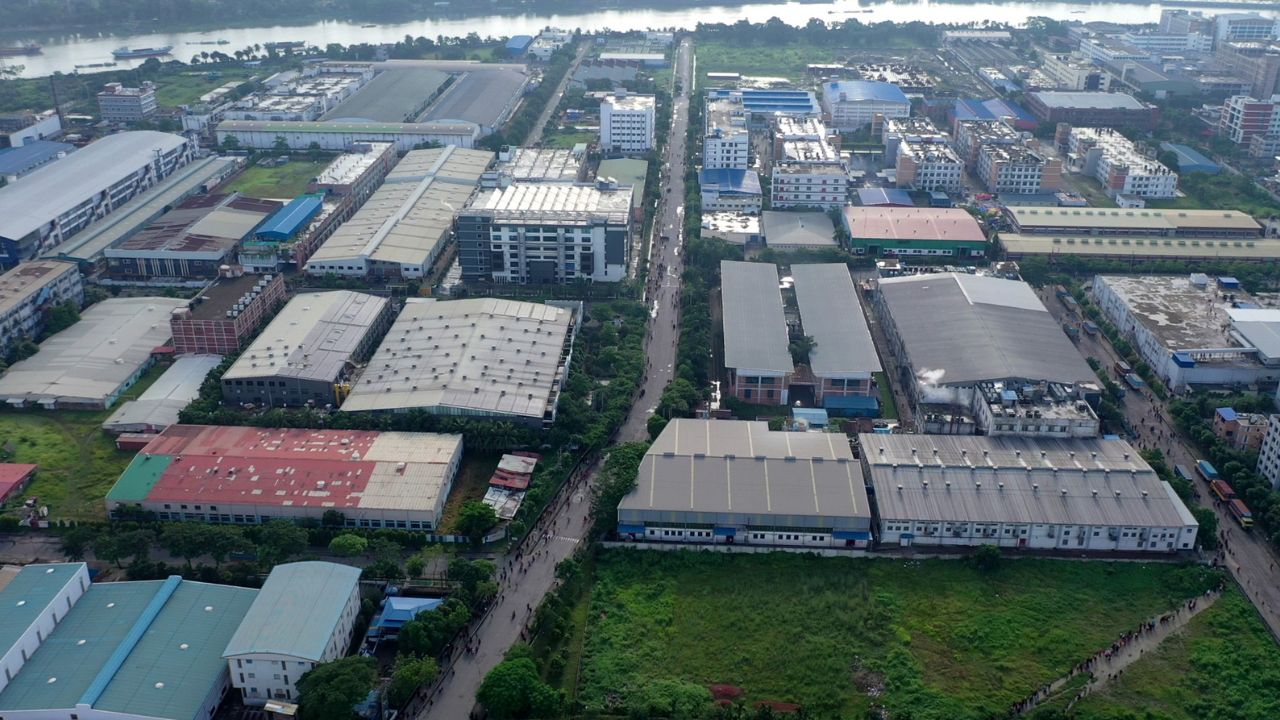
The site that once symbolised Bangladesh’s struggling state-owned jute mills has been transformed into a diversified export manufacturing hub, with Adamjee Export Processing Zone (EPZ) shipping goods worth $1.179 billion in the 2025–26 fiscal year.
Established on the former Adamjee Jute Mill land in Siddhirganj, Narayanganj, the EPZ has far exceeded its original export target. The project proposal had estimated annual exports of $750 million once the zone became fully operational, but shipments crossed $1 billion in FY2024–25 and reached $1.179 billion in FY2025–26.
Adamjee EPZ Executive Director Md Abdur Rahman Bhuiyan said exports could exceed $1.5 billion annually once 10 factories currently under construction begin production.
Spread across 292.62 acres, with around 230 acres currently usable, the EPZ has 47 operational enterprises on 276 industrial plots, while another 10 factories are under construction.
It has attracted $847.03 million in investment, with cumulative exports exceeding $11.1 billion since launch.
The zone added $34.45 million in investment and created 2,046 jobs in FY2025–26.
The transformation is also reflected in employment. When Adamjee Jute Mill closed in 2002, it employed around 20,000–25,000 workers. Today, factories inside the EPZ employ nearly 80,000 workers.
Adamjee Jute Mill, established in 1950 and beginning production in December 1951, was once one of the world’s largest jute mills. It was shut down on 30 June 2002 after years of financial losses, management problems, technological limitations and labour unrest.

The government later transferred the land to the Bangladesh Export Processing Zones Authority (BEPZA), and Adamjee EPZ was formally inaugurated in 2006.
The industrial base has since shifted from traditional jute production to specialised manufacturing, including garments, bridal wear, footwear, automotive components, electrical products and other high-value goods.
Of the operating enterprises, 26 are foreign-owned, nine are joint ventures and 12 are locally owned. Investors include companies from Germany, Japan, China, India, the United States, South Korea, Romania and Ukraine.
Romania-Bangladesh joint venture Universal Menswear Ltd has invested $45.91 million to build South Asia’s largest suit factory and employs 8,194 workers. The company produces men’s suits, blazers and formal trousers and exported $97.88 million worth of products in FY2025–26.
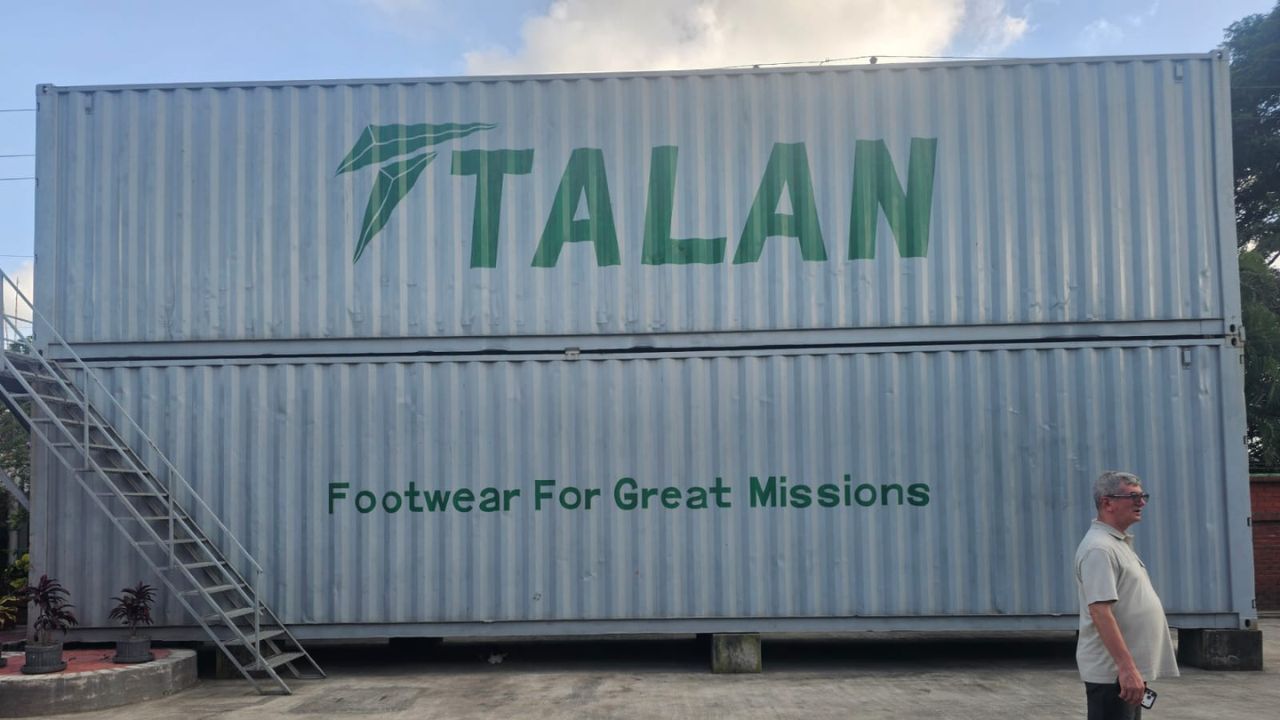
Ukrainian-invested Super Protective Shoes has invested $35 million and is investing another $10 million to expand production of safety shoes, industrial footwear, military boots and specialised footwear.
Before the Ukraine war, Bangladesh accounted for only 20 per cent of the company’s global sourcing. The share has since increased to 50 per cent as supply disruptions affected Ukrainian factories.
The company exported 1.5 million pairs of footwear last year, earning $12.77 million, and aims to double exports after expansion.
Japanese company TS Tech Bangladesh, which manufactures automotive seat trim covers for Japanese vehicle manufacturers, has invested $4.67 million and employs 512 workers. It exported $14.75 million in FY2025–26.
The company sources most raw materials from Japan and China, processes the products in Bangladesh and supplies them to production facilities in Japan, linking the EPZ with global automotive supply chains.
TS Tech Bangladesh Managing Director Satoru Onishi said the company has focused on productivity improvement and automation, including the use of 3D printing for internal production activities.
Adamjee EPZ has also developed a specialised bridal-wear manufacturing segment. German-invested UBF Bridal began operations in 2022 after investing $3.66 million and recorded overseas sales of $5.27 million in FY2025–26.
The company produces wedding and evening dresses, suits, jackets, veils, petticoats and jewellery. Its products are shipped to Germany and distributed to around 37 countries, including markets in Europe, the United States, Brazil and South Africa.
UBF Bridal Chief Operating Officer Robiul Hoque Siddiki said Bangladesh initially lacked workers experienced in producing such specialised garments.

“We had to train the workers and managers ourselves,” he said.
Starting with around 130 workers, the company expanded its workforce while improving worker efficiency from around 30 per cent initially to about 60 per cent.
The rise of specialised manufacturing is also reflected in global brands linked with factories operating in Adamjee EPZ. Manufacturers produce goods for brands including Tommy Hilfiger, Ralph Lauren, Michael Kors and Van Heusen, alongside industrial safety products and automotive components.
Two decades after the closure of Adamjee Jute Mill, the site has become one of Bangladesh’s major export-oriented industrial centres, connecting local manufacturing with global supply chains and higher-value production.


