

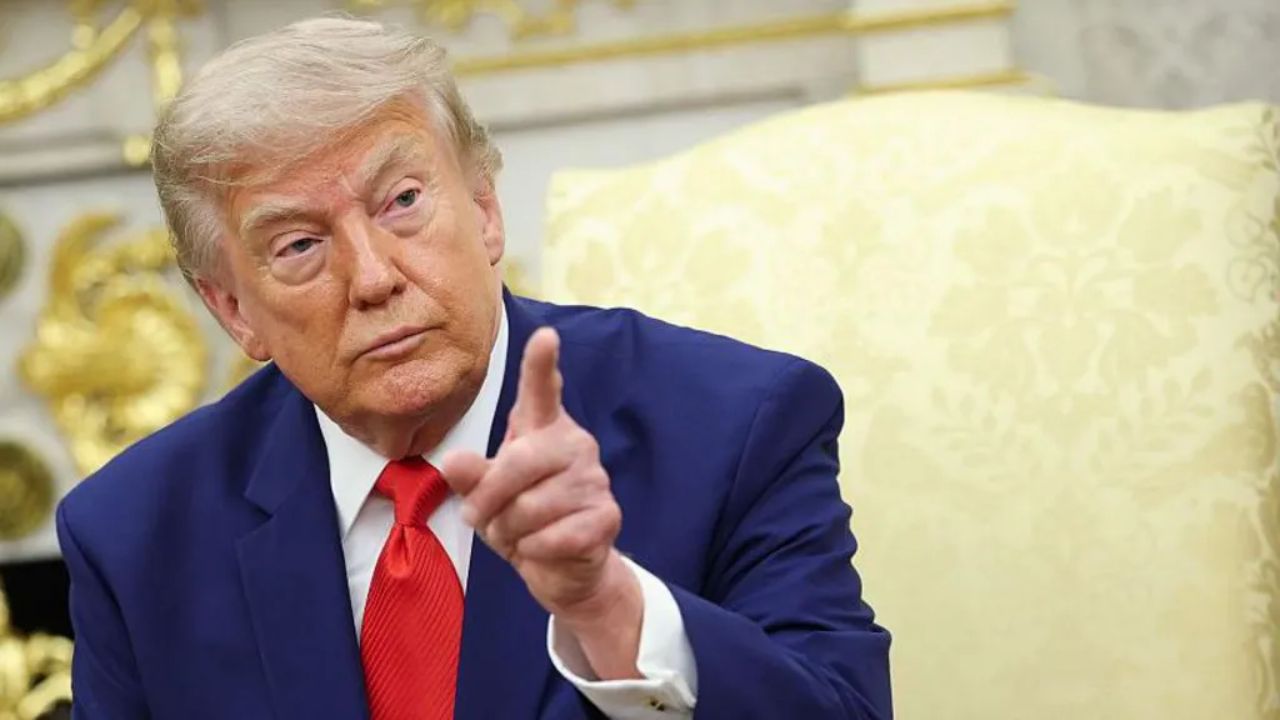



Say what? Donald J. Trump, in the course of a sharp diatribe aimed at NATO, has threatened to withdraw from that security organisation on the pretext that it has not come to the active aid of his country in its current dire straits in various theaters of the current quagmire that it has found itself in or, more appropriately, has been a key player in bringing it about. And has berated his long-term ally, the British Prime Minister Sir Keir Starmer for basically adhering to the letter of sound political communication. And, rather familiarly, harangued everyone around him or his orbit while the Middle East situation is being sorted out by the concerned entities and that is a big number. But Donald Trump’s political communication is what he gives, not receives, and the weightage here is heavy.
To get an idea of political communication, one of its leading scholars has explained it this way. Richard M. Perloff has touched on its very elements: Contemporary political communication has five core characteristics.
First, it involves an interplay of strategic or symbolic influence among three key players: leaders, media, and public.
Second, politics are enacted on a media and Internet stage. Importantly, the media have become such a centerpiece of governing that political leaders adapt their behaviour to fit the media’s criterion of newsworthiness.
Third, technology plays an ever-increasing role in the process by which politics is communicated.
Fourth, thanks to the development of information technologies and harnessing of US-style political marketing techniques, political communication, negative advertising, and practitioners of social media, might have gone global.
Fifth, like all forms of communication, political communication can be employed either with beneficial and/or malicious intentions, and with positive and negative outcomes.
Taking any or all of the possibilities of communication, it is intriguing that Trump chooses to bank on a major security organisation.
The writer is an MALD (Fletcher School of Law and Diplomacy) and PhD (Boston University)


