Bangladesh’s balance of payments returned to a strong surplus in the first 10 months of FY26, but the recovery remains uneven as imports rose faster than exports, widening the trade deficit despite stronger remittances and higher foreign exchange reserves.
According to Bangladesh Bank data, the overall balance stood at a surplus of $3.74 billion in July-April FY26, reversing a deficit of $655 million in the same period of the previous fiscal year. Gross official reserves rose to $35.11 billion at the end of April, while reserves measured under BPM6 reached $30.45 billion.
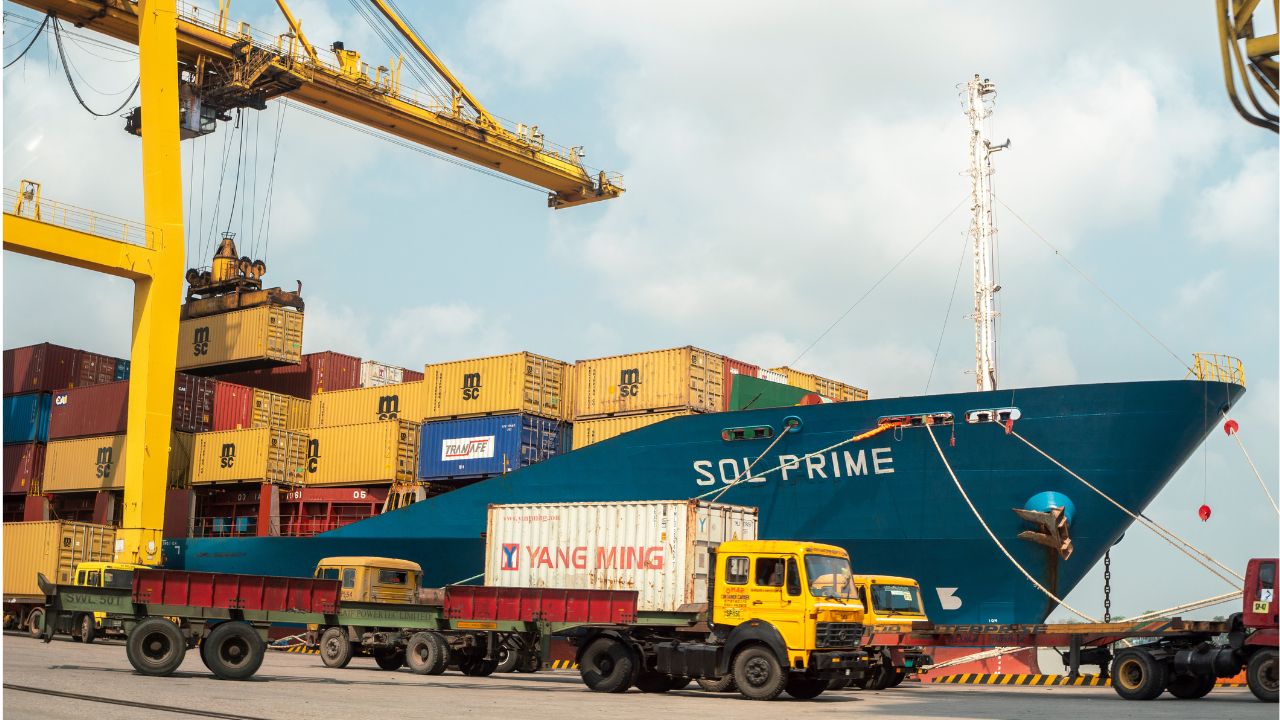
Behind the stronger reserve position, however, the trade account weakened significantly. The trade deficit widened to $22.21 billion in July-April from $18.23 billion a year earlier as import payments rose 6.2 per cent to $58.23 billion while export earnings fell 1.5 per cent to $36.02 billion.
The gap widened by nearly $4 billion over the year, highlighting the growing imbalance between the country’s foreign currency earnings and payments.

The weakness was most visible in Bangladesh’s export engine. Readymade garment (RMG) exports declined 1.9 per cent to $32.01 billion, indicating that the sector has yet to regain momentum even as domestic demand and import activity recover.
Pressure also increased beyond merchandise trade. The services deficit widened to $4.77 billion from $4.36 billion a year earlier as service payments rose faster than receipts.



The primary income deficit remained elevated at $3.93 billion, while official interest payments climbed to $1.94 billion from $1.77 billion, reflecting the rising cost of servicing external debt.
Despite the wider trade gap, the current account deficit narrowed to $1.07 billion from $1.64 billion a year earlier, largely because of a strong rise in remittance inflows.
Workers’ remittances increased 19.5 per cent to $29.33 billion, while private transfers rose 19.1 per cent to $29.79 billion. These inflows absorbed much of the pressure created by higher imports and weaker exports.
The data, however, suggest that pressure re-emerged towards the end of the period. The current account deficit, which stood at $586 million during July-March, widened to $1.07 billion after April’s transactions were included, indicating renewed pressure on the external account.
The financial account provided another source of support. Its surplus rose to $4.47 billion from $1.13 billion a year earlier. However, the composition of those inflows raises questions about sustainability. Net foreign direct investment fell to $1.14 billion from $1.43 billion, while portfolio investment remained negative.
Instead, much of the improvement came from other investment, which increased to $3.46 billion from a negative $185 million a year earlier. Trade credit surged to $3.57 billion from a negative $1.47 billion, indicating that trade-related and short-term financing played a major role in supporting the external account.
Longer-term financing, meanwhile, showed signs of weakness. Disbursement of medium and long-term loans fell 20 per cent to $3.85 billion, while amortisation payments rose 19.1 per cent to $2.61 billion. Net aid flows also dropped to $1.24 billion from $2.62 billion, suggesting tighter external financing conditions than a year earlier.
Reserve indicators nevertheless continued to strengthen. Import cover increased to 5.1 months of goods and services imports and 5.7 months of goods imports, up from 4.2 months and 4.7 months respectively a year earlier, providing a stronger cushion against external shocks.