
Bangladesh’s first dedicated Tk800 crore budget for the creative economy will fail to generate jobs and exports unless it is backed by reforms to taxation, copyright, licensing and industry regulation, policymakers and business leaders said at a discussion organised by the Power and Participation Research Centre (PPRC) on Saturday.
The FY2026-27 budget has earmarked Tk300 crore in direct government funding and Tk500 crore from Bangladesh Bank’s corporate social responsibility (CSR) fund to expand the creative economy. The government expects the initiative to increase the sector’s contribution to gross domestic product, create nearly 5 lakh jobs and build a “Created in Bangladesh” brand across film, music, publishing, digital content and design.
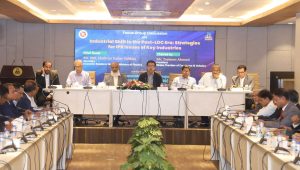
Speaking at PPRC’s Ajker Agenda discussion, titled “Creative Economy: Slogan or Untapped Potential?”, participants said Bangladesh’s creative industries have long depended on individual talent rather than a supportive policy framework, limiting investment, commercialisation and global competitiveness.
Filmmaker and creative entrepreneur Tanim Noor said introducing sector-specific tax incentives, including a 50 per cent tax exemption for the film industry, would attract significantly more investment into Bangladeshi cinema.

Chorki Chief Executive Officer Redwan Rony said policy reform must go beyond funding. He argued that domestic over-the-top (OTT) platforms are taxed under the general corporate regime because Bangladesh lacks a dedicated policy, while global platforms such as Netflix and Amazon earn revenue from Bangladeshi audiences without facing similar tax obligations, putting local streaming services at a competitive disadvantage. He also called for investment in film infrastructure alongside tax and licensing reforms.
Luva Nahid Choudhury, director general of Bengal Foundation, said Bangladesh has no shortage of creative talent but lacks the institutions needed to nurture, commercialise and scale it. She urged structural reforms that support not only artists but also the wider workforce behind the creative industries.




Playwright, actor and Tarua Creative Director Bakar Bakul said theatre has rarely been treated as an industry capable of generating economic value, with most productions relying on unpaid work and personal commitment. He said government support has often focused on political patronage rather than building a sustainable creative economy.
Mahrukh Mohiuddin, managing director of UPL, described publishing as one of the country’s most neglected industries. She said the National Book Policy is outdated, international promotion of Bangladeshi publishing remains weak and poor enforcement of copyright laws has allowed digital and print piracy to flourish, discouraging investment.
Md Tauhid Bin Abdus Salam, managing director of Classical Handmade Products (CHP), said quality certification, compliance and branding are essential for scaling handicraft exports and improving competitiveness in international markets.
Summing up the discussion, PPRC Executive Chairman Hossain Zillur Rahman said Bangladesh now needs a policy ecosystem that matches the sector’s economic potential. He said infrastructure alone would not be enough unless supported by effective public-private partnerships, while taxation, royalty sharing, copyright protection and licensing reforms should become policy priorities.
Rahman welcomed the government’s decision to allocate dedicated funding for the creative economy but said achieving measurable results would require industry stakeholders to work together and develop an independent strategic roadmap to guide future policy and investment.