





It begins with the smell, sharp, rotten, inescapable. Then comes the sight: layers upon layers of waste choking what was once a living waterway. In Keraniganj, the Shubhada canal no longer flows; it lingers, reduced to a narrow, blackened stream carrying the burden of Dhaka’s neglect.
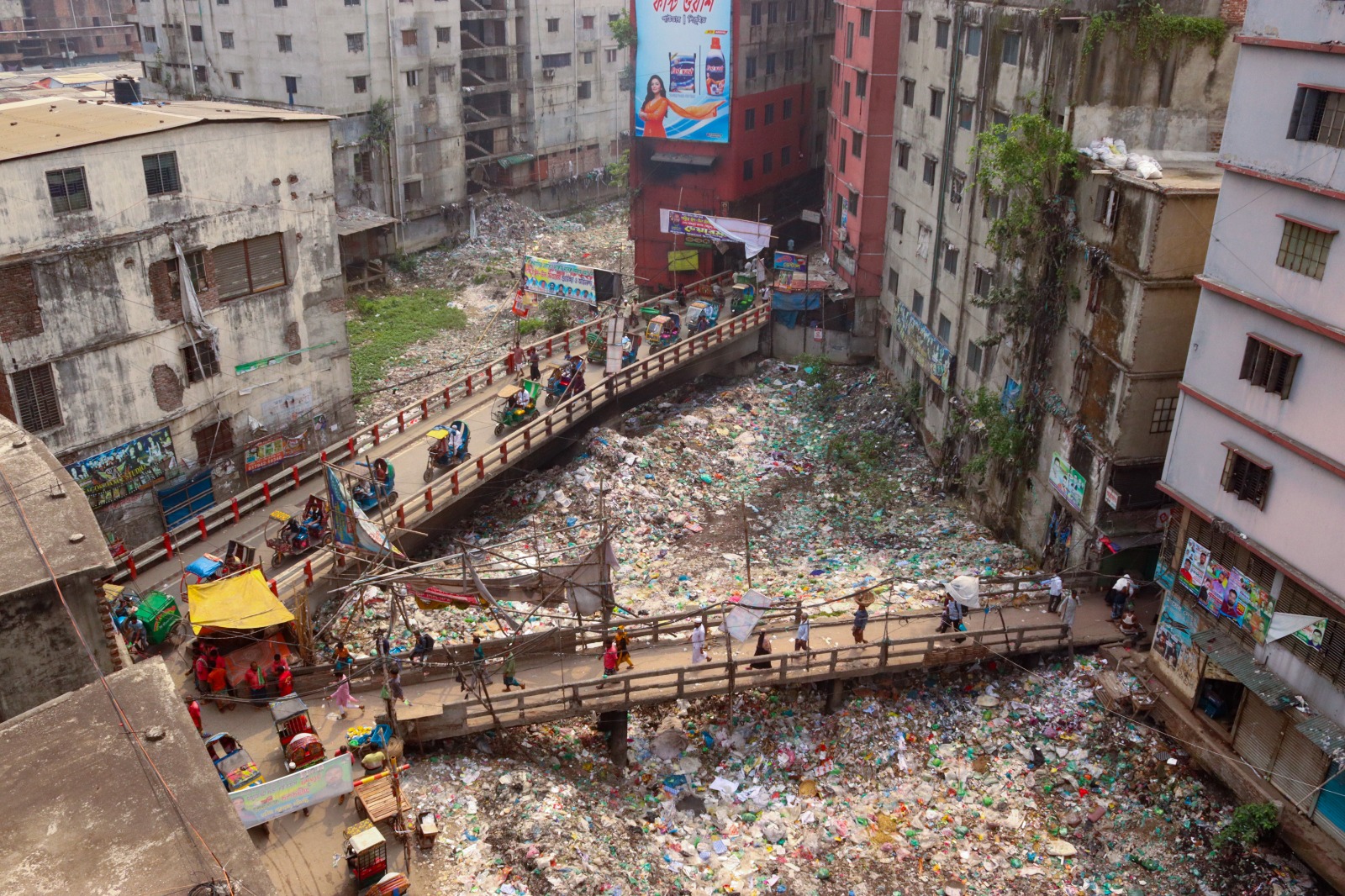
Once connected to the Buriganga, the canal had a purpose, a direction. Today, that identity has been erased. What remains is a clogged corridor of garbage, where water struggles to move beneath plastic, sludge and debris.
For the people who live along its banks, this is not just an environmental issue; it is a daily reality. Makeshift bamboo walkways stretch over piles of waste, forcing residents to navigate a precarious path every day. A single misstep can lead to injury, or worse. Movement here is careful, calculated, and often fearful.
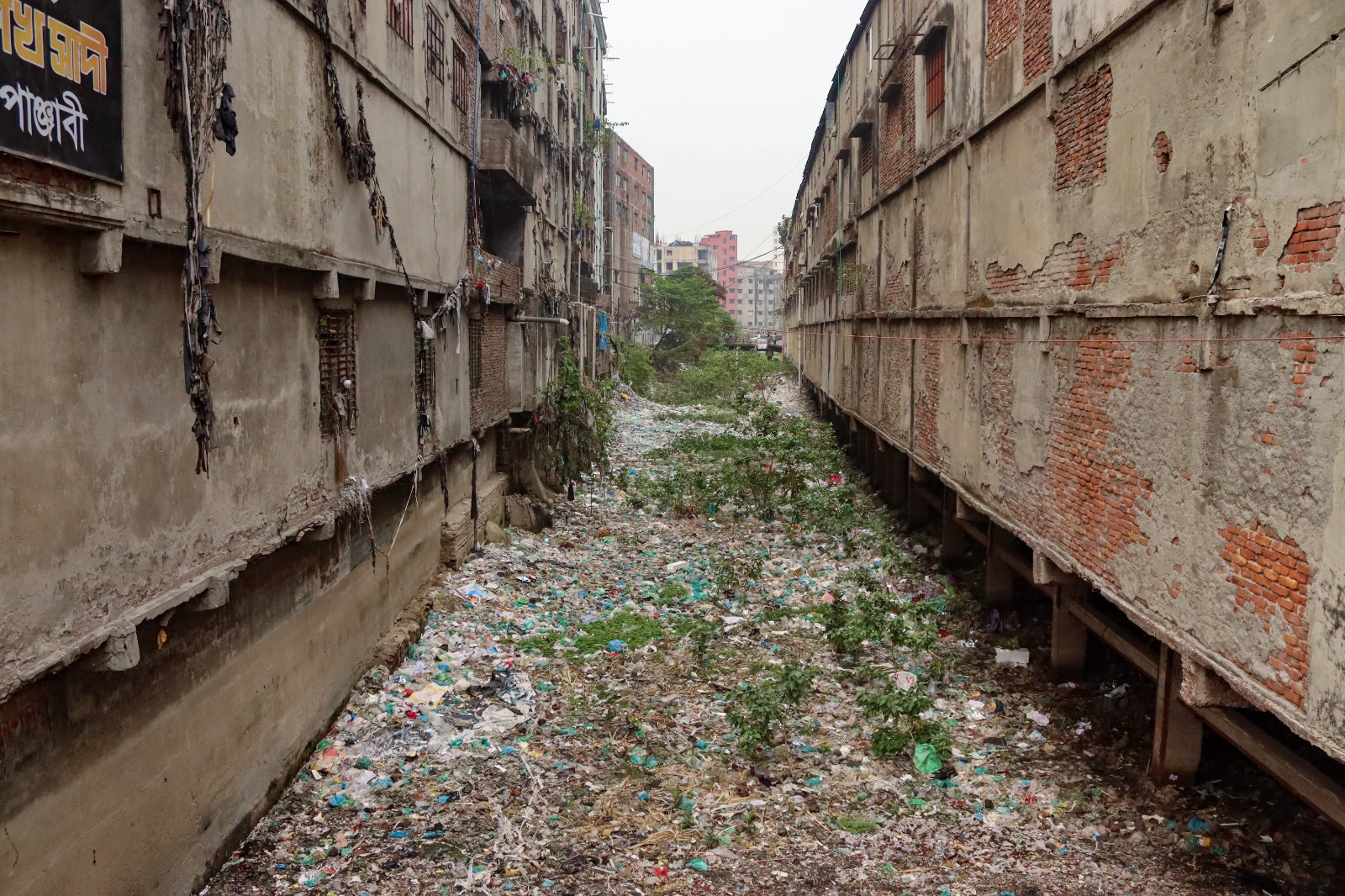
Children bear the brunt of this decay in ways that feel particularly unjust. For many, the journey to school involves crossing these unstable bridges, balancing over filth and uncertainty. What should be a routine walk becomes a daily risk.
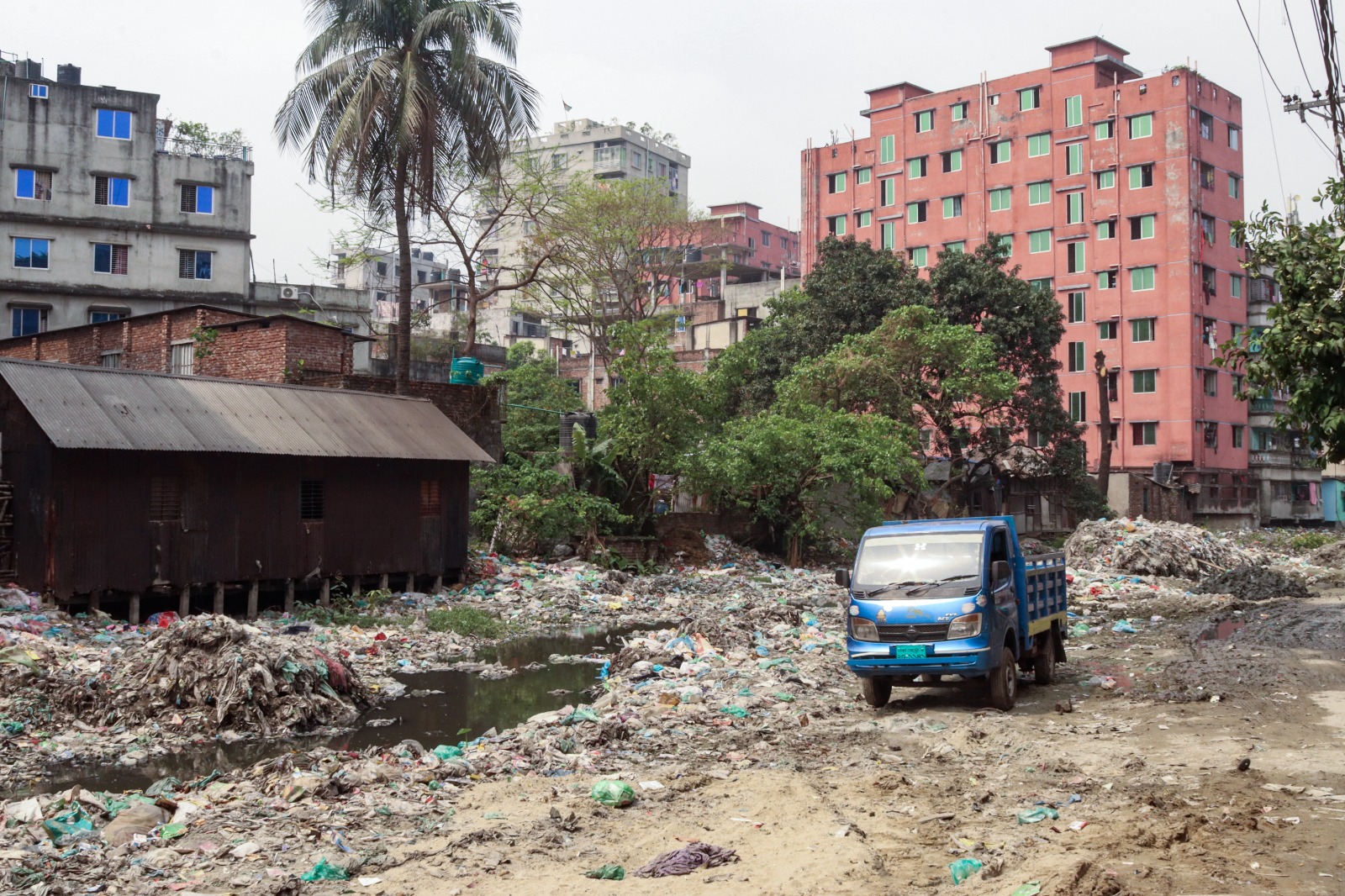
Life continues around the canal despite the conditions. Small shops and tea stalls line its edges, serving food exposed to flies and mosquitoes breeding in the nearby waste. Hygiene becomes a luxury, and illness an all-too-common consequence.
The canal, once a source of life, now feels like a slow, suffocating presence. The air is heavy, the water lifeless, and the sense of neglect overwhelming.
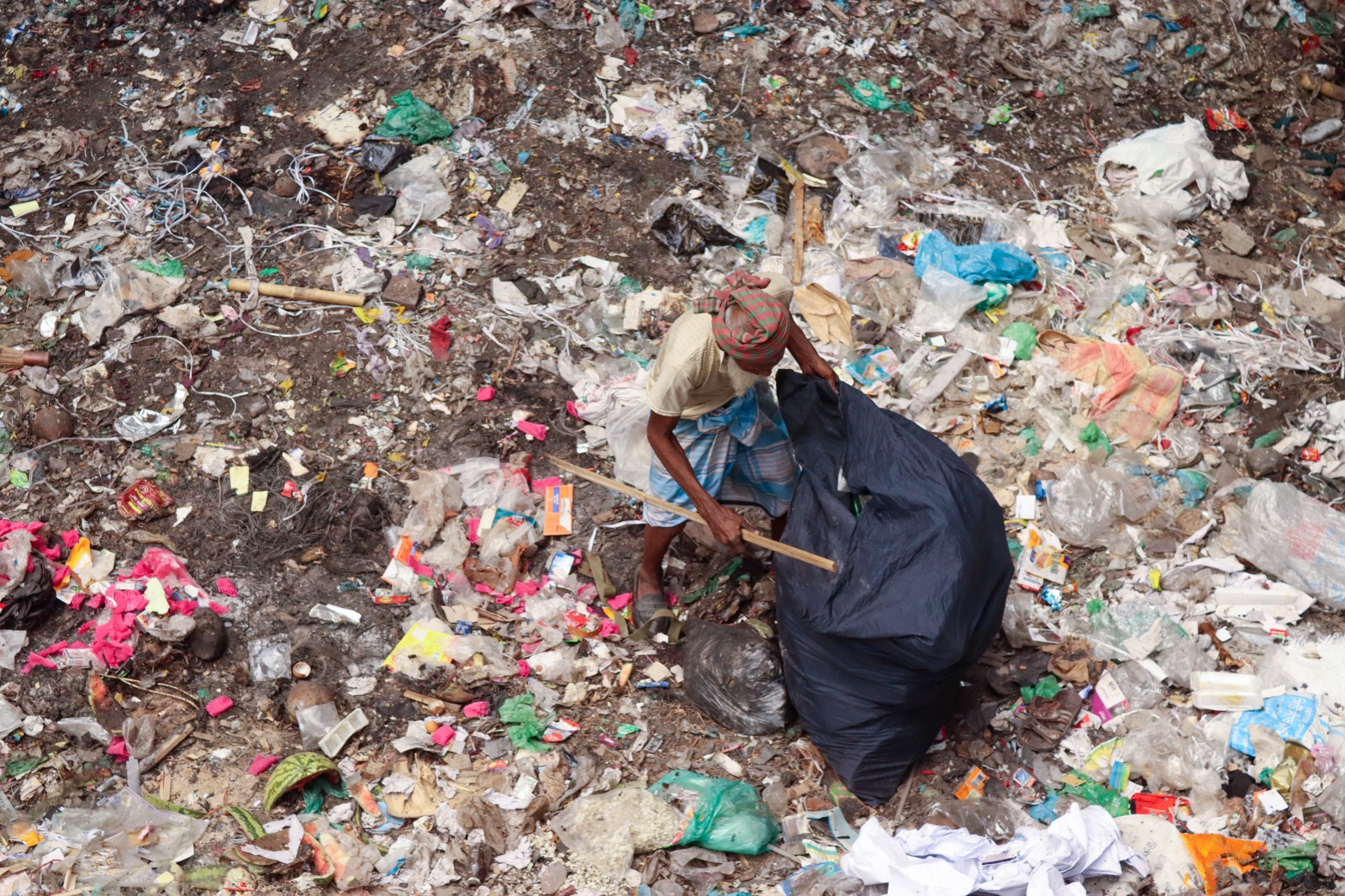
Yet, amid this, there remains a quiet resilience among residents. They do not ask for much. Just a clean canal, a safer path and a breath of fresh air.
Until then, Shubhada waits, caught between what it once was and what it has unwillingly become.


