


Lionel Messi has spent more than two decades turning football matches into personal showcases. Now, after the death of his father Jorge, the 39-year-old is considering whether he still wants to keep playing.
Messi remains under contract with Inter Miami until 2028. But his emotional tribute to his father offered a rare glimpse of uncertainty.
“I don’t know how to carry on. I used to just play football, and now I’m really not sure if I’ll carry on doing it for much longer,” he said.
If Messi does decide to walk away, football will lose a player whose career produced an extraordinary collection of defining moments.
His first major glimpse came as a teenager in El Clasico. A 19-year-old Messi scored all three Barcelona goals in a 3-3 draw with Real Madrid in March 2007, completing his first senior hat-trick with a stoppage-time equaliser.

Just weeks later, he produced one of the most famous goals of his career. Against Getafe in the Copa del Rey, Messi collected the ball in his own half, dribbled past several defenders and rounded the goalkeeper before finishing. The goal immediately drew comparisons with Diego Maradona’s famous 1986 World Cup run against England.
Messi then began collecting defining Champions League moments.
In the 2009 final against Manchester United, he scored a rare header from Xavi’s cross as Barcelona won 2-0. Two years later, he scored again against United in the final as Barcelona lifted the trophy for the fourth time.




In 2010, Messi scored four against Arsenal in the Champions League quarter-final. Two years later, he went even further, scoring five against Bayer Leverkusen.
Records soon followed.
Messi became Barcelona’s leading scorer at 24, breaking Cesar Rodriguez’s long-standing mark with a hat-trick against Granada in 2012. That same year, he scored 91 goals for club and country, setting the record for most goals in a calendar year.
In 2014, another hat-trick against Sevilla made Messi La Liga’s all-time leading scorer. Three years later, he produced another iconic El Clasico moment, scoring in stoppage time at Real Madrid before holding his shirt aloft in front of the Bernabeu crowd.
Then came the moments that had eluded him with Argentina.
Messi left Barcelona in tears in 2021 after the club could not renew his contract. Months earlier, however, he had finally won his first senior international trophy, leading Argentina past Brazil in the Copa America final at the Maracana.
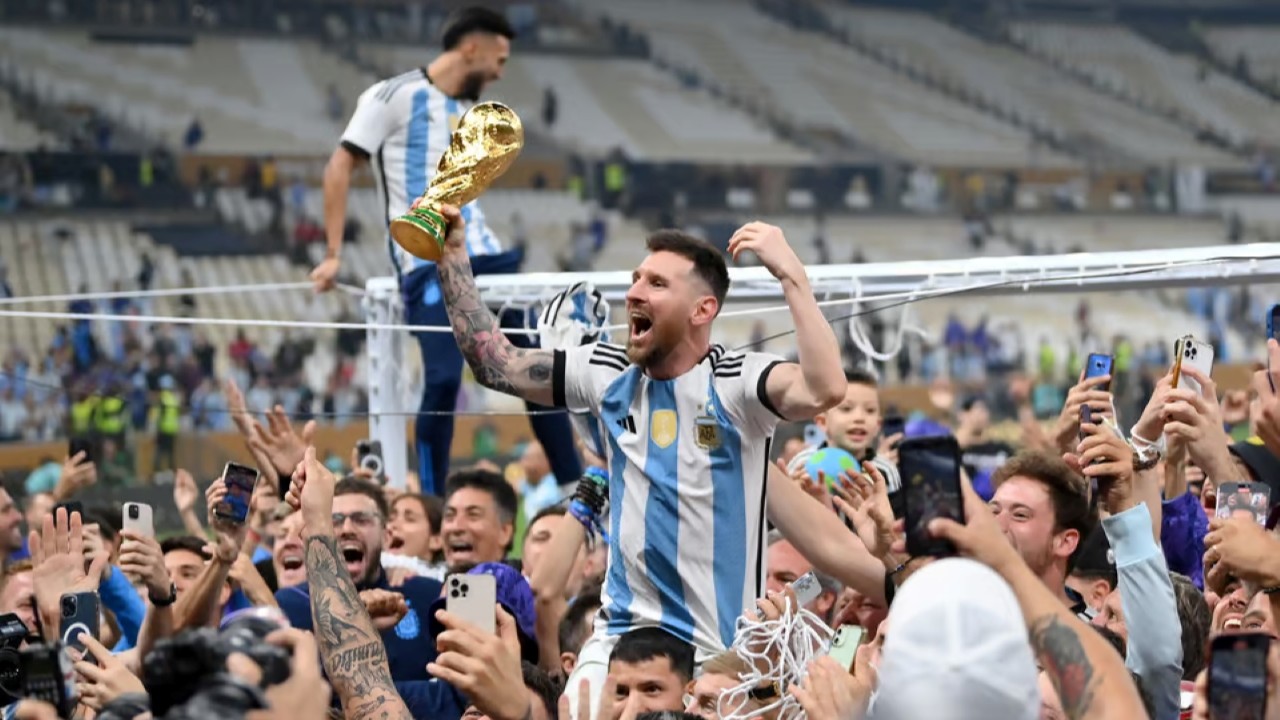
The ultimate prize arrived in Qatar in 2022.
Messi scored twice in the World Cup final against France and converted his penalty in the shootout as Argentina won their first World Cup since 1986. He finished the tournament with seven goals and won the Golden Ball.
He added another Copa America title in 2024 and collected a record eighth Ballon d’Or in 2023.
At the 2026 World Cup, Messi again produced on the biggest stage. His eight goals took his World Cup tally to 21, briefly making him the tournament’s leading scorer before Kylian Mbappe moved ahead.
Argentina eventually lost the final to Spain, but Messi had already added another remarkable chapter.
Now comes the question no record can answer. After a career filled with trophies, records and moments of genius, Messi must decide whether football still feels like home without his father beside him.