Since its independence, Bangladesh has carried the promise of resilience, sacrifice, and immense potential. Born through struggle and guided by the dreams of millions, the country was meant to stand as a testament to justice, dignity, and self-governance. Yet, decades later, a difficult question continues to echo across society: why has this promise remained only partially fulfilled?
At the heart of this question lies a persistent crisis of leadership and governance. Time and again, citizens have placed their trust in individuals who, once in power, have struggled to demonstrate the competence, integrity, and long-term vision required to lead a nation of over 170 million people. Leadership, in its true sense, is not about position or rhetoric; it is about responsibility, accountability, and the ability to unite a diverse population toward a common national goal. Unfortunately, these qualities have not always been consistently present.
One of the core challenges has been the personalisation of politics. Instead of institutions growing stronger over time, leadership has often revolved around individuals rather than systems. This creates a fragile structure where decisions depend more on personalities than on established frameworks, policies, and accountability mechanisms. As a result, governance becomes reactive rather than strategic, and emotional rather than rational.
This problem is not limited to political leaders alone. It reflects a broader systemic issue where partisan interests often overshadow institutional integrity. When institutions, whether administrative, legal, or regulatory, are unable to function independently and effectively, the entire governance structure weakens. Moreover, there is a growing concern about the quality of public discourse. In a healthy democracy, disagreement should lead to constructive debate and better solutions. Instead, public dialogue often descends into polarisation, where opposing views are dismissed rather than engaged with.

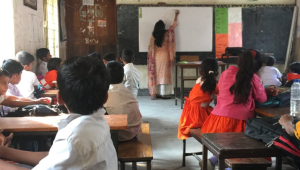
Education and civic awareness also play a crucial role in shaping leadership outcomes. A society that lacks critical thinking, informed participation, and a sense of civic responsibility is more vulnerable to poor leadership choices. When voters are unable to evaluate policies, question decisions, or demand accountability, the democratic process itself becomes weakened. Leadership, therefore, is not only a supply issue but also shaped by the demand created by the people.
Another significant issue is the absence of a structured and integrated governance framework. Effective governance requires coordination across sectors, long-term planning, and continuity of policies beyond political cycles. Without this, development becomes inconsistent, and setbacks often offset progress in one area. Infrastructure may expand rapidly, but without parallel improvements in education, healthcare, institutional reform, and environmental management, the overall impact remains uneven.




Bangladesh has, nevertheless, demonstrated remarkable economic progress in recent decades. Growth in the ready-made garments sector, rising remittances, infrastructure expansion, and poverty reduction have all contributed to national development. These achievements are real and deserve recognition. However, economic indicators alone do not define national success. True progress is measured by the strength of institutions, the fairness of systems, and the trust citizens place in governance. Without these, growth risks become fragile and unevenly distributed.
At the same time, emerging challenges demand stronger leadership foresight. Climate vulnerability poses a serious threat to Bangladesh’s long-term stability, requiring coordinated adaptation strategies. Rapid urbanisation has created pressures on housing, transport, and public services. Youth unemployment remains a critical concern, as millions enter the job market each year.
It is important to acknowledge that leadership is not about perfection. Every nation faces challenges, and every leader operates within constraints. But what distinguishes effective leadership is the willingness to learn, adapt, and prioritise the collective good over personal or political interests. Transparency, accountability, and inclusiveness are not optional but essential pillars of sustainable governance.
So, what is the way forward?
First, there must be a renewed focus on institution-building. Strong institutions outlast individual leaders and provide continuity, stability, and fairness. This requires legal reforms, administrative modernisation, and genuine independence in key sectors such as the judiciary, election management, and oversight bodies. Second, political culture needs transformation. Merit, competence, and integrity should become the primary criteria for leadership selection, rather than loyalty or influence alone. This shift will not happen overnight, but it begins with internal reforms within political parties and a stronger public expectation of accountability. Third, education must be prioritised not only in terms of access but also in quality. An informed and engaged citizenry is the foundation of a functioning democracy.
There should be greater emphasis on long-term national planning. Policies must transcend electoral cycles and focus on sustainable development goals. Whether it is climate resilience, digital transformation, industrial diversification, or healthcare reform, consistency in policy execution is essential for meaningful progress. Finally, Bangladesh needs a unifying national vision and one that rises above political divisions and focuses on shared aspirations. The strength of the country lies in its people, its cultural depth, and its history of resilience.
The path ahead is not easy. Structural reforms are complex, and cultural shifts take time. But history shows that nations can evolve, adapt, and overcome their limitations. Bangladesh has already defied many odds since its independence. There is no reason it cannot do so again. The question is whether it can align its leadership, institutions, and policies toward a common purpose. When that alignment is achieved, the long-standing dream of progress will no longer remain distant but will become a lived reality. Until then, the search for true leadership continues.
The writer is a columnist and political analyst