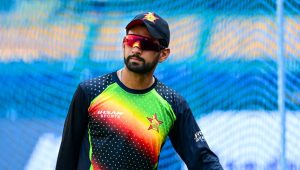




When Akeal Hosein talks about his childhood, there is a curious blend of innocence and intensity in his voice, as if he is still trying to make sense of the forces that shaped him.
“I have no idea what made me gravitate to that profession,” he says with a laugh when asked about his childhood dream of becoming a fireman. “It was two, a fireman or an actor. Those were just some of my dreams outside of cricket. And then I picked up cricket and from there I knew it was cricket only for me.”
That moment, when bat and ball replaced the childhood dream of firefighting, would set the course for one of Trinidad’s most determined sporting journeys. From the rugged heart of Laventille, a neighborhood often mentioned for the wrong reasons, Hosein rose to become one of the most dependable left-arm spinners in the Caribbean.
A spark in Laventille
It was not an academy or a coach that first showed Hosein the promise of cricket. It was a neighbor, Darren Crookshank.
“At quite a young age I understood what cricket could do for you,” Hosein recalls. “Darren would sit and share stories with me. He told me how cricket gave him opportunities to do what he loved, to travel the Caribbean and the world. I thought, how fitting could that be, doing something you love and getting to explore the world as well.”

From that point, there was clarity. “I played one or two other sports in the neighbourhood,” he says. “But I never got the love for any other sport like I did for cricket. Any other sport is just for recreation, but cricket is going to be my career.”
That sense of purpose was essential. Laventille could be unforgiving, with its distractions and dangers. Many stories there ended before they truly began. Hosein’s did not, largely because of the example he saw every day at home.
A father’s lesson
“Just looking at the examples my dad set for me, he was always hardworking. He worked two jobs,” Hosein says. “I remember one time he fell down coming home because he was so tired.”




That image stayed with him for life, a silent lesson in resilience. “For me that was the perfect and only example I needed,” he continues. “Stick to your goals, your dreams, stay on the straight and narrow path. Always have your goals in mind and don’t give up.”
His father passed away before he could see his son’s rise. Hosein pauses when he speaks about him. “It’s unfortunate he’s not here today to see me rise,” he says quietly. “But I thank him very much for the way he set me up as a kid. Having that strong mentality, I think that’s why I’m here today.”
‘The Lara of Laventille’
For a community long associated with struggle, Hosein’s story has become a counter-narrative. Locals now call him “The Lara of Laventille.”
“It’s good to hear that,” he smiles. “A lot of negative things come out of that area, so it’s always good when people start recognising the positives. I always say it’s not where you come from, it’s about where you’re going.”
Hosein represents that shift, from survival to aspiration, from anonymity to identity.
Learning from the greats
Trinidad’s lineage of spinners is proud and deep, from Samuel Badree’s precision to Sunil Narine’s mystery. Hosein now belongs in that line and understands the value of having those figures around him.
“Before I came up here, I did a lot of work with Sunil Narine,” he says. “Badri’s here commentating. We’re always having conversations. It’s very good to have these guys around and in your corner, one phone message away. At the end of the day, these are the greats of the game. So why not pick their brains and get that knowledge to make your career a better one?”
That humility and curiosity are central to how Hosein approaches his craft. He studies, learns, and evolves quietly.
Full circle in Bangladesh
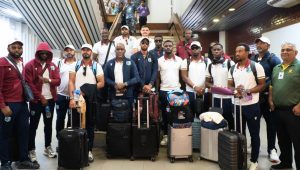
His journey has come with moments of symmetry. When he returned to Bangladesh recently, he walked familiar ground in Mirpur, the same place where he made his ODI debut.
“Yeah, it’s good memories,” he smiles. “My first wicket was Litton Das, it was a beauty. I was sharing that with some of my colleagues. It’s good to come back here in spin-friendly conditions and put on a couple of performances to help my team get over the line. Pretty pleasing, and it’s a good welcome back to Bangladesh for me.”
From the concrete streets of Laventille to the slow, turning tracks of Mirpur, Hosein’s story has crossed continents.
Yet his essence remains the same, hard work, quiet belief, and pride in proving that where you start does not have to define where you finish.
He may not have become a fireman, but in his own way, Akeal Hosein has learned to control a different kind of fire, one that burns from within.