
Bangladesh, a riverine country, has for centuries depended on its rivers to sustain its culture, society, civilisation, and economy. Along these rivers, agriculture has been a way of life. Trade, fishing, navigation—all have taken place on this waterway. People have built their settlements along its banks. Despite over 50 years of independence, however, the country is now facing one of its most vexing national challenges on one of its most important transboundary rivers – the Teesta.
The Teesta is more than just a river; it has evolved into an issue of national interest, economic resilience, environmental sustainability, and national security. Flowing from the Himalayan peaks, the Teesta crosses the Indian states of Sikkim and West Bengal, and enters Bangladesh, where it nurtures one of the world’s most fertile basins supporting life and livelihood to millions through agriculture, fisheries, and biodiversity. For centuries, it had been a vital source of life in northern Bangladesh, a waterway of promise and bounty. Sadly, the natural flow and character of the river have been irrevocably altered by upstream damming and water regulation, declining dry season flow, increasing sediment deposition and riverbank erosion, and lack of integrated river management.
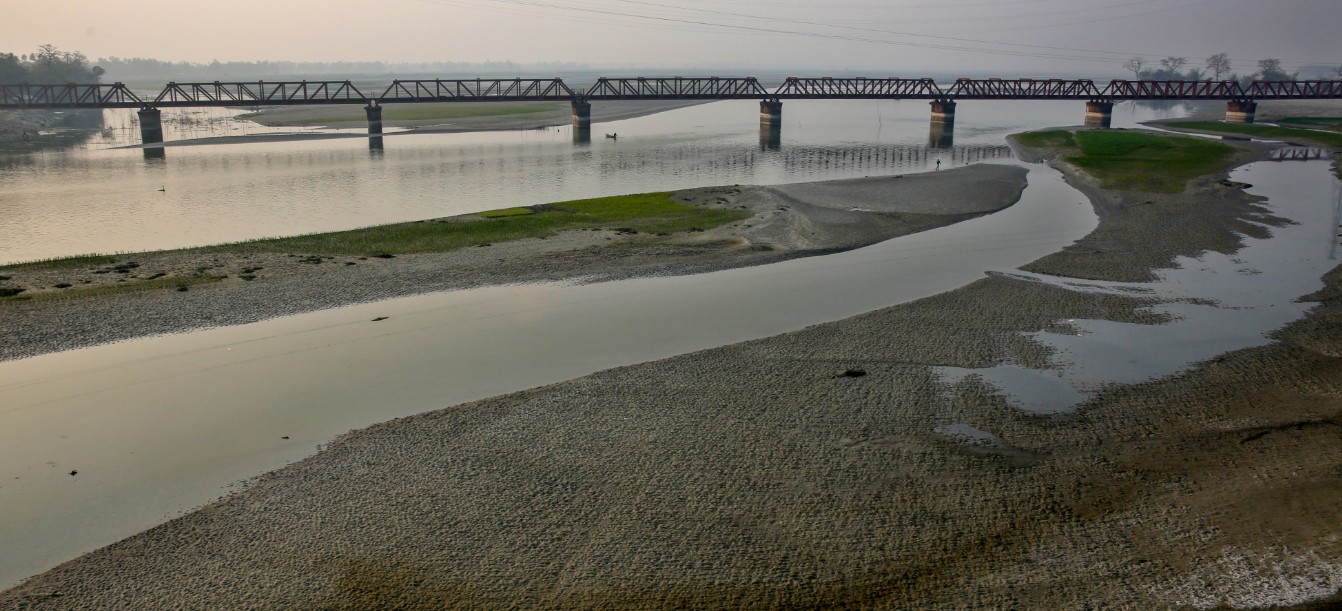
While excessive flow during monsoon devastates river communities with unprecedented floods and extensive crop inundation, large stretches of the Teesta nearly run dry in the dry months, exposing barren sand beds and pushing agricultural production and rural livelihoods to the brink. This paradox of abundant waters at one end of the spectrum and chronic water scarcity at the other end is no accident. The solution lies in recognising the Teesta as more than just an infrastructure project; it is a matter of strategic national importance.
Developing the Teesta could be the next major investment in Bangladesh’s long-term security, food security and economic development. The economic consequences of the Teesta are undeniable. Northern Bangladesh is an agricultural heartland responsible for the production of rice, wheat, maize, potatoes, vegetables, and a plethora of cash crops. Unfortunately, inadequate irrigation in the dry season, the region’s primary water challenge, prevents farmers from realising the full productivity of the land.

But what if that excess monsoon water were judiciously conserved and managed in reservoirs, through modern dam structures and integrated water systems to provide reliable irrigation throughout the year? The impacts would be dramatic. More robust crop yields, higher intensity cropping, reduction in production costs, enhancement of national food security and, consequently, a significant increase in the incomes of farmers in northern Bangladesh. Beyond agricultural production, the flow of waters would spur a host of related industries-agribusinesses, cold storages, food processing units, dairy enterprises, fisheries, logistics, rural businesses, and entrepreneurship. The economic ramifications could result in thousands of job opportunities for people in northern Bangladesh, significantly alleviating poverty and driving national GDP growth. Thus, an investment in the Teesta should be viewed as a national investment in our future, not merely a developmental project.
Modern dams, when designed thoughtfully and deployed wisely, are not simply about flood control. A well-conceived dam is a multi-purpose facility. It is primarily meant to regulate water resources. Dam projects are used for water conservation, erosion control, groundwater recharge, riverbank protection, fisheries management, power generation and, importantly, climate resilience and adaptation measures. By storing excess monsoon waters, Bangladesh could dramatically reduce the impacts of flooding and severe water shortages simultaneously. However, the engineering, environmental, social, and riverine ecological impacts of dam construction or any similar large-scale intervention need to be rigorously studied and addressed in the design and execution process.
A healthy riverine ecosystem is a biodiversity stronghold that ensures rich fish stocks, viable wetland systems, flourishing groundwater resources, and stable riverbanks. A diminishing river flow has led to a decrease in native fish species, drying of wetlands, escalating riverbank erosion and falling groundwater tables in many parts of northern Bangladesh. This directly has negative implications for both agriculture and human health. Climate change has exacerbated the vulnerability of Bangladesh to environmental disasters. More irregular patterns of rainfall, increased instances of droughts and floods, rising temperatures, and other climate-related stresses put further pressure on water resources.




Therefore, effective river basin management, consistent dredging of the river channel, restoration of natural river processes, conservation of wetlands, sustainable rainwater harvesting, and scientific storage solutions are crucial climate adaptation measures. Environmental stewardship for the Teesta is inseparably linked with our nation’s environmental resilience. Ensuring adequate water supplies for the nation’s agricultural sector, industries, and millions of its citizens is no longer solely a matter of development; it is increasingly a critical issue of national security.
As the global population and climatic stress on freshwater resources mount, water scarcity poses a growing threat to global stability and prosperity. Depletion of available water resources in northern Bangladesh is already affecting food security and, if unaddressed, could lead to rising rural poverty, increased rural-to-urban migration, and other socio-economic instabilities. Enhancing our agricultural productivity and bolstering national food security through expanded irrigation by the Teesta could effectively bolster our national security posture.
For these reasons, addressing the Teesta must be considered a core national security priority, not just a development challenge. Consequently, the Government of Bangladesh must devise a comprehensive, multi-sectoral and long-term strategy for the Teesta. This strategy should move beyond the confines of political cycles and evolve into a national development agenda that outlines limited to, investment in river training, regular maintenance dredging, infrastructure development for water conservation and storages, appropriate irrigation technology, riverbank protection and stabilisation works, management of groundwater, climate adaptation, and robust environmental management of the basin. Its implementation requires a holistic approach involving concerted collaboration among government agencies, professional bodies of engineers, environmental scientists, agricultural specialists, and community organisations.
Although discussions over the Teesta River waters have been underway for many years without yielding a conclusive outcome, the implications of the diminishing dry season flow in the Teesta have profound and negative impacts on Bangladesh’s agriculture, environment, and its rural population. India also has domestic constraints, both administrative and political, governing water sharing. Despite these complex realities, Bangladesh should continue to engage in pragmatic and future-oriented diplomacy that seeks to find common ground and mutual benefit.
The principles of equitable and reasonable utilisation of international rivers, coupled with the duty of states not to cause significant harm to co-riparian states and to cooperate on shared waters, offer a useful framework under international water law to facilitate dialogue and dispute resolution. The country must build and sustain a solid technical basis for such engagement, supported by hydrological data, economic analysis, and robust diplomatic efforts to build mutually beneficial initiatives in the basin. Simultaneously, Bangladesh must not solely rely on agreements with neighboring countries; it must also act proactively domestically.
It is indispensable for safeguarding the country’s food security, sustaining economic growth, protecting its rich biodiversity, reinforcing its climate resilience, and asserting national control over its most precious water resources. To abandon its rivers is to imperil one’s future; to master them is to build one’s own destiny.
Gone is the era of endless debate. Bangladesh requires a strong vision, science-backed, policy-led, diplomacy-enhanced, politically committed national agenda. A renewed Teesta can put northern Bangladesh back on the map, it can enhance national economic strength, environmental resilience, and sustain the growth path for Bangladesh.
The views expressed in this article are solely those of the author
The writer is a columnist and political analyst