As BNP Chairperson Khaleda Zia battles a critical illness in hospital, a renewed wave of speculation has swept through the country’s political arena. The question dominating discussion is simple but loaded: will her exiled son and BNP’s acting chairman Tarique Rahman return to Bangladesh — and if not, why?
The debate intensified after Tarique posted a short but carefully worded message on social media, saying he shared “the deep desire to feel my mother’s touch during such a crisis, as any son would”. But, he added, unlike others, he did not have the “unrestricted freedom to act solely on personal decisions”. He also said he could not elaborate further on “this sensitive matter”.
For analysts, these few lines opened up two parallel layers of interpretation — the emotional immediacy of a son wanting to be with his critically ill mother, and the strategic considerations of a politician navigating a fraught national atmosphere. The statement hinted at personal anguish but also at unspoken political constraints, prompting questions about what — or who — is really preventing his return.
Khaleda Zia’s deteriorating health has become the emotional centre of Bangladesh’s political conversation. Under ordinary circumstances, a son rushing home would be unremarkable. But Tarique’s return is now intertwined with complex political calculations, diplomatic caution and state-level assessments.
The government maintains that he faces no legal barriers, noting that his sentences remain effectively suspended and that he is free to re-enter the country. The law ministry has echoed this position.

As recently as Saturday, Shafiqul Alam, press secretary to Chief Adviser Muhammad Yunus, reaffirmed the interim government’s stance, saying there are no restrictions or any form of objection from the government’s side.
Inspector General of Police Baharul Alam likewise told TIMES of Bangladesh on Saturday evening: “There is no risk to Tarique Rahman’s security if he returns to the country.”
Yet Tarique has not come back. The gap between official assurances and political reality, analysts say, is where the “missing variable” lies — whether in security concerns, political vulnerability, or strategic hesitation. Some also detect a geopolitical dimension to his inability or unwillingness to return home.

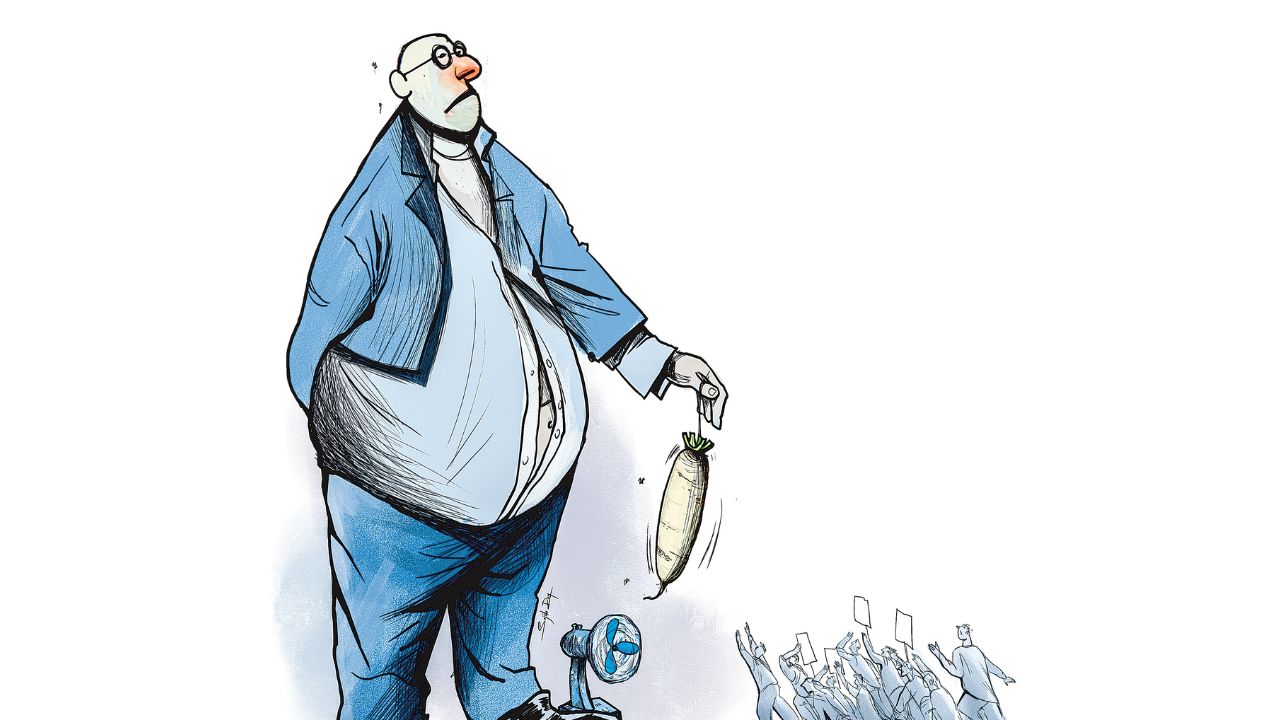
In the midst of Bangladesh’s pre-election uncertainty, his return is seen as a high-stakes event with consequences for law and order, political mobilisation and party direction. For many observers, it is no longer a personal decision but a “state-level calculation”.
The debate has revived questions about a controversial document from 2007, during the military-backed caretaker government known as the One-Eleven era. At the time, Tarique reportedly gave an undertaking to withdraw from politics — a document forwarded by the joint forces to the home and foreign ministries.
Whether that undertaking still carries any official weight remains unclear. Neither the government nor BNP has clarified its current status, fuelling suspicion that the old pledge may still linger in the political background. Analysts argue, however, that if Tarique chooses to return, such bureaucratic obstacles are unlikely to be decisive.
Despite the fall of the Awami League government nearly 18 months ago, Tarique has continued to guide BNP’s strategy from London. This raises questions about whether physical distance offers him tactical advantages — insulation from domestic turbulence, political safety, or leverage over negotiations.
Tarique currently holds permanent legal residency in the UK. He is not a political asylum seeker, meaning British policy does not restrict his travel. Legally, there is nothing stopping him from boarding a flight to Dhaka. Yet his remark — that he has limited scope to “explain further” — has been widely interpreted as diplomatic caution, hinting at the presence of unspoken “red lines”, either international or domestic.
His message also appears aimed at managing expectations within the BNP. Some activists believe his return would instantly revitalise the party, but senior leaders warn that an abrupt comeback could upset sensitive political arrangements — including talks with allies, the handling of legal vulnerabilities and calculations about security risks. With the election landscape shifting rapidly, they fear his presence in Dhaka could introduce new uncertainties rather than strengthen the party’s position.
From that perspective, his comment serves multiple purposes — to temper expectations, signal caution, and reaffirm that the timing of his return is not solely a personal matter but part of a broader strategic roadmap.
For supporters, the situation is deeply emotional: a son unable to visit his critically ill mother. Yet analysts say it also reflects the broader anxieties of South Asian politics, where leaders routinely operate under threats — from legal jeopardy to political instability and security uncertainty.
The question looming over all of this is stark: Would Tarique Rahman return only when there is a clear prospect of BNP returning to power — and not before?
His reference to “crisis” captures both a private family tragedy and a national moment of uncertainty. It recalls the political engineering of the past — including the “minus-two formula” that once sought to remove both Khaleda Zia and Sheikh Hasina from politics. Today, analysts are asking whether another invisible equation is again shaping the choices available to Bangladesh’s key political actors.