





India is making concerted efforts to reset diplomatic ties with BNP government led by Prime Minister Tarique Rahman, as speculation intensifies over a potential official visit by the Bangladeshi leader to New Delhi.
The urgency of India’s diplomatic push was highlighted earlier this month when an official email from the Indian president’s office was abruptly withdrawn after prematurely announcing the cancellation of a Change of Guard ceremony at the presidential palace to prepare for Tarique’s ceremonial welcome, reports BBC.
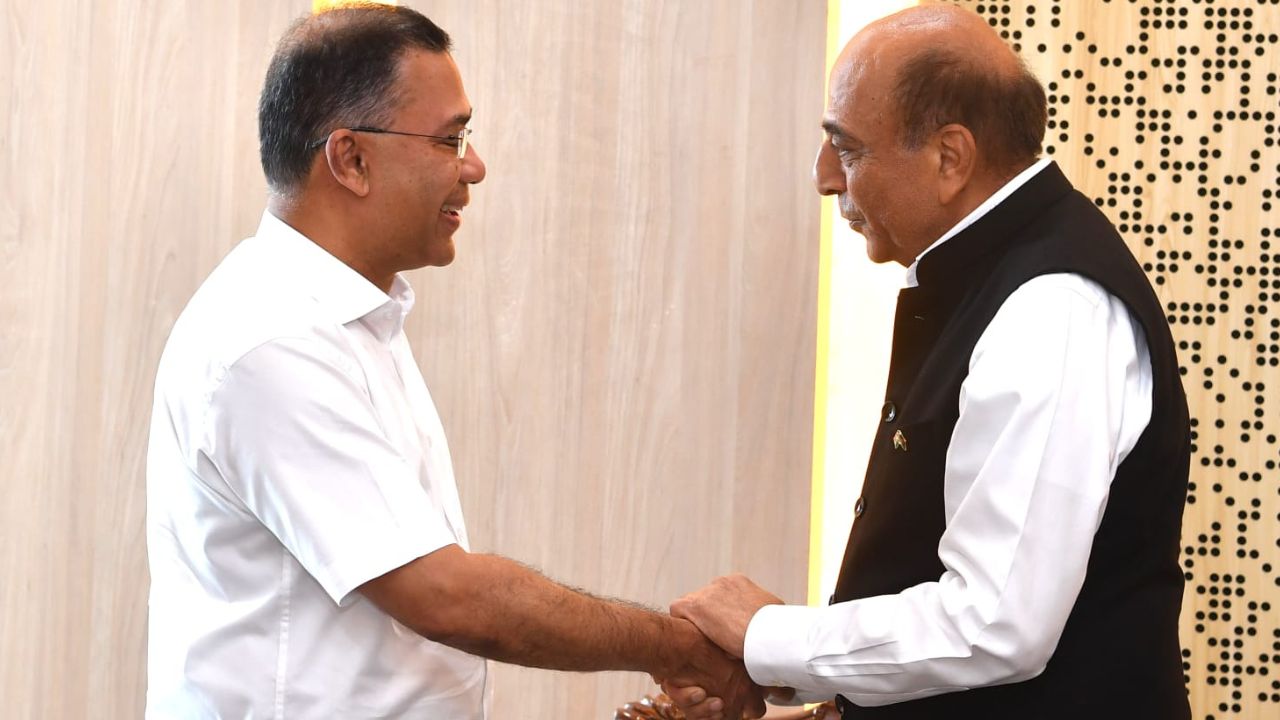
While no visit has been officially confirmed, Delhi has extended a formal invitation to Tarique, with India’s High Commissioner to Bangladesh Dinesh Trivedi, holding multiple discussions with officials in Dhaka.
Trivedi has promised that the prime minister will be “accorded the highest honour” and given a “memorable welcome”.
However, Prime Minister’s Press Secretary AAM Saleh said “No decision has yet been made on the visit.”
Hasina extradition hurdle
A major obstacle to the bilateral reset is the continued presence of former prime minister Sheikh Hasina on Indian soil.
Hasina, who ruled Bangladesh for 15 years, was ousted in August 2024 following a mass uprising in which hundreds of people died. She fled to India, where she has remained since.
Bangladesh has formally requested Hasina’s extradition after a special tribunal sentenced her to death in absentia for ordering lethal force against protesters, a charge she denies.
“We called for the creation of a propitious environment and are awaiting response from the Indian side regarding expediting extradition of Sheikh Hasina,” Saleh said.
India’s foreign ministry has stated that the request is currently being considered.
Bilateral tensions flared further on 5 August when Hasina virtually addressed journalists at the Foreign Correspondents’ Club of South Asia in Delhi, accusing BNP government of suppressing her supporters and vowing to return to Bangladesh in December.
The public address sparked “outrage” in Dhaka. Although India’s foreign ministry disavowed the event, stating it had “no role” and did not “endorse anything said at the forum,” the incident created a significant political backlash.
According to Dhaka University Professor Lailufar Yasmin, there had been reports that the prime minister was seriously considering a visit to New Delhi before Hasina’s appearance. “It actually created a huge backlash in Bangladesh,” Yasmin said.
“Questions were raised whether Indian authorities were sincere about a reset in bilateral relationship”.
For the prime minister, travelling to New Delhi while Hasina remains there carries a heavy domestic political cost.
Delhi’s overtures and bilateral stakes
Despite these strains, New Delhi has actively reached out to Dhaka to repair relations. Former Indian foreign secretary Shyam Saran noted that India has gone “pretty far” to meet Bangladesh’s immediate needs, including supplying electricity and fuel, issuing medical visas, and reviving bilateral trade mechanisms.
The stakes for both nations are immense. India and Bangladesh share a 4,096-kilometre (2,545-mile) border and deep cultural ties. Last year, bilateral trade exceeded $12 billion, overwhelmingly in India’s favour.
Under Hasina’s tenure, India secured critical road, rail, and port links to access its landlocked north-eastern states, while Dhaka co-operated closely with Delhi to crack down on north-eastern insurgent groups.
However, India’s close relationship with Hasina became deeply controversial within Bangladesh, with critics accusing Delhi of ignoring concerns over human rights and democratic backsliding.
Under the subsequent interim government led by Muhammad Yunus, bilateral ties deteriorated sharply.
Strategic realignment and Mecca Pact
India’s diplomatic scramble also comes as Bangladesh begins rebuilding relations with Pakistan, India’s long-standing rival.
Dhaka and Islamabad have recently exchanged high-level military visits and discussed expanding defence co-operation, developments monitored closely by Delhi.
This marks a major shift from the 2000s, when India accused Pakistan’s Inter-Services Intelligence of training north-eastern insurgents on Bangladeshi soil.
Bangladesh is positively viewing potential involvement in “Mecca pact,” a NATO-style collective defence agreement signed this month by Saudi Arabia, Turkey, and Pakistan.
“If there is a security arrangement among Islamic nations in the Middle East, it is not unusual for us to consider participating,” State Minister for Foreign Ministry Humayun Kabir said this week, adding that the arrangement is “being viewed positively”.
Saudi Arabia has already invited Tarique for a bilateral visit, though it remains unclear if a formal invitation to join the pact has been extended.
Upcoming diplomatic windows
Professor Yasmin cautioned that Bangladesh should proceed carefully regarding any defence pact to avoid prematurely aligning its strategic interests or antagonising India.
She urged that Tarique should visit New Delhi before United Nations General Assembly meeting in New York in mid-September. “Neighbours have to live together,” she noted.
Another diplomatic opportunity is approaching in mid-September, when India is scheduled to host a BRICS summit.
Bangladesh has been invited to attend as a special guest. Following weeks of public overtures, Delhi remains hopeful that the Bangladeshi prime minister will accept the invitation to begin a new era of bilateral relations.


