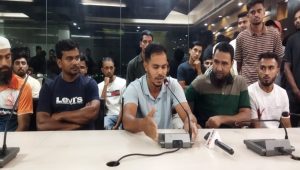
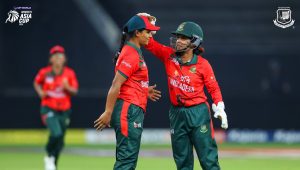
Bangladesh Cricket Board ad hoc committee president Tamim Iqbal has dismissed the notion that India ever faced a security threat in Bangladesh, telling Indian media outlet The Indian Express that the BCB and BCCI relationship is no longer broken and that a bilateral series would be the best way to prove it.
On the T20 World Cup withdrawal
Tamim was candid about the decision that strained relations between the two boards. “I was probably the first person to speak out publicly. The previous BCB administration did not handle the matter correctly. The ICC was flexible, there was room for a solution. We should have tried to find it,” he said.
He framed the decision in deeply personal terms, recalling Bangladesh’s famous ICC Trophy victory over Kenya in 1996-97 that secured their first World Cup qualification. “My house was flooded with coloured water. People came out onto the streets. That celebration brought children into cricket. And yet we gave up a World Cup without any proper discussion. There may be players in that squad who will never get another chance. For me, that is the most painful thing.”

BCB and BCCI: no real problem anymore
On the relationship with India, Tamim was equally direct. He noted his close personal friendship with current BCCI president Mithun Manhas, having played alongside him in the IPL and in Dhaka League cricket. “After taking this position I have not yet had the opportunity to sit formally with him, but I know him very well. Bangladesh’s security situation is excellent now. There is no problem, no security threat, and there never was for the Indian team. When India come here, the whole stadium is packed. People love this rivalry. Personally, I think there is no real problem anymore between the BCB and the BCCI. Hosting a series here would be the best way to move to the next stage.”



On Pakistan’s solidarity and the ICC
Asked about Pakistan’s threat to boycott the World Cup in solidarity with Bangladesh, Tamim was measured. “It is difficult for me to comment. I was not part of the core discussions. Whatever happened, we lost the chance to play in a World Cup. Some of our players may never get that chance again. That is the biggest issue.” On ICC chairman Jay Shah, he said he sees the ICC as a family. “There are 12 to 15 countries together here. We have to look after each other. Cricket should remain in cricket’s place.”
Why the ad hoc committee was needed
Tamim explained the circumstances that necessitated the committee for those outside Bangladesh who found it difficult to understand. The previous elections were deeply questionable, seven directors had resigned, and nearly 50 of the 76 teams across four divisions of the Dhaka League refused to participate. “Cricketers were not being paid. People who had built their lives around cricket were working as rickshaw pullers or selling fuchka on the streets. The situation had become very dirty.” The National Sports Council intervened, formed an investigation committee, and some directors of the previous board now face accusations of involvement in dishonest activities.
Money, facilities and the future
Tamim also addressed the BCB’s finances, pointing to Tk 1,300 crore sitting in bank accounts. “The ICC does not give us money to keep in fixed deposits. This money should be spent on development, infrastructure and real investment in cricket.” He was equally forthright about sports corruption, revealing he has already raised the issue with the Speaker of Parliament, the sports minister and the home minister, calling for legislation that would make sports betting a jailable offence.
On his own approach to the role, he was refreshingly humble. “My background is cricket. But in this committee there are people far more skilled in finance, tenders and procurement. You have to use those people.” He set himself a clear target. “I was given 90 days to organise the election. I will complete it within 60 days.”