Building strong editorial institutions and insulating newsrooms from financial and political interference is the only way to save investigative journalism from extinction, editors warned at the opening of the Bangladesh Journalism Conference 2026 on Friday.
Organised by the Media Resources Development Initiative (MRDI) at the Radisson Blu Dhaka Water Garden, the conference marked the organisation’s 25th anniversary and brought together around 547 journalists, editors, researchers and media experts from home and abroad.

The conference aims to address the growing challenges facing independent journalism, strengthen media accountability, and explore the future direction of the profession. Journalists and media experts from 10 countries are participating.
Over two days, the event will feature 12 sessions, including plenary discussions, thematic dialogues, parallel tracks and masterclasses. Topics include investigative journalism, media self-regulation, accountability and grievance mechanisms, digital transformation, data journalism, gender equality and journalist safety.
‘Independent media vital for democracy’
Speaking at a session titled “Investigative Journalism in Bangladesh: Current Status and Challenges”, the Daily Star editor, Mahfuz Anam, said governments themselves ultimately benefit from independent journalism.
“One of the reasons for the fall of previous governments was their failure to allow independent media to grow,” he said. “The future of Bangladesh lies in investigative journalism.”
He noted, however, that investigative reporting remains limited in the country and stressed that its future largely depends on the role of editors and the strength of editorial institutions.

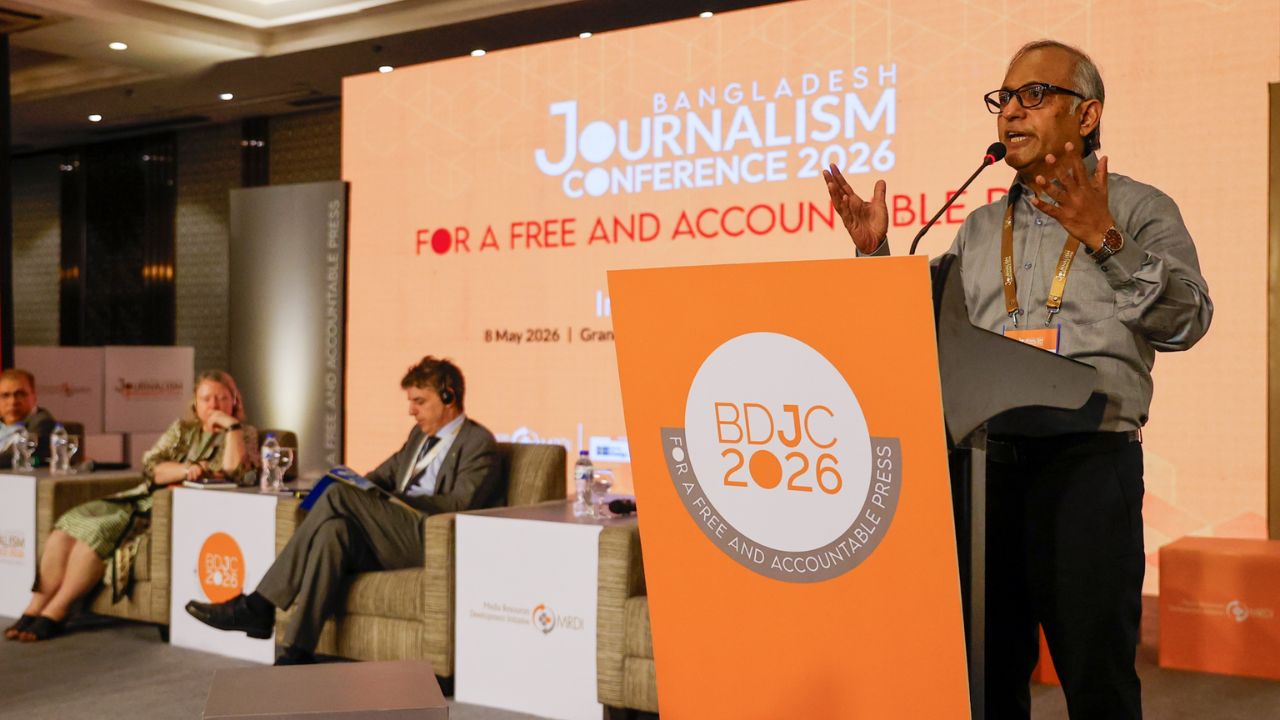
“Strong editorial institutions and independent journalism are prerequisites for effective investigative reporting. Unfortunately, our editors have not yet reached that point,” Anam said.
Warning against the politicisation of journalism, he said media leadership in Bangladesh often changes alongside political power.
“When one regime is in power, journalists aligned with that regime take leadership positions. Others are marginalised. When the regime changes, the leadership also changes,” he said.
According to Mahfuz, investigative journalism is essential for ensuring accountability, strengthening governance and protecting democratic development.
Self-censorship ‘more dangerous’ than direct control
Zaffar Abbas, editor of Pakistan’s Dawn newspaper, warned that media organisations in Bangladesh, India and Pakistan are increasingly prioritising profits over public-interest reporting.




“Self-censorship is much more dangerous than direct control,” he said. “Under direct control, people know something is being blocked because of military rule or authoritarian pressure. But with self-censorship, the public never learns that an important story exists.”
He described invisible pressure within newsrooms as one of the most difficult challenges facing journalism today.
‘Time to move from analysis to action’
Unesco Representative and Head of Office in Bangladesh Susanne Vej described the current period as a critical moment for Bangladesh’s media landscape.
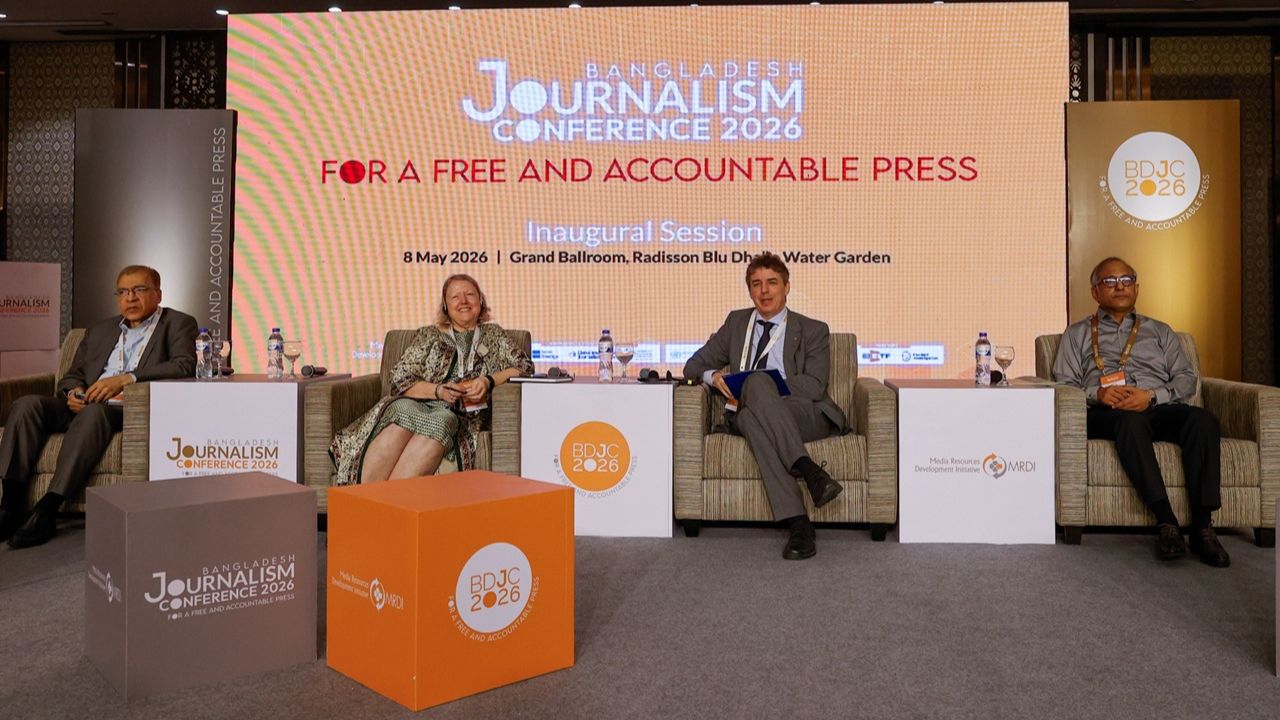
While acknowledging concerns over press freedom, she said several organisations, including Unesco, MRDI and UNDP, had already produced extensive analyses and reform recommendations over the past two years.
“Now it is time to move beyond analysis, identify solutions and begin implementing them,” she said.
Rising global risks for journalists
Transparency International Bangladesh executive director, Iftekharuzzaman, highlighted growing threats to journalists worldwide.
“At least 500 journalists have been killed globally over the last decade,” he said. “Since 7 October, at least 60 journalists have died in Israeli attacks on Gaza.”
He added, “Over the past 17 years in Bangladesh, culminating in the unrest of August 2024, escalating human rights violations have placed the lives of journalists and media workers at unprecedented risk.”
Media is ‘a public trust’
Emilia Diaz-Struck, executive director of the Global Investigative Journalism Network, said journalism should be viewed as a public trust rather than simply a business.
“The free flow of information and the public’s right to know form the foundation of a transparent society,” she said.

Swedish Ambassador Nicolas Weeks said the global information environment is facing a deep crisis.
“False information is spreading faster than truth, public trust in institutions is declining, and journalists are facing political, economic and digital pressure,” he said. “In such a situation, the role of the media is not just valuable, but essential.”
Investigative reporting needs institutional backing
Former editor of Canada’s Toronto Star, Michael Cook, said investigative journalism requires institutional commitment, not just individual courage.
“It takes not only the courage of journalists, but also the unwavering support of editors, owners and lawyers,” he said. “A major investigation is never a solo effort.”
Corruption now a ‘global system’
At another thematic session on the future of investigative journalism into corruption, speakers said corruption has evolved into a sophisticated global network that requires cross-border collaboration to expose.
Canadian investigative journalist and filmmaker Julian Sher said corruption can no longer be treated as a purely domestic issue.
“As money and influence move across borders, journalists must also investigate collaboratively across countries,” he said.
Referring to the 2012 Padma Bridge corruption scandal, Sher said allegations involving a Canadian company had led the World Bank to cancel its loan agreement and impose restrictions on the company.
“Large-scale corruption tied to international projects involves financial and political networks spanning multiple countries,” he said. “Corruption is now global, so investigations must also become global.”