Successive governments are being accused of removing important state records from official websites after coming to power, a practice experts say is increasingly restricting citizens’ access to information and weakening transparency.
According to analysts and transparency advocates, the trend began after the fall of the Awami League government and has continued under subsequent administrations. Each government, they say, has followed the precedent of deleting information related to its predecessor from state websites.
The interim government that took office after the political upheaval of August 2024 first removed a wide range of information published during the Awami League administration. This included annual reports and other records from nearly 25 ministries and government divisions.
Now, critics say the current government led by BNP has begun removing information published during the tenure of the interim administration.
Experts warn that if the practice continues, it could severely undermine citizens’ right to access information about government policies, decisions and performance.
They argue that such removals could also reduce public accountability and make good governance more difficult to achieve.
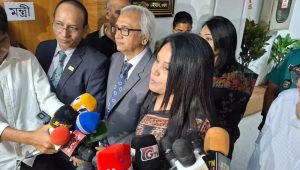
The issue was raised publicly on Sunday at a press conference held at the office of Transparency International Bangladesh (TIB) in Dhaka.
The organisation’s Executive Director Iftekharuzzaman accused the current government of removing important state information that had been published on official websites during the interim administration.
“Many important pieces of information have been removed from government websites. The responsibility lies with the current government,” he said.

“They cannot do this. Whether information is right or wrong, whether it favours the state or goes against it—citizens have the right to know all information.”
He said several decisions and documents related to the Chief Adviser’s Office and the Prime Minister’s Office had been removed, making them impossible to locate online.
Iftekharuzzaman urged the government to reconsider the decision to remove such information from public websites.
He also noted that the interim government had previously removed records from the period between 2009 and August 2024, when former Prime Minister Sheikh Hasina was in power.
Rights activists say deleting official records contradicts the spirit of the Right to Information Act 2009, which was enacted to ensure citizens’ access to government information.
Ruhi Naz, deputy director of Research Initiatives Bangladesh, said removing important state data from government websites could violate legal provisions requiring information to be published and preserved.



“The government often says that the previous administration made many wrong decisions, so the information was removed,” she said.
“But there can be many reasons behind it. It could be done out of ignorance, or it could be intentional because they do not want those records to remain on the websites. Political motives may also play a role.”
She warned that removing official data could cause serious damage to the state itself.
On the one hand, she said, it reduces transparency in governance. On the other, it makes it harder to hold previous governments accountable in the future.
At the time the interim government removed records from the Awami League era, annual reports covering the previous 15 years from around 25 ministries and divisions were also deleted.
Annual reports typically contain detailed information about a ministry’s activities during a fiscal year, including policies, plans, achievements, financial allocations and comparisons with previous years.
Journalists and researchers say such reports are crucial for understanding government performance and policy continuity.
A review conducted by Times of Bangladesh of the websites of 55 ministries and government divisions found that many of them now contain little or no information.
Among those with missing or empty sections are the websites of the ministries responsible for foreign affairs, defence, railways and home affairs.
Similar gaps were found on websites of the Power, Energy and Mineral Resources Division, the Road Transport and Highways Division, the Bridges Division and the Armed Forces Division.
The process of removing information reportedly began shortly after the Awami League government collapsed on August 5, 2024.
Initially, websites removed the profiles, photographs and videos of Sheikh Hasina and the country’s founding president Sheikh Mujibur Rahman.
However, many documents and records related to the former prime minister, her ministers and party leaders remained on various government websites.
In response, the e-Governance division of the Cabinet Division issued a circular on April 24 this year instructing government institutions to fully clear records related to the previous administration.
The circular, signed by Senior Assistant Secretary Sheikh Zobayer Ahmed, stated that many government websites under the Bangladesh National Portal still contained “unnecessary and praise-oriented information, photos and videos” about the previous government.
It said that because many websites had not been updated, citizens’ access to information was being disrupted and the government’s reputation was being harmed.
The directive instructed offices from ministries to union councils to update their websites — a step critics say effectively meant removing those materials.
Following the instruction, records were removed from several government websites, including sections of the President’s Office, as well as sites belonging to the Secondary and Higher Education Division, the Health Services Division, the Legislative and Parliamentary Affairs Division, and the Statistics and Informatics Division.
Transparency advocates say the deletion of government records — whether by the interim administration or the current government — is equally problematic.
“If state information is good or bad, citizens still have the right to know it,” said Iftekharuzzaman.
“When governments remove such information, citizens are deprived of that right.”
Rights activists say if governments continue to erase records of their predecessors for political reasons, future efforts to ensure accountability will become increasingly difficult.
They warn that preserving official records is essential not only for transparency but also for the historical and institutional memory of the state.
When contacted for comment, Information Minister Zahir Uddin Swapan told TIMES of Bangladesh that he was not aware of the allegations.
“I have just heard about it. I do not know anything about the matter yet. I will have to seek information from the relevant ministry,” he said.