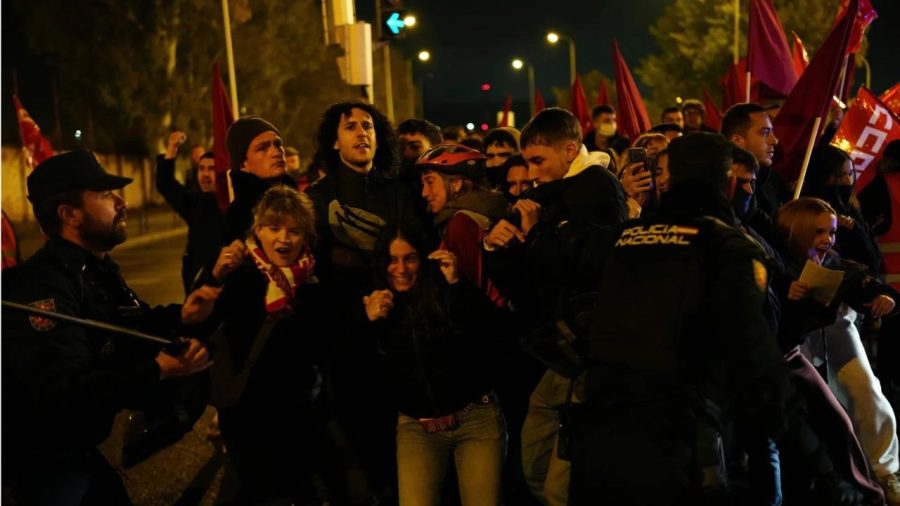



Millions of workers across Spain went on strike on Wednesday in the country’s first general strike in 14 years, demanding government action on a housing affordability crisis less than three weeks before a snap general election on 29 November, reports Reuters.
The walkout, backed by the two largest unions, UGT and CCOO, along with other labour groups and tenants’ associations angry about rising rents and evictions, disrupted public transport and slowed factories across the eurozone’s fourth-largest economy as workers braved storms to man picket lines.
Public transport in Barcelona was at a standstill or badly delayed during the morning rush hour, while in rain-lashed Madrid city buses were hardest hit.
The unions said early participation reached 90 per cent at ports and in the automotive sector, 85 per cent in the meat industry, 82 per cent in waste collection and 75 per cent in energy, with “total stoppages” at factories including Volkswagen’s in Navarre and SEAT’s in Barcelona.
Turnout was lower in healthcare and social services (38 percent) and the postal service (35 per cent), they added.
Participation was uneven nationwide, strongest in coastal regions where housing pressures are particularly acute.

Tensions flared at Madrid’s Mercamadrid wholesale market, where about 1,000 protesters gathered. CCOO’s Madrid branch said police fired pepper spray at pickets and arrested one person, with 13 needing medical attention.
Police confirmed the arrest but not the pepper spray there, although a spokesperson said it was used to disperse a separate picket in the Carabanchel district.
Protesters in Barcelona also set up roadblocks, some with burning tyres.




Average rents have almost doubled in a decade.
At €1,176 ($1,315), the average rental price equals about 98.7 percent of a young person’s average monthly salary, according to the Youth Council of Spain, while the central bank estimates a shortfall of about 750,000 homes, set to top one million by 2028.
Anger boiled over after the televised eviction of an 87-year-old woman from her Madrid home last month.
Her subsequent death turned the woman, known as Maricarmen, into a symbol for Spaniards who feel they pay too much in rent.
Housing activists called the strike and won the unions’ backing. They want tourist apartments eliminated, a crackdown on property speculation and automatic lease renewals, while the unions are demanding greater state intervention in the housing market and a new minimum wage agreement with employers.
Right-wing parties refused last month to ratify government decrees to curb evictions and help tenants, arguing they would drive properties out of the rental market.
That prompted Prime Minister Pedro Sanchez to call the election.

He hopes to harness voter resentment over housing to shift attention from corruption cases involving his inner circle and a train collision last month that killed 69 people, Spain’s second deadly rail disaster this year.
His Socialists still trail in the polls, and the government will try again on Thursday to have a reduced interim parliament ratify the two decrees.
Political scientist Oriol Bartomeus said the Socialists need the strike to succeed without violence so the campaign can swing back to housing, while the right could benefit if it turns violent.
The Popular Party and far-right Vox oppose intervention beyond encouraging new construction.
Angela de Miguel, vice president of the main business lobby CEOE, called the strike counterproductive, saying the answer was to build more homes and cut construction taxes.
The government largely blames the right-wing opposition, which runs many regions, for rising rents, but union leaders and many protesters also hold the central government responsible.