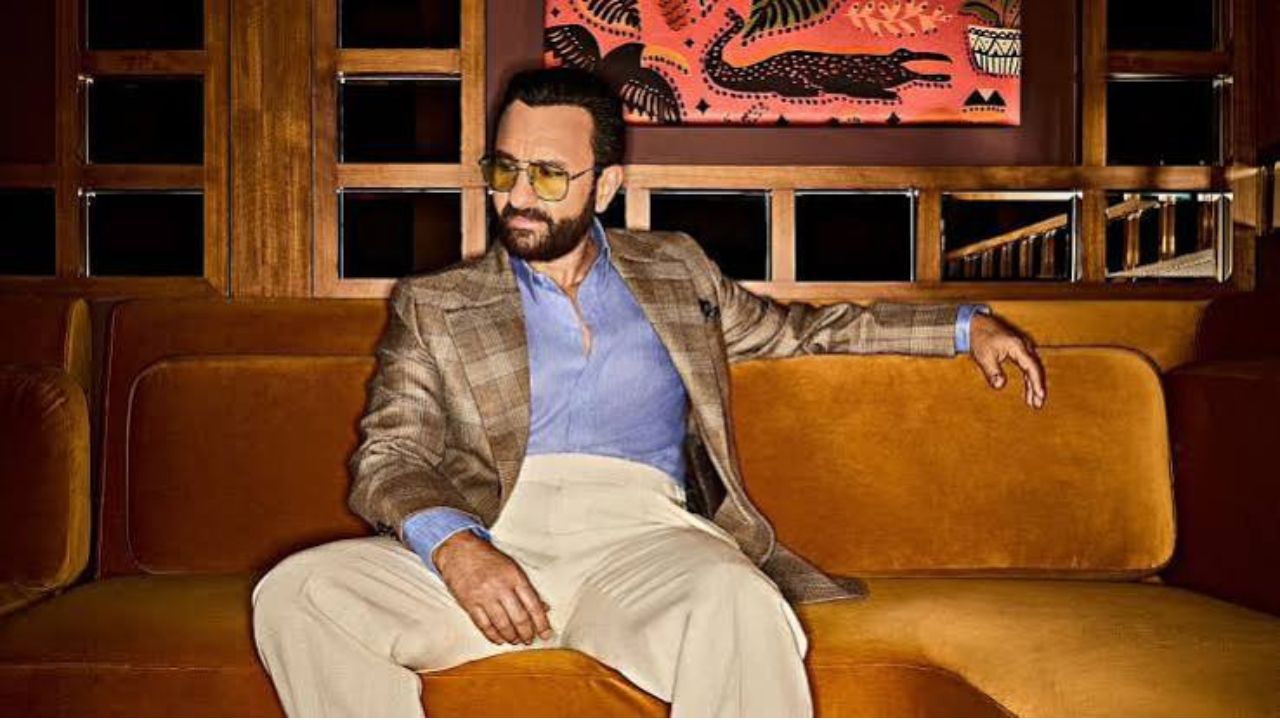

Saif Ali Khan has revealed that director Vishal Bhardwaj once wanted him to perform a nude scene in Omkara, but he declined the idea at the time. Looking back nearly two decades later, the actor said he believes the scene might have become even more powerful had he agreed.
Speaking to India Today while reflecting on Omkara, which marks its 20th anniversary this month, Saif recalled that Bhardwaj suggested filming Langda Tyagi’s pivotal mirror sequence with him completely naked. He said he turned down the proposal because the set was crowded, although he now feels it could have enhanced the impact of the scene.
Saif said Bhardwaj asked whether he would perform the long mirror sequence without any clothes. He described the idea as exciting but admitted he felt self-conscious because a large number of people were present during filming. The actor joked that he would only agree if Bhardwaj directed the sequence in the same way himself. According to Saif, the filmmaker laughed and declined, making the exchange a memorable moment on set.

Reflecting on the decision today, Saif said he no longer regrets taking creative risks and believes the sequence would have been even more striking if it had been filmed from behind in silhouette. He said such an approach would have captured the raw vulnerability of Langda Tyagi’s emotional state. “I’d do it today,” the actor said.
Saif also shared how Bhardwaj changed the sequence during filming. He said the original script featured a lengthy monologue in which Langda Tyagi explained his plans for revenge. On the day of the shoot, however, Bhardwaj abandoned the dialogue and chose to tell the story entirely through visuals.




Instead of speaking, Langda Tyagi silently stood before a mirror holding a heavy metal object before smashing the glass. The shattered reflections symbolised the character’s fractured state of mind. His bleeding hand then smeared blood across his forehead, creating a silent expression of vengeance.
Saif recalled Bhardwaj telling him that the character did not need any dialogue because the visuals alone would tell the story. The actor said he immediately understood the director’s vision and praised the scene as an example of economical and intelligent filmmaking that relied on imagery instead of exposition.
The mirror sequence later became one of Omkara’s most memorable scenes and helped define what is widely regarded as one of the finest performances of Saif’s career.
An adaptation of William Shakespeare’s Othello, Omkara explored caste, power and patriarchy through the politics of rural Uttar Pradesh. The film starred Ajay Devgn, Kareena Kapoor Khan, Vivek Oberoi, Konkona Sen Sharma, Bipasha Basu, Deepak Dobriyal and Naseeruddin Shah alongside Saif.
The film won three National Film Awards, including Best Supporting Actress for Konkona Sen Sharma, Best Audiography and the Special Jury Award for Vishal Bhardwaj. Saif’s recollection has offered a fresh insight into the creative decisions behind one of Hindi cinema’s most acclaimed literary adaptations and a scene that almost took a very different form.