






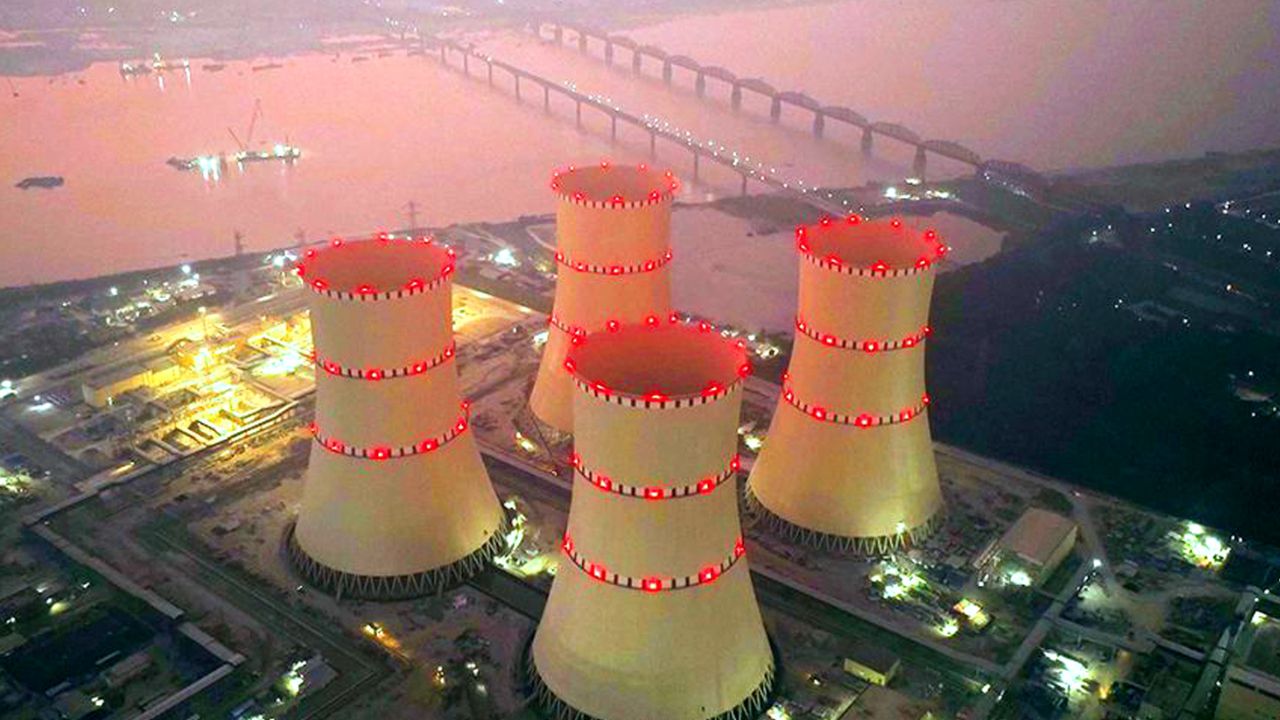
Despite earlier assurances, the Rooppur Nuclear Power Plant is unlikely to begin trial power generation this month, with uncertainty also looming over whether 300MW of electricity can be supplied to the national grid in September.
The delay comes as Bangladesh is grappling with a severe fuel crisis triggered by the war in the Middle East, with load shedding nearing 4,000MW. The power shortage has caused widespread public suffering and disrupted industrial production. The 300MW expected from Rooppur could have provided some relief amid the crisis.
Fuel loading at the plant’s first unit began on 28 April. At the time, authorities said the unit would start generating 300MW by the end of July or in August.
On 12 June, Science and Technology Minister Fakir Mahbub Anam said at a high-level strategic roundtable in Ishwardi, Pabna, that electricity from the plant would be added to the national grid by the end of August. He also said that the first unit would reach its full capacity of 1,200MW by December.
However, a ministry official told TIMES of Bangladesh on condition of anonymity that the August target would not be met. “It is not happening in August. It may take until September to supply 300MW to the national grid. Even that is not certain,” the official said.
According to the official, the first unit has successfully completed initial safety tests, including nuclear fuel loading, but has yet to reach the crucial “criticality” stage before power generation can begin.
The plant must first obtain approval from the Bangladesh Atomic Energy Regulatory Authority (BAERA) to enter the criticality stage.
The Nuclear Power Plant Company Bangladesh Ltd (NPCBL) has already submitted the results of the tests to the regulator. BAERA will review the results before allowing the plant to proceed to the next stage.
NPCBL Managing Director Zahidul Hasan told TIMES that the process was now under review. “It is now at the review stage. After reviewing the results, they will give approval for the next stage,” he said.

Asked when the plant could start supplying electricity, Zahidul declined to give a specific date. “You can say that we are at the very final stage before power generation begins at the first unit. Safety is our top priority,” he said.
He explained that a nuclear power plant undergoes a series of tests, with each stage dependent on the successful completion of the previous one. His assessment suggests that another six to eight weeks could be required before electricity can be supplied to the grid.
More than 2,000 tests have already been completed, and the first unit is currently at the B-1 and B-2 stages, he said.
All 99 tests under B-1 have been completed, while another 18 tests remain. After B-2 is completed, the plant will move to the ‘C’ stage, following which electricity can be supplied to the national grid.
B-2 normally takes around two weeks, while C-2 requires another four to six weeks, according to Zahidul.
The Rooppur plant consists of two units, each with a generation capacity of 1,200MW. Russian contractor Atomstroyexport is constructing the units, which are expected to meet around 15% of Bangladesh’s electricity demand once fully operational.
The plant is expected to generate electricity at a lower cost than fossil-fuel-based power plants over the long term. However, the government has yet to finalise the cost of electricity from Rooppur.
“The discussions with Rosatom, the company building the plant, have not yet been finalised on this issue,” said the ministry official.
Ministry officials said the delay in supplying the initial 300MW could also affect the target of receiving the full 1,200MW from the first unit by December. The deadline could be pushed back by at least a month, they said.
Officials, however, said the national grid is ready to receive electricity from the plant.
Minister Fakir Mahbub Anam told TIMES on Wednesday that he would comment after speaking with the officials concerned. He did not respond to phone calls made on Thursday and Saturday.


