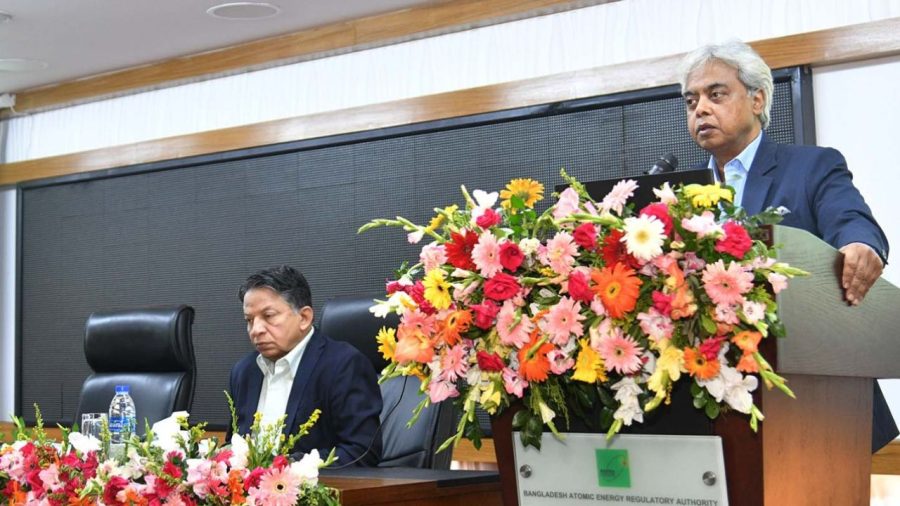



Science and Technology Secretary Md Anwar Hossain on Saturday called for upgrading emergency preparedness and response arrangements at the Rooppur Nuclear Power Plant to international standards, stressing the need for trained personnel, institutional co-ordination and effective response mechanisms.
He made the remarks at a workshop at the Bangladesh Atomic Energy Regulatory Authority (BAERA) auditorium in Agargaon, Dhaka, ahead of the International Atomic Energy Agency’s (IAEA) Emergency Preparedness Review (EPREV) mission, scheduled to visit Bangladesh from 8 to 18 November.
Speaking as the chief guest, Anwar said the likelihood of a nuclear emergency was low, but its potential consequences demanded the highest level of vigilance and preparedness.
He said Rooppur was equipped with modern safety systems, automatic controls and various interlocks. However, technological safeguards alone were insufficient without skilled personnel, institutional readiness and co-ordinated action among relevant agencies.
The secretary urged stakeholders to regard the upcoming IAEA mission not as an examination but as an opportunity to assess national preparedness, identify shortcomings and learn from international experience.

He emphasised the need for clear protocols specifying when and how a nuclear emergency should be declared, how information and instructions should reach national authorities and how response operations inside and outside the plant should be co-ordinated.
Anwar also called for effective planning for medical treatment, patient transportation, isolation and the allocation of responsibilities among agencies.




He said BAERA, technical institutions, local administration, police, armed forces, medical teams and the Department of Environment must work together to ensure an effective emergency response.
The secretary stressed the importance of regularly monitoring environmental conditions and radiation levels around Rooppur, alongside preserving, analysing and sharing relevant data nationally and internationally when required.
He said radiation monitoring data collected after the plant begins operations should be compared with pre-operational baseline levels to verify compliance with international standards.
Highlighting the media’s role, Anwar called for accurate, science-based public communication about nuclear power and radiation risks to prevent unnecessary panic arising from information gaps or misinterpretation.
He urged the authorities to communicate technical information in language easily understood by the public.
BAERA Chairman Mahmodul Hasan, who chaired the workshop, said everyone involved in emergency management, from field-level first responders to national policymakers, had an important role to play.
He said the workshop aimed to develop a common understanding among stakeholders ahead of the EPREV mission, identify preparedness gaps through self-assessment and clarify the responsibilities of individual institutions.
Ministry of Science and Technology Additional Secretary (Nuclear Power) Abul Khair Md Akkas Ali attended as a special guest.
Representatives from BAERA, the Bangladesh Atomic Energy Commission, local administrations in Pabna and Kushtia, law enforcement agencies, armed forces, medical teams and the Department of Environment also attended.
A booklet prepared for the upcoming IAEA EPREV mission was unveiled at the workshop.