





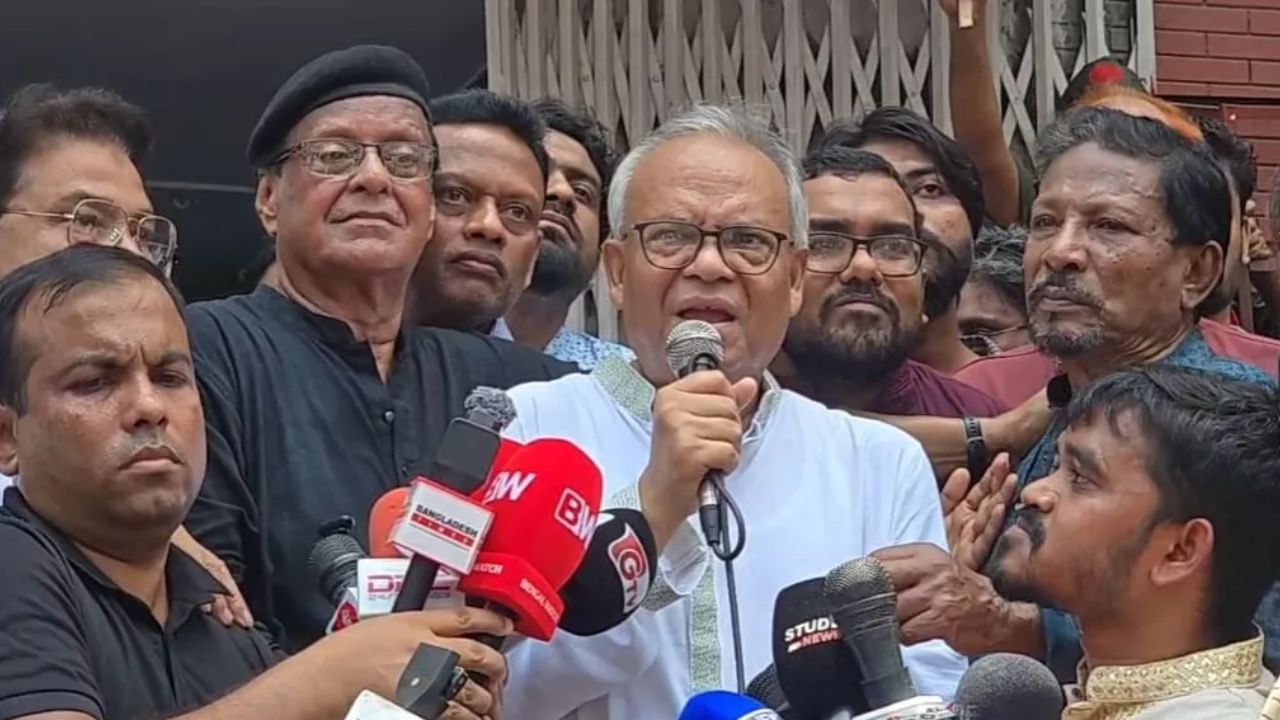
BNP Senior Joint Secretary General Ruhul Kabir Rizvi on Tuesday accused Jamaat-e-Islami of repeatedly making political alliances with what he called “monstrous forces” and warned against any attempt to undermine the history of the 1971 Liberation War.
Rizvi made the remarks while addressing a protest procession organised by Muktijoddha Dal and Muktijoddha Projonmo Dal against what the organisers described as Jamaat’s “arrogant statements and activities” aimed at destabilising the country.
The procession started from the auditorium of Dhaka Reporters Unity (DRU) and ended in front of the BNP’s Nayapaltan office.
“You have always played hide-and-seek. You have always made alliances with monstrous forces,” Rizvi said, referring to Jamaat.
He said the independence of Bangladesh gave its people the right to speak freely, establish Bangla as the state language and identify themselves as Bangladeshis.
“This is the achievement of 1971, the achievement of the war,” he said.
Rizvi alleged that those who opposed Bangladesh’s independence had attempted to undermine the country’s Liberation War history.
He claimed that such groups had informed Pakistani occupation forces about the locations of freedom fighters engaged in guerrilla warfare during the war.
“They have no history of heroism; they only have a history of collaboration,” Rizvi said, alleging that their “opportunistic and collaborative politics” continued even after independence.
He also accused Jamaat of repeatedly seeking political accommodation with the Awami League, which he referred to as a “fascist, authoritarian one-party regime.”
According to Rizvi, Jamaat formed an alliance with the Awami League and took part in the 1986 parliamentary election before later joining an election under HM Ershad.
He said Jamaat remained “underground and dormant” for 17 years before participating in the 2008 election, which he termed a “staged election.” He also alleged that the party had pressured BNP to participate in that election.
“The consequences were not good for them, but even now they are trying to gain favour,” Rizvi said.
Referring to a reported comment by a Jamaat leader following 5 August that all Awami League members would be forgiven, Rizvi questioned whether such a position would undermine the sacrifices made by those killed during the July uprising.
Rizvi also criticised Jamaat’s reported position on developing relations with a neighbouring country.
He alleged that the country kills Bangladeshis along the border, restricts the flow of river water and carries out propaganda against Bangladesh.
‘You cannot belittle 1971’
Rizvi also referred to an exhibition organised around the official residence of Jamaat chief and Opposition Leader Shafiqur Rahman.
He alleged that the exhibition covered events from 1971 through the July uprising but did not include any photograph of Ziaur Rahman, whom Rizvi described as the country’s “greatest freedom fighter” and the “proclaimer of independence.”
Rizvi said the Liberation War remained a source of great pride for Bangladeshis and that his generation had inherited the “bright and burning aspiration for independence” associated with 1971.
He said the July uprising was also connected to the spirit of the Liberation War.
“You cannot belittle or underestimate 1971. That will never be allowed. The spirit of 1971 paved the way for the 1990 movement and later inspired the July uprising,” Rizvi added.
Highlighting what he described as the strength of the Liberation War legacy, Rizvi said ordinary Bangladeshis had taken up arms during the war, while freedom fighters crossed rivers carrying Sten guns to launch attacks on enemy camps.
Rizvi further warned against attempts to portray one historic event as more or less important than another.


