Nine international rights organisations have urged Prime Minister Tarique Rahman to strengthen Bangladesh’s National Human Rights Commission (NHRR), warning that an independent and empowered watchdog is critical to investigate abuses and prevent future violations.
In a joint letter sent after his election victory, the groups welcomed commitments made by the new government and the interim administration to improve rights protections, but cautioned that serious challenges persist, including arbitrary detentions, curbs on free expression, mob violence targeting journalists and minorities, and alleged abuses by security forces in the Chittagong Hill Tracts.
They also raised concerns about the situation of Rohingya refugees living in camps in Cox’s Bazar and on Bhasan Char, where residents face limited access to livelihoods and education while humanitarian funding continues to decline.
The rights groups urged the prime minister to use his time in office to build a legacy of reform and accountability, emphasising that a strong and independent NHRC would play a central role in protecting the rights of all people in Bangladesh.
“We recognise that you are assuming office at a time of great challenges, including strategic, trade and economic pressures,” the letter said.
“The international situation is also especially challenging for human rights. Respect for the international rule of law is under strain, economic difficulties abound, and millions of people’s rights are threatened by climate change.”

The organisations added that Bangladesh’s leadership could play an important role in strengthening global human rights commitments while pursuing reforms at home. “We urge you to use your time in office to create a legacy of positive change and support systematic reform and accountability.”
The appeal was signed by Amnesty International, ARTICLE 19, Human Rights Watch, Committee to Protect Journalists, CIVICUS, International Federation for Human Rights (FIDH), Fortify Rights, Robert F Kennedy Human Rights, and Tech Global Institute.
They outlined a series of recommendations covering freedom of expression, accountability, security sector reform, women’s rights, refugee protection, and minority rights.
Freedom of expression
The groups urged the government to reaffirm its commitment to media independence and pluralism and to implement the recommendations of the Media Reform Commission in line with international standards.


They called for an end to arbitrary surveillance, censorship and internet shutdowns, stressing that digital regulations should operate under proper judicial oversight.
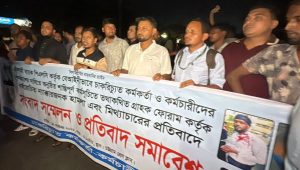
Authorities were also asked to release journalists detained solely for exercising free expression and to end the use of serious criminal charges to silence dissent.
The organisations further urged investigations into attacks on journalists and media outlets including Prothom Alo, The Daily Star and Chhayanaut.
Accountability for past rights violations
They said credible accountability is essential to restoring public trust, calling for independent investigations into killings during the 2024 protests and urged that perpetrators be prosecuted through fair trials without the use of the death penalty.
They recommended abolishing capital punishment entirely, including for cases handled by the International Crimes Tribunal.
Prosecutors should arrest individuals only when credible evidence meets criminal standards, the letter said, while security agencies must cooperate fully with investigations.
The groups also urged implementation of the January 2026 Commission of Inquiry on Enforced Disappearances recommendations, preservation of evidence gathered by the commission, investigation of deaths in custody, and reparations and rehabilitation for victims.
Security sector reform
Saying that meaningful reform of the security sector is necessary to prevent abuses such as enforced disappearances and extrajudicial killings, the rights bodies called for dismantling institutions accused of serious violations, including Rapid Action Battalion and National Telecommunications Monitoring Centre.
They also recommended withdrawing military personnel from routine civilian law enforcement and limiting the Directorate General of Forces Intelligence strictly to military intelligence functions.
Independent human rights screening for personnel nominated to United Nations peacekeeping missions and impartial investigations into deaths during law enforcement operations were also proposed.
Women and girls
The organisations highlighted ongoing risks faced by women and girls, including sexual and gender-based violence and early marriage, urging the government to implement the recommendations of the Women’s Affairs Reform Commission, ensure accountability for gender based violence, and enforce legal safeguards against early and forced marriage.
The groups also called for equal participation of women in politics and public life and recommended repealing Section 19 of the Child Marriage Restraint Act of 2017.
Rohingya refugees
On the Rohingya crisis, they urged Bangladesh not to pursue forced returns to Myanmar until conditions allow safe and voluntary repatriation.
The groups also called for easing restrictions on refugees’ livelihoods and mobility, allowing Rohingya children access to formal education using the Burmese curriculum, and ratifying the 1951 Refugee Convention and its 1967 Protocol.
Arbitrary detention, minority rights
Expressing concern about arbitrary arrests and politically motivated cases, the rights groups urged authorities to ensure detainees are promptly brought before a judge to review the legality of their detention and recommended establishing an independent body to review unlawful cases.
They also called for implementing the 1997 Chittagong Hill Tracts Peace Accord, protecting Indigenous land rights, investigating attacks on Indigenous peoples and religious minorities, and adopting comprehensive anti-discrimination laws to protect vulnerable groups, including the hijra community.