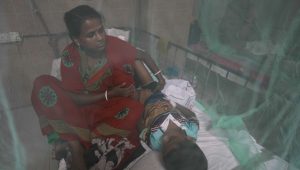
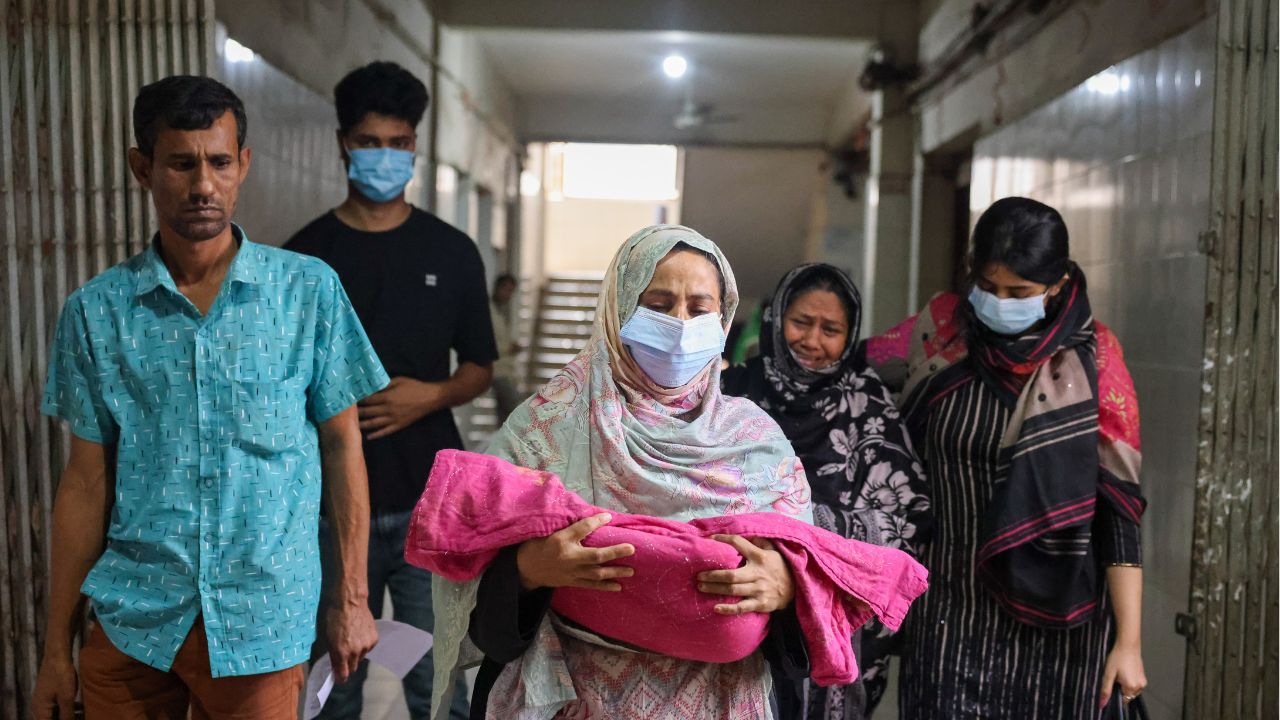
Ratneshwar Kumar, a resident of Kanchibari in Gaibandha’s Sundarganj, died at Rangpur Medical College Hospital on 8 May after failing to secure a rabies vaccine in time.
Despite seeking help at both the Sundarganj Upazila Health Complex and Gaibandha General Hospital immediately after being bitten by a dog, neither facility had the life-saving vaccine in stock.
Ratneshwar’s brother, Rabindra Kumar, told TIMES of Bangladesh, “We took him to the Sundarganj hospital immediately. After dressing the wounds, they told us there was no vaccine. I rushed to Gaibandha hospital, and the same thing happened. I searched drugstores and private clinics everywhere, but it was nowhere to be found.”
A vaccine was eventually sourced at a high price 24 hours later, but by then, the onset of rabies symptoms had begun. Rabies is 100 per cent fatal once symptoms appear.
This crisis is not isolated to Gaibandha; reports indicate a nationwide supply failure.
While some districts have received small batches, the supply remains vastly insufficient.
In some areas, health officials are allocated only Tk15,000 to purchase vaccines locally, a sum that barely covers a handful of doses. Even under such dire conditions, health officials maintain the façade that vaccines are still in stock.
When contacted for comment regarding the shortage, Directorate General of Health Services (DGHS) Director (Hospital) Abu Hussain Md Moinul Ahsan and Assistant Director (EPI) Hasanul Mahmud did not respond.
Public health expert Dr Lenin Chowdhury warned of the dire consequences, “The uninterrupted supply of rabies vaccines is critical. Any shortage creates a massive public health risk. In the case of rabies, a lack of vaccines is equivalent to a death sentence.”
No way to survive the disease
Currently, there is no cure for rabies once symptoms appear; medical science recognises it as having a 100 per cent mortality rate. While dogs are the primary carriers, the disease can also be transmitted through the bites or scratches of foxes, cats, monkeys, and other infected animals.
To prevent infection, post-exposure prophylaxis is critical. If a person is bitten or scratched, a regimen of two to five vaccine doses is required to stop the virus from reaching the central nervous system.
While district and upazila hospitals historically maintained steady supplies, a severe shortage has emerged over the past 18 months.
Currently, vaccines are largely unavailable at the upazila level, leaving private pharmacies in major cities as the only, and often expensive, alternative.

This shortage threatens to undo decades of progress.
According to the World Health Organization (WHO), rabies claimed approximately 2,500 lives annually in Bangladesh prior to 2010.
In response, the government launched a comprehensive eradication programme involving mass dog vaccinations, animal birth control, public awareness campaigns, and improved treatment access. While the nation set an ambitious target of reaching zero rabies deaths by 2030, recent data suggests a worrying reversal of these trends.
Statistics from the Infectious Diseases Hospital (IDH) in Dhaka confirm a steady climb in fatalities. There were 42 deaths in 2023, which rose to 58 in 2024 and 59 in 2025.
The crisis appears to be accelerating in 2026, with 19 deaths recorded in just the first two and a half months of the year.
This trajectory indicates that unless the vaccine supply chain is stabilised and local accessibility is restored, Bangladesh’s goal of total eradication remains at significant risk.
When did the crisis start?
The crisis reportedly began in August 2025. According to Jahirul Islam, the Resident Medical Officer at Narayanganj General (Victoria) Hospital, the facility received only 400 vials against a demand of 4,000 during that month.
Since then, the supply has steadily dwindled until government deliveries ceased entirely. Currently, none of the district’s four upazila health complexes have any vaccines in stock. To mitigate the shortage, the district council and the Civil Surgeon’s office managed to procure 1,000 doses through local funds in April, but as of now, only 239 vials remain.
The disparity between supply and demand has reached a breaking point.

Storekeeper Noman Bhuiyan noted that the remaining stock can only treat 956 people, a figure dwarfed by the 6,711 patients who sought vaccination in April alone.
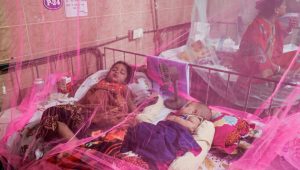
This scarcity has created a volatile environment at Narayanganj Victoria Hospital. Shibani Biswas, the senior staff nurse in charge of vaccination, reported that frustrated relatives frequently engage in heated arguments with nursing staff when turned away.
Narayanganj Civil Surgeon Mushiar Rahman has stated that while the local infrastructure is ready, they are entirely dependent on a central allocation from the national level to resume supplies to the district general hospitals and upazila health complexes.
Two days before Ratneshwar’s death in Sundarganj, Gaibandha, 55-year-old Nanda Rani of Bajra Kanchibari and Fulu Mia of Kanchibari village died from rabies following dog bites.
Thirteen others, including two children and two women, were also injured.
There are grave concerns regarding their recovery as none of the victims initially received the rabies vaccine.
Currently, one patient, Afroza Begum, has been transferred to Dhaka for specialised care, while nine others remain under local treatment.
“Three people have died; we are in a state of panic,” said Abdul Malek, a resident of Mandalerhat.
Sundarganj Upazila Health and Family Planning Officer, Dibakar Basak, acknowledged the crisis, noting a long-term supply shortage.
“We have only recently received the allocation to purchase 30 vaccines this month,” Basak stated.
The shortage was evident at Gaibandha General Hospital on Tuesday afternoon, where patients were seen waiting for treatment. Victims such as Taspiya Khatun and Babita Khatun reported having to purchase vaccines from private pharmacies due to hospital shortages. Similarly, Md Bishal Talukder from Palashbari said, “Upon arriving at the hospital, I was told the vaccine was out of stock. Now, I have no choice but to purchase it from outside.”
Shafiqul Islam, the hospital’s official in charge of dog bite cases, indicated that new supplies are expected to arrive within the next two to three days.
Tk15,000 block allocation
Kishoreganj Civil Surgeon Abhijit Sharma said that the government has allocated Tk 15,000 per hospital for rabies vaccines.
While some stock is currently available, supplies remain limited.
According to Bidhan Debnath, the Itna Upazila Health and Family Planning Officer, the current allocation only covers 33 vials. Since a full course requires five doses per person, these vials can treat a maximum of six patients.
“A single vial can vaccinate four patients simultaneously,” Debnath explained. “However, if patients arrive at different times, any remaining vaccine in an opened vial is wasted.” Additionally, patients often require rabies immunoglobulin treatment around the wound, which costs approximately Tk1,000.
Jamalpur without vaccination for a year
Mohammad Mahfuzur Rahman Sohan, Assistant Director of Jamalpur General Hospital, confirmed that the facility has lacked a rabies vaccine supply for nearly a year.
During this period, patients were required to purchase the vaccine privately.
While he noted that a government shipment is expected this Wednesday, conflicting reports remain regarding the district’s supply.
Civil Surgeon Md Azizul Haque could not be reached for comment.
However, an official from his office claimed the crisis has been resolved following deliveries to six Upazila Health Complexes.
Local officials tell a different story: AAM Abu Taher, the Islampur Upazila Health and Family Planning Officer, noted that his current stock covers only 25 patients in a population of over 3,00,000. Similarly, the Bakshiganj Upazila Health Complex received only 30 doses, 11 of which have already been administered, leaving officials uncertain about future availability once the remaining 19 are exhausted.
Khulna relies on private sector
In Bangladesh’s southwestern districts, between 100 and 200 people seek rabies vaccinations daily.
However, after failing to find supplies at government hospitals, many are forced to turn to private pharmacies.
Deputy Civil Surgeon Md Mizanur Rahman confirmed to TIMES that the stock at Khulna General Hospital ran out several days ago, though a formal request for new supplies has been submitted.
Regarding the broader district, Rahman noted that while two or three of the nine upazilas might still have stock, the majority are depleted.
In some cases, government hospitals have even resorted to purchasing vaccines privately to bridge the gap, a situation he expects to persist for three to four months.
Meanwhile, Quazi Nur Imam Al Mamun, the Khulna depot in-charge for Incepta Pharmaceuticals, stated that they are actively supplying local pharmacies. He noted that they provide vaccines even to individual walk-ins at a cost of Tk 500 per dose.
The situation in Rajshahi remains consistent with broader trends.
Despite reports of scarcity, Divisional Health Director Habibur Rahman maintains there is no crisis across the division.
He said that while the central government has halted supplies, vaccinations are being managed through local arrangements.
Shankar K Biswas, spokesperson for Rajshahi Medical College Hospital, echoed this, confirming the hospital is now sourcing vaccines independently.
However, Rajshahi Deputy Civil Surgeon Mahbuba Khatun provided a different perspective, noting a shortage across nine upazila health complexes.
She clarified that vaccinations are currently being coordinated through Upazila Nirbahi Officers (UNOs).
In Bagha, however, UNO Shammi Akhter could not confirm the availability of rabies vaccines, deferring the matter to local health officials.
Ali Abrar from Khulna, Abdul Auwal from Rajshahi, Billah Hossain from Narayanganj, Saimum Sabbir Shovon from Jamalpur and Rakibul Hasan Rukel from Kishoreganj, also contributed to this report.