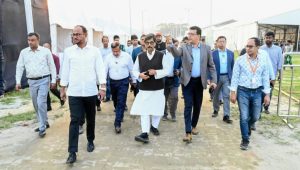
Prime Minister Tarique Rahman on Wednesday directed the authorities concerned to introduce third party price assessment of expensive medical equipment and machinery during the procurement process to prevent inflated costs and ensure transparency in public spending.
The directive came as the Ecnec approved the second revision of a major project to establish comprehensive cancer, cardiac and kidney treatment centres in eight divisional cities, said State Minister for Planning Zonayed Abdur Rahim Saki while briefing reporters after a meeting of the Executive Committee of the National Economic Council (Ecnec) on Wednesday.
The prime minister also asked the authorities concerned to secure approval for the required manpower alongside development projects and complete their training before the projects are finished to ensure that newly procured sophisticated medical equipment can be put to immediate use.
Saki said the prime minister gave detailed instructions in connection with major healthcare infrastructure projects involving the procurement of modern medical equipment.
“The required manpower must be approved at the same time as the project. Once approved, they must receive the necessary training before the project is completed,” he said quoting the prime minister.
He said the prime minister also directed that the procurement conditions should require the concerned equipment manufacturers and suppliers to provide specialised training to doctors, technicians and other relevant personnel for operating sophisticated medical equipment.

Saki said the government wanted to prevent a situation in which expensive medical equipment remained unused because of a shortage of trained manpower, a problem observed in several public healthcare institutions.
He said the government would begin the process of obtaining approval from the Ministry of Public Administration and the Finance Ministry for the required positions at the initial stage of project implementation instead of waiting until projects approached completion.
The state minister also said the prime minister approved a proposal to engage independent domestic or international price assessment companies to examine the costs of particularly expensive equipment and machinery.


He said the government had already introduced measures to strengthen cost monitoring, including the use of approved rate schedules and expert assessments for specialised items that fall outside regular procurement schedules.
A software system is also being developed to use artificial intelligence (AI) to check whether project expenditure conforms to approved rate schedules, he said.
For specialised equipment not covered by the rate schedules, relevant experts will be invited to pre-Ecnec Project Scrutiny Committee (PSC) meetings to examine proposed prices.
Saki said the measures were intended to establish an institutional system of checks and balances and prevent excessive expenditure in development projects.


The revised projects’ cost has been raised to Tk4,532 crore from the original Tk2,388 crore, following an earlier revision that increased the cost to Tk3,433 crore.
Saki said the project, initially taken up in 2019, had expanded from a 100-bed cancer hospital initiative to a wider programme covering cancer, cardiac and kidney treatment facilities with increased bed capacity and modern medical equipment.
He said Bangladesh identifies around 1,80,000 new cancer patients every year, while approximately 1,30,000 patients die from the disease annually.

The existing National Institute of Cancer Research and Hospital in Dhaka can provide services to around 40,000 patients a year, creating substantial pressure on its facilities.
The state minister said the government had also prioritised the recruitment and training of manpower for another project involving the construction of 500-bed medical college hospitals in Jashore, Cox’s Bazar, Pabna and Noakhali, alongside the vertical expansion of the National Institute of Gastroenterology and Hepatology Hospital.
The project cost has increased from Tk2,103 crore to Tk3,971.64 crore under its second revision.
He said the expansion of the gastro-liver hospital would include a liver transplantation unit.
Seven Bangladeshi doctors have already received training in liver transplantation in five countries, and an agreement with foreign partners would help them gain practical experience before performing such operations independently.
Saki said the government expected the project to help establish the capacity to conduct liver transplants in Bangladesh.