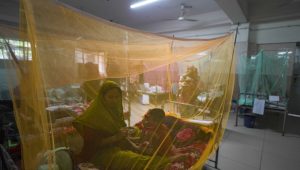
On Tuesday morning, a deeply distressing scene unfolded at the DNCC Hospital as the body of a three-year-old measles-infected child, Sadman, was taken away by his family.
A relative carried the child’s body through the midday heat in search of a CNG auto-rickshaw, while grieving family members followed in tears.
Medical records show Sadman, from Kamrangirchar in Dhaka, died at 10:30am while undergoing intensive care at the DNCC-CDH facility. He had been admitted to ICU on 16 April in critical condition and was being treated for measles, pneumonia and septic shock.
According to a record issued by the hospital director, a blood sample had been collected for IgM testing to confirm the viral status.
ICU shortage and repeated referrals
Another case at the same facility highlights the strain on hospitals.
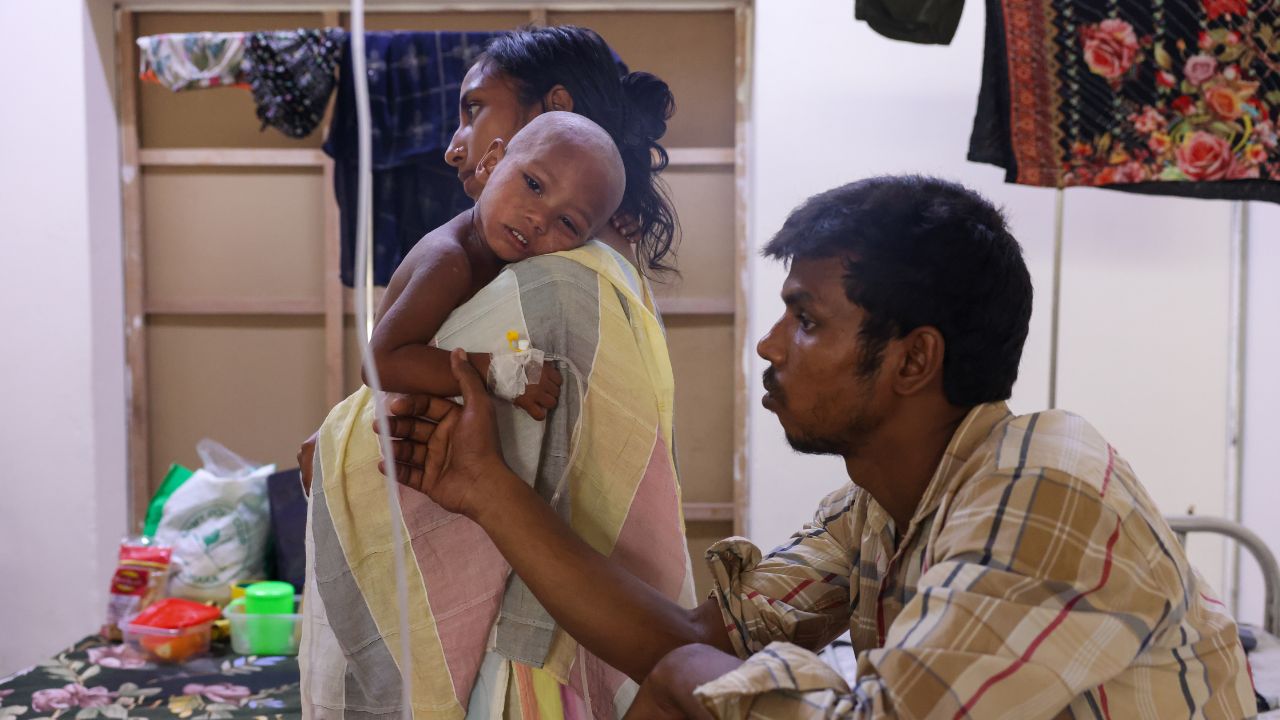
From Chandpur to Dhaka, the family of 11-month-old Alifa moved between hospitals in search of an ICU bed.
Standing beside her at DNCC Hospital, her uncle Md Shaheed Hossain broke down, saying, “So many big hospitals in such a big city, and I still cannot find an ICU bed for my niece.”
Alifa had been admitted for four days with a high fever and limited response to oxygen. Medical officer Atiq advised ICU care, but no bed was available.

Critically ill children from DNCC are usually referred to Mugda Medical College Hospital and Shaheed Suhrawardy Medical College Hospital, but the family said neither had ICU capacity.
Shaheed said he contacted multiple hospitals while visiting Dhaka for the first time.
“We are now at Bangladesh Naobojatok Hospital… we admitted her to ICU, but they are asking why we did not keep her in the previous place.”
He described shifting diagnoses, “They said it was pneumonia… today they are saying it is measles.”
The family had earlier visited Bangladesh Shishu Hospital and Institute and Infectious Disease Hospital but found no ICU beds.



“They kept saying there are no seats… then why such big hospitals are even open?” he said.
Doctors later warned that delays in ICU admission had worsened her condition. “We are only praying to Allah for her,” he added.
Hospitals under sustained pressure
Professor Md Mahbubul Haque, director of Bangladesh Shishu Hospital and Institute, told TIMES of Bangladesh that the situation shows no sign of decline.
He said ICUs remain under heavy pressure due to a steady influx of critically ill children, with pneumonia and adenovirus cases adding to the burden since February.
Medical officer Atiq at DNCC Hospital echoed the same concern.
Rising cases and deaths
According to the Directorate General of Health Services, three measles-related deaths were recorded in the 24 hours to 8am Tuesday—one confirmed and two suspected.
In the same period, 1,159 suspected cases and 188 confirmed cases were reported.
Since 15 March, the country has recorded 25,935 suspected cases and 3,805 laboratory-confirmed infections.
Between 15 and 21 April, there were 30 deaths and 8,714 cases—an average of more than four deaths and 1,244 infections per day.
Daily figures show no sustained decline. The highest death toll was eight on 16 April, while infections peaked at 1,362 on 19 April. Cases remained above 1,028 each day, indicating continued volatility.
Govt stance vs expert warning
Health Minister Sardar Md Sakhawat Hossain said the situation has not yet reached epidemic level.
Speaking in Narayanganj, he said around 85% of children in high-risk areas are now under vaccination coverage and infections are expected to fall within “two to three days”.
However, experts disagree.
Doctors Platform for People’s Health has called for an official epidemic declaration and emergency measures.
At a press conference at the Dhaka Reporters Unity, they said the scale and spread now meet the criteria of a public health emergency.
Public health expert Mohammad Mushtuq Husain said such a declaration would trigger faster vaccine procurement, airport clearance and real-time monitoring.
“It would reduce confusion and ensure faster access to vaccines and treatment,” he said.
A system under strain
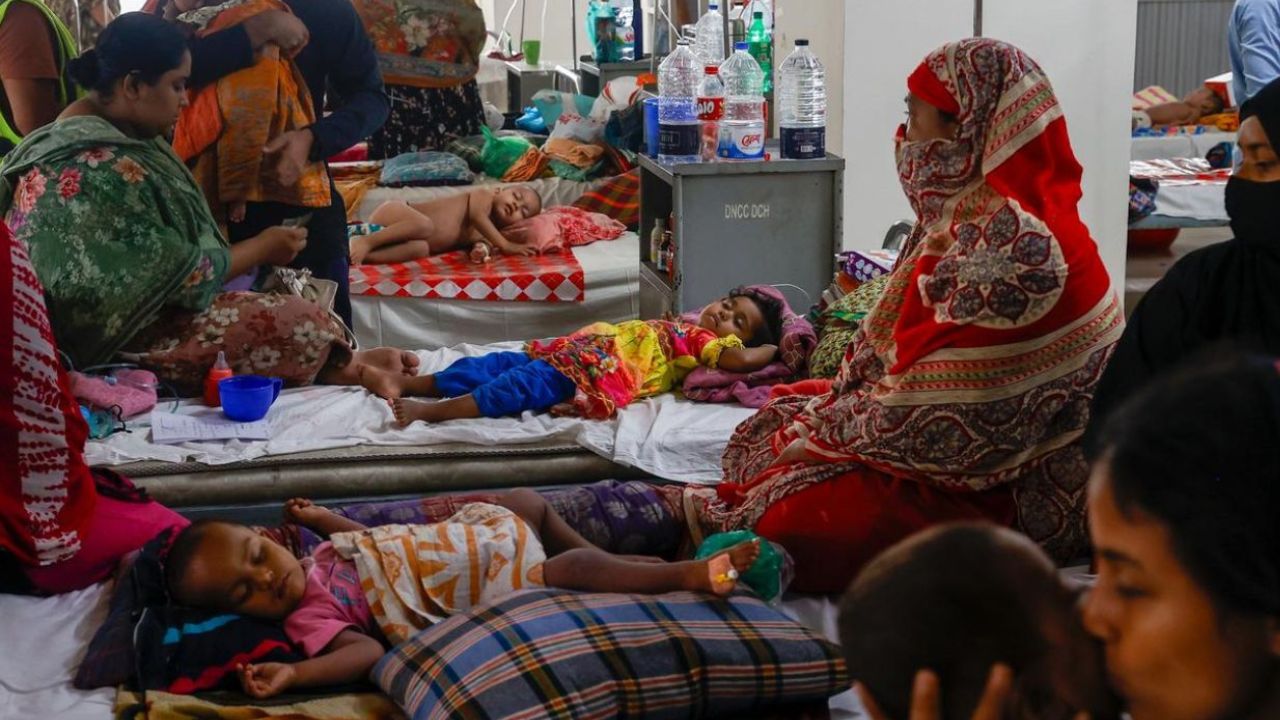
The cases of Sadman and Alifa reflect wider pressure on hospital capacity, with repeated referrals, limited ICU availability and delays in critical care.
As infections and deaths remain high, health facilities continue to struggle—while debate intensifies over whether the outbreak should now be formally declared an epidemic.