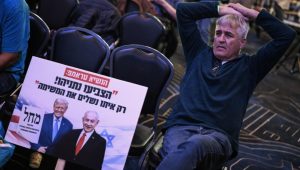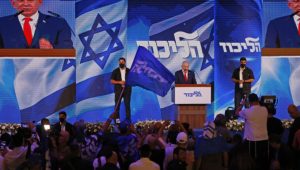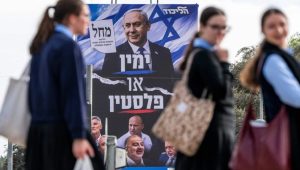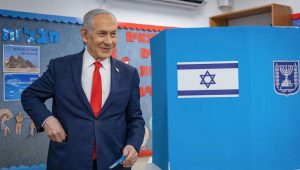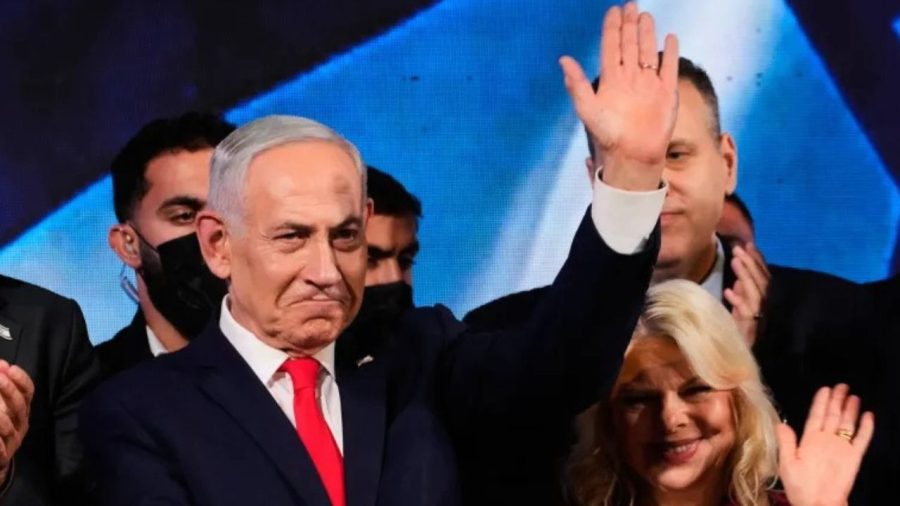



Israel’s Prime Minister Benjamin Netanyahu vowed early Wednesday to form a new government following a closely contested election, insisting that no leader should govern with the support of Israeli Arab parties, which made significant gains.
“We must establish a strong right-wing government,” Netanyahu told cheering supporters.
“The Jewish and Zionist majority must unite,” he said, adding that a government backed by Arab parties was “out of the question.”
Speaking shortly after 3am, Netanyahu delivered a brief address that was shorter than his usual speeches, AFP reports.
He stopped short of declaring victory, noting only that projections indicated his Likud party would emerge as the largest single party.

Meanwhile, Israeli Arab parties made substantial gains, potentially giving the opposition a path to power. However, Netanyahu’s main rival, Gadi Eisenkot, has said he would not form a government with the minority group.
More than 1.6 million votes have been counted in Israel’s Knesset election, according to figures released by the Central Elections Committee and updated at 02:47 GMT.
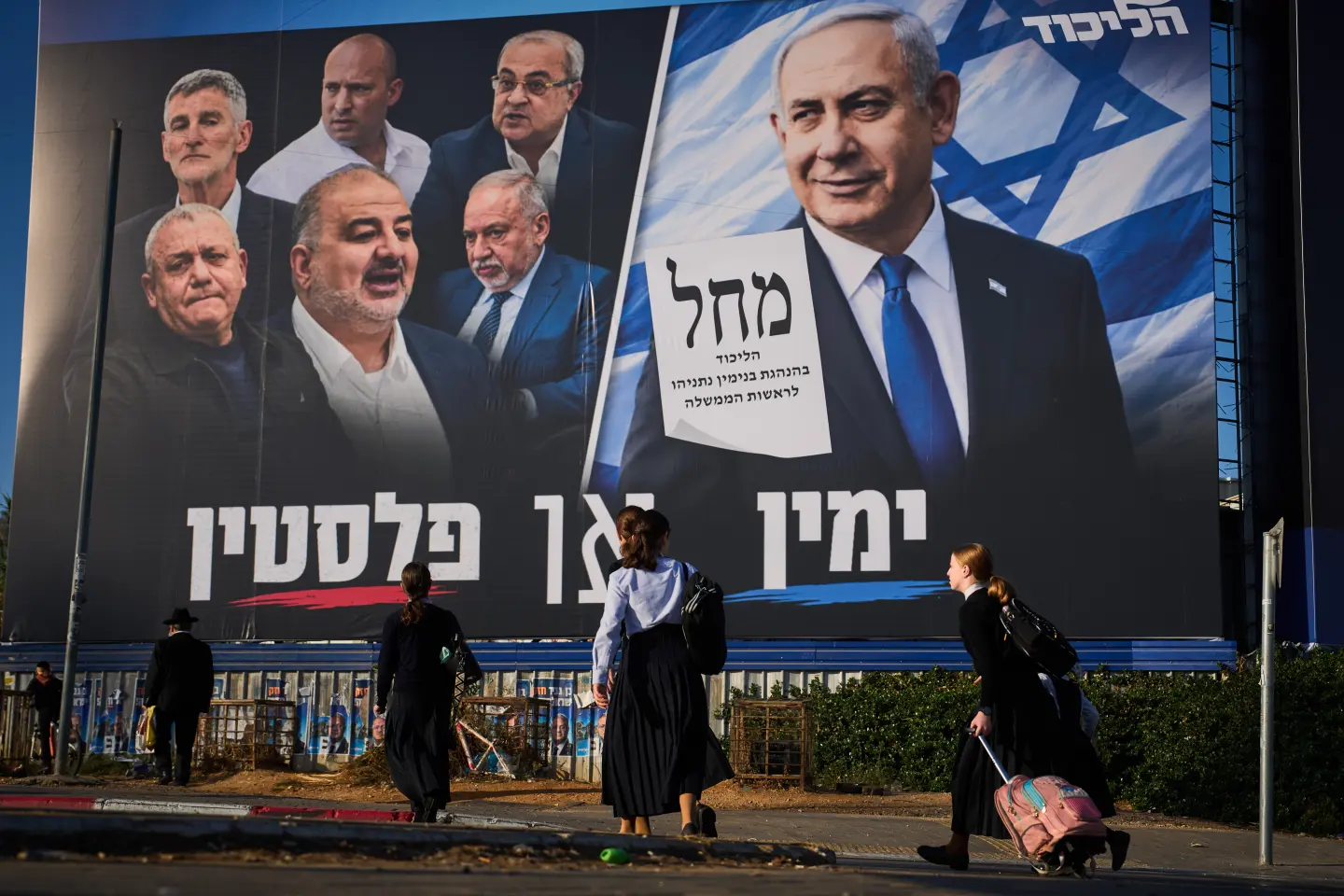
Netanyahu’s Likud party remained in first place, securing 22.24 per cent of the valid votes counted so far, although its share declined from 23.36 per cent in the previous update. Former military chief Gadi Eisenkot’s Yashar party held second position with 15.41 per cent, down slightly from 15.74 per cent.


The Palestinian-Israeli Joint List moved into third place with 8.28 per cent of the vote, narrowly overtaking former prime minister Naftali Bennett’s party, which secured 8.22 per cent.
The figures remain preliminary, with vote counting still underway.
According to Al Jazeera, more than 5.69 million Israelis cast ballots in the election from a pool of approximately 7.33 million eligible voters.
As coalition arithmetic begins to take shape, analysts say the eventual winner may still struggle to form a government without difficult political compromises. Alon Pinkas, a former Israeli ambassador and former consul general in New York, told Al Jazeera that whichever bloc emerges with the most seats could be forced into an uneasy coalition arrangement to secure a governing majority.
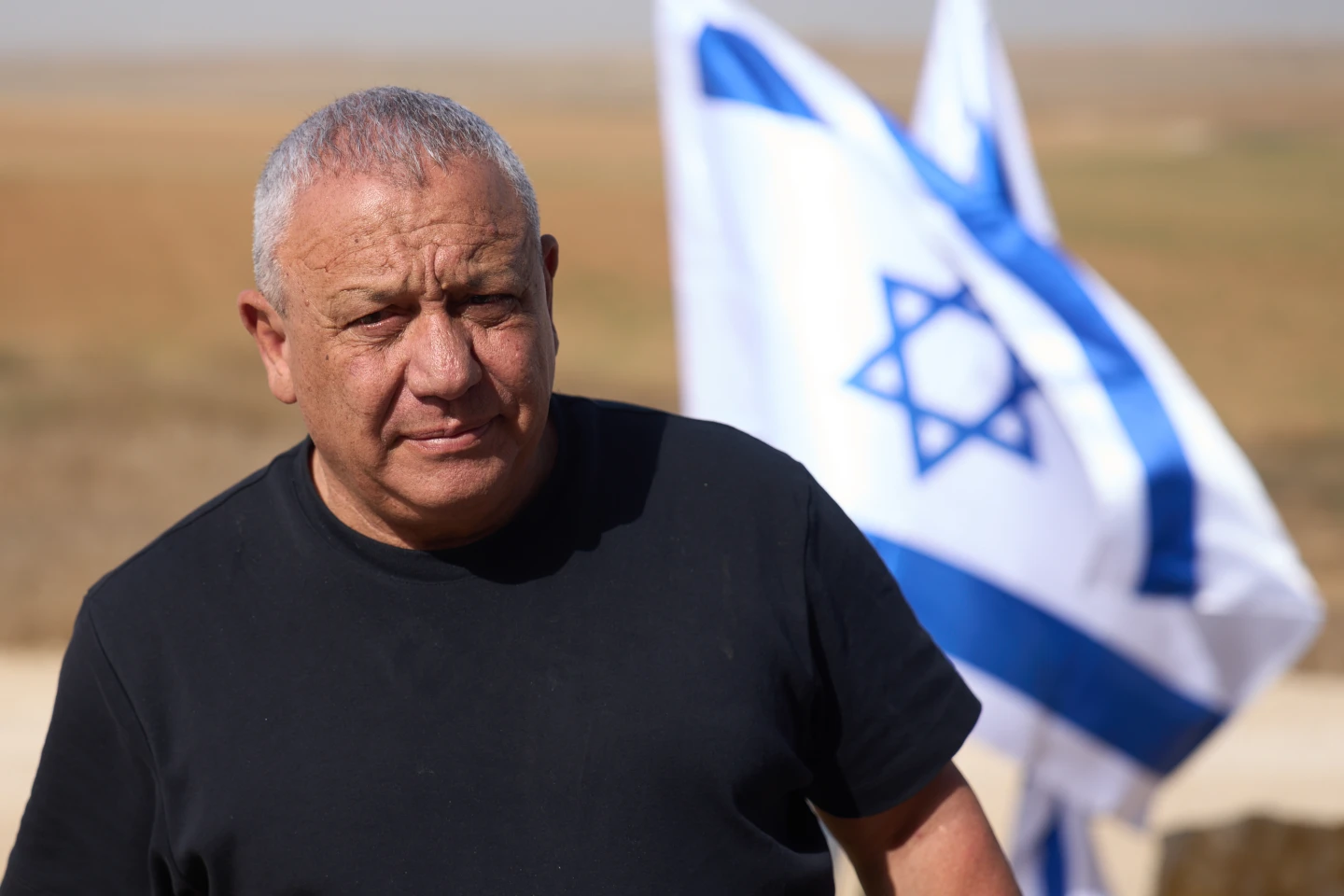
However, Pinkas said opposition voters would strongly oppose any deal involving Netanyahu’s coalition.
“From an analytical point of view, it would run completely contrary to what 95 per cent of the opposition voters want,” he said.
“None of them want to join with Likud.”
Pinkas argued that opposition voters “will never forgive” Eisenkot if he chooses to align with Netanyahu’s bloc. He also warned that any rotational power-sharing arrangement between the rival camps would likely result in political “dysfunction”.
Meanwhile, Netanyahu continued to emphasise Iran as a central issue in the campaign and in his public remarks.
“Please know that Israel is standing before an unprecedented and unique opportunity to eliminate the existential threat that is Iran once and for all,” he said.