As Eid-ul-Fitr approaches, Bangladesh’s mobile financial services industry is preparing for one of its busiest periods of the year, with transaction volumes expected to rise sharply as remittances arrive and consumers head to markets and online platforms for festive shopping.
For Nagad, one of the country’s largest mobile financial services providers, the festival season has become a major driver of digital spending, gradually transforming a traditionally cash-heavy marketplace into a fast-moving digital ecosystem.
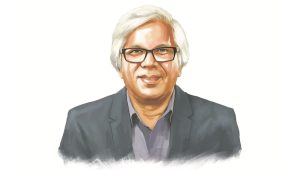
Transaction volumes typically increase during the Eid season compared with normal months, the company said. “The surge usually begins with inward remittances as expatriates send money home ahead of Eid,” Mohummed Shahin Sarwar Bhuiyan said in an interview with TIMES of Bangladesh.
He said the remitted funds quickly circulate through the economy as customers use instant person-to-person transfers and digital payments at clothing, footwear and lifestyle retailers preparing for Eid shoppers.
Nagad also sees the festival season as an opportunity to attract new users to digital financial services.
Promotional campaigns offering cashback, prizes and merchant discounts encourage customers to keep money in their digital wallets instead of withdrawing cash immediately.
Instead of cashing out, many users now rely on their digital balances to pay utility bills, shop online, buy travel tickets and make everyday payments.
Helicopter rides, gold necklace and cashback
To capture Eid spending, Nagad has launched several promotional campaigns for Eid-ul-Fitr. The most eye-catching campaign is the “Helicopter Offer”, which allows customers to win an exclusive helicopter ride through qualifying transactions.
Beyond the headline promotion, customers can receive more than Tk2,000 in cashback through merchant payments and other digital transactions.
Participating footwear brands include Apex, Bata, Bay Emporium and Orion, while apparel partners include Infinity Mega Mall, Lubnan, Richman, Rise, Gentle Park, Twelve Clothing, Artisan Outfitters, Sara Lifestyle, Raw Nation, Men’s World, B2, Shadesh Palli, Tahoor and Anjan’s.

Online merchants participating in the campaign include Daraz, Foodi and Othoba.com.
Nagad has also introduced another campaign offering customers the opportunity to win a gold necklace when they receive inward remittances of at least Tk10,000.
The platform is also offering instant bonuses and discounts designed to encourage customers to use Nagad for Eid shopping.
Rapid growth since launch
The company began operations on 26 March 2019 and has since grown into one of the country’s largest mobile financial services platforms.
Nagad now has more than 9 crore verified registered customers and operates through a nationwide network of about 300,000 retail agents, known as Uddoktas.
The company processes an average of around Tk42,000 crore in transactions each month. In January this year, Nagad recorded Tk40,301 crore in transactions, marking the highest monthly transaction volume in its history.
The milestone reflects continued growth as digital financial services become part of everyday life. Last year, Nagad recorded around 20 per cent year-on-year growth.




Beyond basic cash-in and cash-out services, inward remittances, utility bill payments and merchant transactions have become major contributors to expansion.

Lowest cash-out charges
Nagad said it offers some of the lowest cash-out charges in the market. Cash-out from the Nagad app costs Tk12.99 per Tk1,000 including VAT, while USSD-based transactions cost Tk14.94 per Tk1,000 including VAT.
Send-money transactions are free for the first three transfers each month.
Keeping transaction costs low helps ensure digital financial services remain affordable and accessible to a wider population, the company said.
Major role in government payments
Nagad also plays a significant role in government financial disbursements.
The platform distributes around 75 per cent of the country’s social safety net allowances and provides stipends to more than 1.40 crore primary school children.
On average, Nagad disburses about Tk7,000 crore of government funds each year.
These programmes have helped bring millions of previously unbanked citizens into the formal digital financial system.
Changing digital habits
Consumer behaviour around mobile financial services has changed significantly in recent years.
Earlier, many users withdrew their entire balance immediately after receiving funds.
Now customers increasingly keep balances in their digital wallets to pay utility bills, recharge mobile phones, make merchant payments, manage emergencies and save small amounts digitally.
Send-money transactions have also become part of everyday social habits, from friends splitting restaurant bills to relatives sending “Eidi” during festivals.
In areas where digital scanners are less common, Nagad’s Uddokta agent network continues to serve as a bridge between technology and users.
Agents help customers access digital financial services even in remote locations.
Disruptive innovation
Innovation has played a central role in Nagad’s growth. The company introduced electronic know-your-customer onboarding, allowing customers to open accounts in less than a minute using their national identity card and a smartphone.
The model was later adopted by other mobile financial services providers and banks, reducing the cost of operations across the financial sector.
Interoperability could transform the sector
Looking ahead, the company said interoperability between banks and mobile financial services providers could significantly accelerate digital payments.
Currently the sector processes around Tk6,000 crore in transactions daily on average. If a fully “boundary-free” system allows funds to move instantly between banks and mobile wallets, daily transaction volumes could rise substantially.
Such a system would allow users to send money or pay merchants regardless of which service provider they use.
When digital money becomes as flexible as cash, customers will no longer feel the need to carry physical wallets, the company said.
Barriers to a cashless economy
Despite strong growth, several structural challenges still slow the transition to a fully cashless Bangladesh.
Fragmented interoperability between financial platforms and the cost of digital adoption for small merchants remain key barriers.
Many shopkeepers hesitate to accept digital payments due to transaction fees and concerns about tax obligations.
The company suggested introducing a tax-neutral period for merchants reaching digital sales targets and lowering interchange fees for micro-transactions.
It also recommended standardising USSD and mobile data costs so that mobile financial services remain accessible to users without smartphones.
If digital financial services transactions were zero-rated for data or USSD costs, the industry could expand beyond the current Tk6,000 crore daily average and move closer to the national goal of a 75 per cent cashless retail economy by 2027, the company said.
Toward digital banking
Over the next five years, Nagad expects the sector to evolve beyond simple payments into a broader digital banking ecosystem.
Future services could include instant nano-loans, tailored insurance and micro-investment products available directly through mobile apps.
By 2030, nearly every adult in Bangladesh could have a mobile financial services account and use it as a primary platform for receiving income, managing savings and conducting daily transactions, the company said.