


Parvez Babul
Realizing the importance of clean water, poet Samuel Taylor Coleridge wrote a poem titled: The Rime of the Ancient Mariner, which describes being surrounded by water but unable to drink it because it is salty. The full phrase, “Water, water everywhere, nor any drop to drink,” is often used metaphorically to describe a situation where there’s an abundance of something useful, yet it remains inaccessible or unusable.
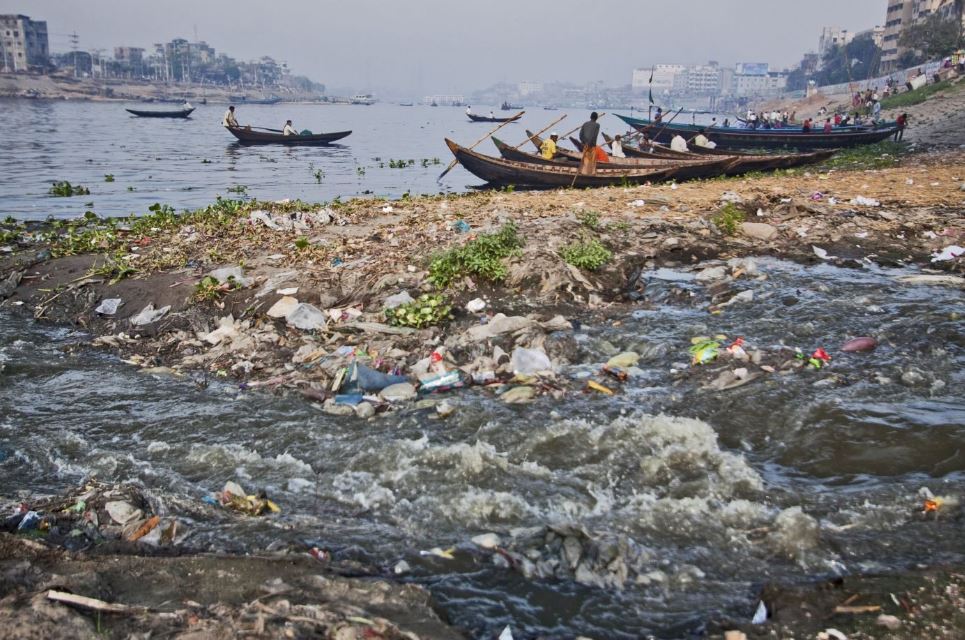
At present the life-threatening scenario of water pollution, crisis, and inadequate sanitation reflects the similar situation as Coleridge described through his poetry. Many countries are worst sufferers due to environmental pollution.
Climate change in Bangladesh is increasing river and groundwater salinity due to rising sea levels and saltwater intrusion. These are threatening drinking water, agriculture, and ecosystems. Saltwater pushes further inland during the dry season, affecting coastal communities in the southwest, causing water shortages, declining crop yields, and health problems. For example, hypertension, and forcing people to migrate.

Water and sanitation are at the core of sustainable development. And the range of services they provide underpin poverty reduction, economic growth and environmental sustainability. However, in recent decades, overexploitation, pollution, and climate change have led to severe water stress across the world.
Different researches show that 2.2 billion people lack access to safely managed drinking water, and more than 4.2 billion people lack safely managed sanitation. Climate change is exacerbating the situation, with increasing disasters such as floods and droughts. 80 per cent of wastewater in the world flows back into the ecosystem without being treated or reused. And 70 per cent of the world’s natural wetland extent has been lost, including a significant loss of freshwater species.




In December 2016 the United Nations General Assembly unanimously adopted the resolution: International Decade for Action – Water for Sustainable Development: 2018–2028 in support of the achievement of the United Nations Sustainable Development Goal (SDG) 6 (six) and other water-related targets. Water is also at the heart of milestone agreements such as the Sendai Framework for Disaster Risk Reduction and the 2015 Paris Agreement. In Bangladesh, while abundant in surface water, poor water management, inadequate treatment of waste, and overuse of groundwater have made many sources unsafe for consumption.
Families, especially women, face increased health risks and economic insecurity. The lack of safe water and fertile land force people to leave their homes and migrate to urban areas to survive, for safer lives and livelihoods. Climate-migration is on the rise too specially in the coastal districts in Bangladesh and other coastal countries globally.
Dr. Pema Gyamtsho, Director General of Nepal-based regional think tank: International Centre for Integrated Mountain Development (ICIMOD) issued a message on World Water Day. He mentioned that we must strengthen transboundary cooperation – for rivers do not stop at borders, and neither should our solutions. True resilience will only come when nations work together, guided by science, trust, and shared responsibility.
Above all, we must ensure that communities are at the heart of water governance. Especially women, who bear the burden when water is scarce, and indigenous people, whose wisdom reminds us that water is sacred, not simply a resource to be consumed.
Because water security is not only about access to safe drinking water. It is about sustaining peace, as history shows us that water can be both a source of conflict and of cooperation. It is about sustaining biodiversity – for every species, from the snow leopard in the Himalaya to the farmer in the plains, depends on healthy water systems.
Dr. Pema added that the Hindu Kush Himalaya, like other vulnerable regions, is both a warning and a wellspring of solutions. Let World Water Week be more than a platform for discussion. Let it be a catalyst for reimagining how humanity values water. Because if we get water right, we get everything else right.
The writer is a journalist and columnist